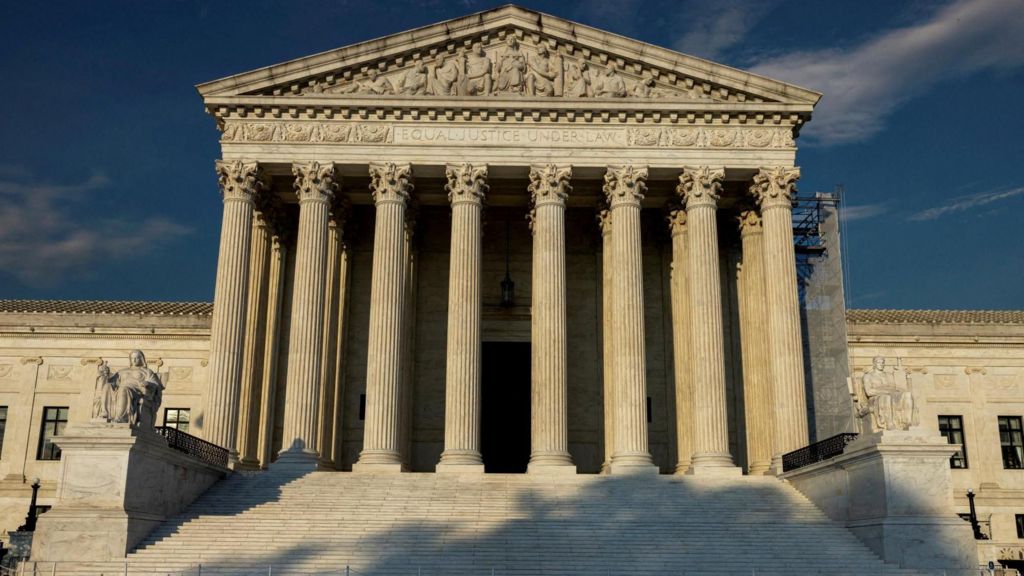
In a high-stakes ruling that has reignited national debate over capital punishment practices in the United States, the US Supreme Court has rejected an emergency appeal from Alabama officials seeking approval to carry out an execution via nitrogen gas hypoxia.
This decision marks the latest turn in a long-running legal battle over the controversial execution method, which Alabama pioneered for regular use in 2024. Lower courts had already stepped in to block the planned execution of 49-year-old death row inmate Jeffery Lee, ruling that nitrogen hypoxia almost certainly violates the Eighth Amendment of the US Constitution, which prohibits cruel and unusual punishment.
Lee’s scheduled execution was set for 6 p.m. local time on Thursday, just hours after Alabama submitted its emergency appeal to the nation’s highest court. The Supreme Court released a brief, unsigned order that offered no detailed reasoning for its denial of the state’s request. Three conservative justices – Clarence Thomas, Samuel Alito, and Neil Gorsuch – issued a dissent, stating they would have granted Alabama’s request to move forward with the execution.
The controversy around nitrogen gas executions escalated earlier this week, when a federal judge issued a permanent ban on the method after hearing extensive testimony from expert witnesses during an April bench trial. The ruling reversed an earlier decision from a federal appeals court, and laid out detailed findings that inmates subjected to nitrogen hypoxia would likely endure agonizing symptoms before death: including extreme air hunger, crippling emotional distress, debilitating anxiety, dangerous physiological stress, and prolonged physical discomfort, according to reporting from CBS News, the US partner of the BBC.
Alabama is the first US state to implement nitrogen gas as a primary execution method, and has already put seven inmates to death using the protocol since rolling it out in January 2024. The current case centers on Lee, who was convicted of the 1998 double murder during a pawnshop robbery, and has spent more than 25 years on death row. A notable detail of his sentencing: the jury that convicted him originally recommended a life sentence without possibility of parole, but a trial judge overturned that decision under a judicial override rule that has since been repealed in Alabama.
While the Supreme Court’s ruling blocks this specific attempt to use nitrogen gas for Lee’s execution, Alabama legal officials retain the option to pursue execution via an alternative method. The decision has drawn renewed attention to the growing national scrutiny of untested execution methods, as states grapple with ongoing shortages of lethal injection drugs and growing legal pushback against capital punishment practices.