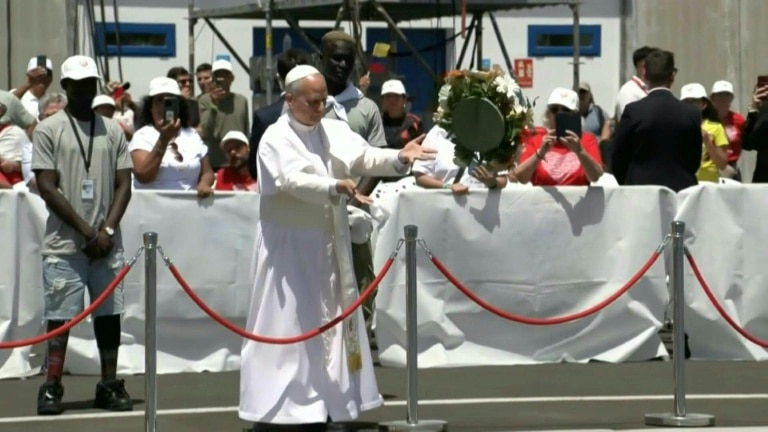
Pope Leo XIV is wrapping up his official visit to Spain this Friday, centering the final day of his trip on the urgent humanitarian crisis facing irregular migrants crossing to Europe, with scheduled meetings with displaced people and an open-air mass on the Atlantic island of Tenerife. As the spiritual leader of 1.4 billion Catholics around the globe, his closing appearances reinforce a clear message: the world must step up support for vulnerable migrants and crack down on the ruthless human trafficking networks that profit from irregular migration, a topic that remains one of the most divisive issues in contemporary European political debate. Tenerife forms part of Spain’s Canary Islands archipelago, a primary Atlantic entry point for tens of thousands of people fleeing poverty, conflict and instability in Africa and the Middle East who seek new, better lives in the European Union. On Friday, the pope will first address hundreds of migrants staying at the Las Raices migrant facility, a converted former military barracks that previously drew widespread public criticism for severe overcrowding and poor living conditions. Following that meeting, he will lead a large open-air mass for tens of thousands of worshippers gathered in Santa Cruz de Tenerife’s main port. The final leg of the papal trip began Thursday, when the pope arrived on Gran Canaria, another major island in the archipelago, after completing earlier visits to the Spanish mainland cities of Madrid and Barcelona earlier in the week. During his first day in the Canaries, he delivered a sharp rebuke of global indifference to the migrant crisis, holding a solemn ceremony to cast a memorial wreath into the waters off Arguineguin port to honor the thousands of migrants who have lost their lives attempting to cross the sea to reach the islands. “Human dignity has no passport,” he stated from the dock, before blessing a weathered blue wooden cross crafted from the remnants of a migrant vessel that washed ashore after a crossing. “Monsters lurk in these seas… traffickers who enslave women and children, and those whose indifference allows the poor to be swallowed up by exploitation or forgetfulness,” he added. Data from the International Organization for Migration confirms that nearly 1,200 migrants lost their lives or went missing on the dangerous crossing from North Africa to the Canary Islands last year alone, cementing the route as one of the deadliest migration corridors on the planet. With European national governments tightening migration policies amid rising political pressure from far-right parties across the continent, the pope pushed back against hardened approaches: Europe “cannot claim to uphold human dignity while growing accustomed to the Mediterranean and the Atlantic becoming unmarked graves,” he argued. He further emphasized that the ongoing tragedy demands a moral reckoning not just for destination countries in Europe, but also for nations of origin and transit, where widespread poverty and unaddressed conflict leave people vulnerable to exploitation by trafficking gangs. For migrant communities on the Canary Islands, the papal visit carries enormous weight during what many describe as a defining moment for the crisis. “We really value this visit. It’s very important for us at such a critical moment,” Mohamed Amjahdi, a Moroccan migrant who arrived on the islands by boat at the age of 17, told Agence France-Presse on the ground in Arguineguin. After concluding his events in Tenerife, the pope will depart for Rome, where he is expected to hold a press conference with traveling journalists aboard his return flight. Pope Leo XIV has made reforming global approaches to migration a core priority of his papacy, using high-profile international visits to draw global attention to the human cost of restrictive immigration policies and systemic indifference to displaced populations.