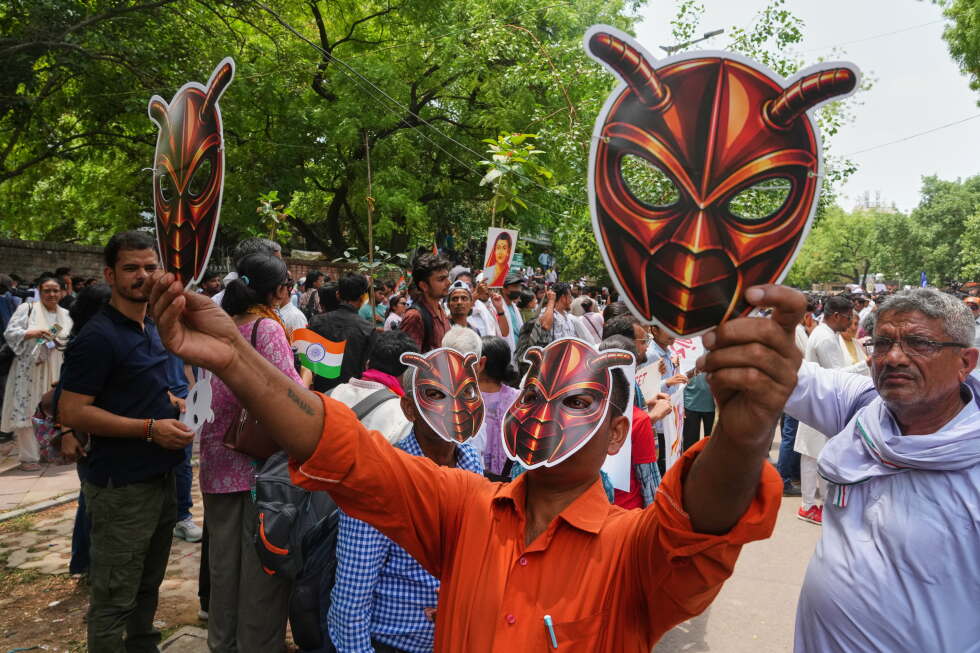
NEW DELHI – A youth-driven grassroots political movement that turned a derogatory label into a rallying cry has launched a nationwide protest campaign, putting new pressure on India’s federal government to address widespread discontent among young people over systemic failures in education and employment.
Hundreds of students and young backers of the self-styled Cockroach Janta Party (CJP) gathered this Thursday for a major public rally at Savitribai Phule Pune University, located in India’s western state of Maharashtra. The demonstration comes one week after the movement held its first large-scale street protest in the national capital of New Delhi, marking the start of a coordinated national push for policy and political change.
At the core of the group’s immediate demands is the resignation of India’s Union Education Minister Dharmendra Pradhan. CJP organizers say Pradhan must be held accountable for persistent examination irregularities and repeated high-stakes exam paper leaks that have upended the academic and career prospects of millions of young job seekers across the country.
Addressing the crowd of supporters, CJP founder Abhijeet Dipke – a political communications strategist and current Boston University student who recently returned to India from the United States to lead the movement – confirmed Thursday’s rally marked the official opening of a broad national campaign. Dipke announced that organized protests are already planned for multiple major Indian cities in the coming weeks, and warned that thousands of CJP supporters will march back to New Delhi later this month if Pradhan fails to step down from his post.
“ The government cannot continue to ignore the voices of India’s youth,” Dipke told reporters on the sidelines of the Pune rally.
The unusual story of the CJP begins back in May, when a comment from Supreme Court Justice Surya Kant sparked national outrage. During a hearing related to youth unemployment, Kant compared some unemployed young people to “cockroaches” – a remark that sparked immediate backlash from young Indians across the country. Rather than reject the insult, CJP founders and supporters embraced the term, rebranding it as a symbol of resilience and survival in the face of persistent economic and political barriers.
The movement’s rapid growth on social media has been unprecedented: it has already amassed more than 22 million followers on Instagram, making it one of the most visible youth political mobilization efforts in India today. What started as a reaction to a single offensive comment has since expanded its scope, with the CJP now centering a broader set of grievances that resonate with millions of young Indians: widespread youth unemployment, skyrocketing living costs, and a lack of transparency and accountability from the ruling government.
A defining feature of the CJP’s political identity is its blend of self-deprecating humor and sharp political criticism. Supporters lean into the joke, jokingly describing themselves as “unemployed and chronically online,” while short-form videos and viral memes mocking high unemployment, systemic corruption, and government dysfunction have racked up millions of views across platforms. The satirical energy of the movement has spawned dozens of parody CJP accounts, all of which have adopted the cockroach as a unifying, tongue-in-cheek political symbol that sets the movement apart from traditional, formal Indian political parties.