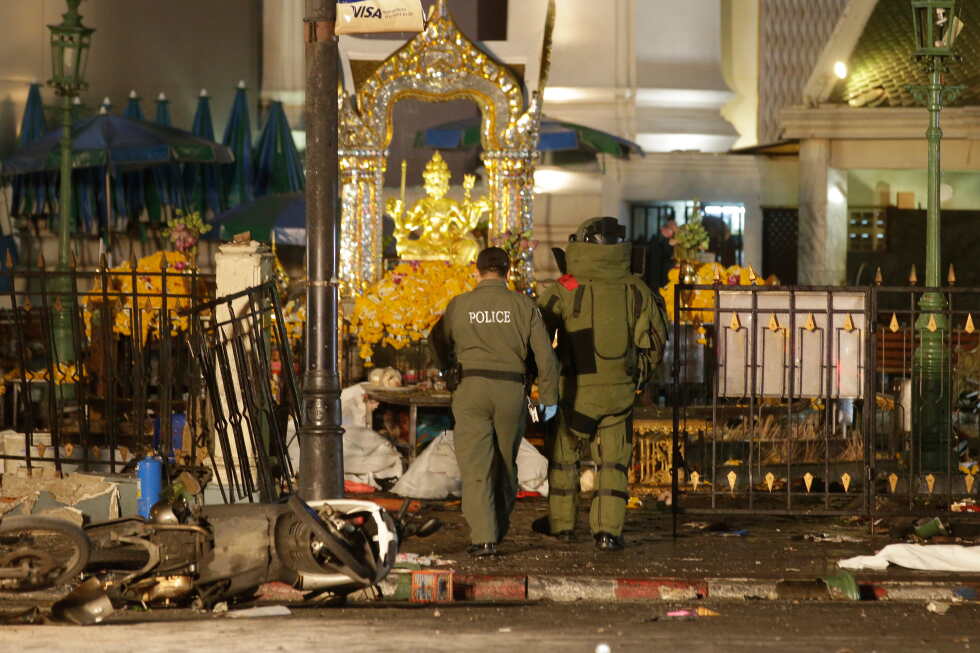
Nearly nine years after a deadly bombing ripped through one of Bangkok’s most popular tourist sites, a Thai criminal court has handed down death sentences to two Chinese Uyghur men convicted over the attack that left 20 people dead and more than 120 injured. The August 17, 2015, blast targeted the Erawan Shrine, a spiritual and tourist landmark that draws large crowds of visitors from China annually. The two defendants, Yusufu Mieraili and Bilal Mohammad (also known as Adem Karadag), were taken into custody by Thai authorities just days after the explosion.
Both men faced a sweeping array of criminal charges, including premeditated murder, attempted mass murder, and unlawful possession of explosive materials. Prosecutors told the court that evidence linking the pair to the attack includes surveillance video footage, fingerprint matches, and additional forensic evidence. The guilty verdict issued Thursday by a four-judge panel at Bangkok South Criminal Court relied on what the court called overwhelming incriminating evidence, noting that the defense failed to present credible substantive evidence to disprove the prosecution’s claims.
Shortly after the ruling was delivered and judges exited the courtroom, Mieraili—who has learned conversational Thai while in detention—proclaimed his innocence in broken Thai, rejecting the court’s decision. “I mourn for Thailand,” he told reporters in the courtroom. “I did not receive justice … I ask Thai people to help me.” Court records show Mieraili, who also speaks English, was called on to translate trial proceedings into Uyghur for Mohammad, as only an English interpreter was provided for the proceeding. The years-long trial was repeatedly delayed due to longstanding challenges securing qualified Uyghur interpreters, a key point of criticism from rights advocates.
Lead defense attorney Chuchart Kanpai confirmed immediately after the ruling that the legal team would file an appeal, arguing that multiple critical aspects of the case were not properly considered by the court. The procedural history of the case has been fraught: the two men initially confessed to the crimes during early interrogation following their arrest, but entered formal not guilty pleas when the trial opened in 2016. The proceeding was originally held in a Thai military court before being transferred to the civilian Bangkok South Criminal Court in 2019 amid broader judicial reforms in the country. The defendants have long alleged they were subjected to mistreatment and torture while in custody to force their confessions, but the ruling Thursday stated no credible evidence of coercion or torture was presented to the court, and investigators’ conduct did not meet the definition of forced confession.
The case has drawn international scrutiny from human rights organizations, which have repeatedly criticized the lengthy procedural delays and unfair trial practices. In 2023, the Paris-based International Federation for Human Rights submitted an official petition to the United Nations highlighting alleged systemic violations of the defendants’ human rights and due process, including lack of legal justification for the initial arrests and discriminatory treatment based on the men’s ethnic identity.
Thai law enforcement named a total of 17 suspects in connection with the 2015 bombing, but only three were ever apprehended. All criminal charges against a Thai national who was initially detained in the case were dismissed in early 2024 due to a complete lack of evidence linking her to the attack. According to the official narrative presented by Thai authorities, the attack was carried out by a transnational people smuggling gang seeking revenge for a major Thai law enforcement crackdown on human trafficking operations earlier that year. The crackdown was launched after authorities discovered abandoned migrant camps in the jungle along the Thailand-Malaysia border, holding Rohingya refugees fleeing persecution in Myanmar and economic migrants from Bangladesh. Police have alleged that Mohammad left the explosive-laden backpack at the shrine, and Mieraili detonated the device minutes later.
However, independent analysts have put forward an alternative competing theory that frames the attack as the work of Uyghur separatists, retaliating for Thailand’s forced repatriation of dozens of Uyghur asylum seekers to China just one month before the bombing, in July 2015. Many Uyghur people, who face systemic repression and restrictive governance in China’s Xinjiang region, work with smuggling networks to flee the country and seek asylum in third countries. The Erawan Shrine’s widespread popularity among Chinese tourists has been cited as additional evidence supporting the theory that the bombing carried a political motive. It is worth noting that a separate 2025 deportation of 40 Uyghur asylum seekers from Thailand to China also drew widespread condemnation from the international community.