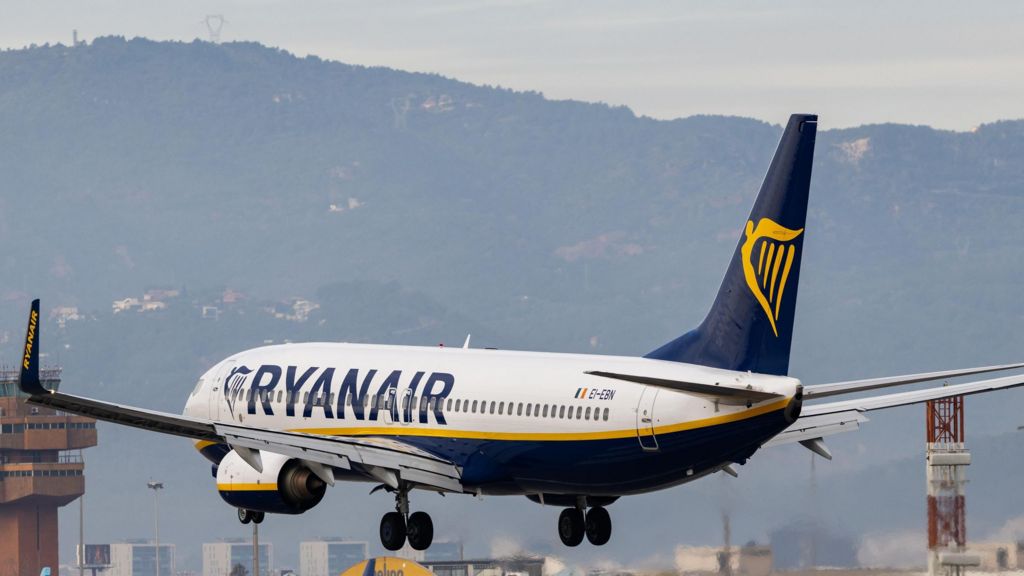
The UK’s top competition regulator has opened a formal probe into budget airline giant Ryanair over its policy of charging parents additional fees to sit alongside their children during flights, triggering a fierce public pushback from the carrier that has labeled the inquiry politically motivated and groundless.
The Competition and Markets Authority (CMA), the body responsible for enforcing UK consumer and competition rules, confirmed this month that it is examining whether Ryanair’s standard seat charges—an average of £8 per passenger per one-way trip—violate existing consumer protection legislation. Under Ryanair’s current terms of service, adult passengers traveling with children between the ages of 2 and 11 are required to reserve a paid “mandatory family seat” to sit with their minor travel companions, aligning with the airline’s own policy that requires guardians to be seated next to young children for the duration of a flight.
A core focus of the CMA’s inquiry is whether Ryanair is wrongfully charging passengers to meet pre-existing safety and accessibility obligations laid out in global and UK aviation regulations. Regulators also noted that Ryanair stands out among major airlines operating out of UK airports as the only carrier that imposes these mandatory charges for family seating. Most other major airlines either automatically assign adjacent seats to families at no extra cost during the booking process or allow guardians to select seats next to children without charging additional fees.
Ryanair has rejected all of the CMA’s preliminary implications, calling the investigation “bogus” and insisting that its family seating policy adheres fully to all applicable UK and aviation laws. The airline pushed back on the regulator’s description of its pricing structure, clarifying that adults only pay for one reserved seat when traveling with children, while up to four additional children on the same booking can reserve adjacent seats at no cost.
Beyond defending its policy, Ryanair attacked the inquiry as a political distraction from the current Starmer government’s failure to eliminate Air Passenger Duty (APD), a tax that the airline argues drives up ticket prices for all travelers and suppresses growth across the UK’s aviation, tourism and broader national economy. The carrier said it is confident it will disprove the CMA’s claims over the course of the investigation.
The CMA is also probing two additional potential consumer protection issues: whether the mandatory family seat fee is “drip-priced” — meaning it is only revealed to customers partway through the booking process, rather than disclosed upfront as part of the total advertised price. CMA Director of Consumer Protection Hayley Fletcher explained that these hidden extra charges can quickly erode the affordability of family summer holidays, a key concern as households across the UK continue to grapple with persistent cost of living pressures.
“For the past year, we’ve told businesses to ensure their customers are shown the total price upfront – those who don’t face the very real possibility of action from the CMA,” Fletcher said, adding that the investigation is in its early stages and no final conclusion on whether Ryanair broke the law has been reached. If the CMA finds Ryanair violated consumer protection law, the regulator’s new enforcement powers allow it to levy fines of up to 10% of the airline’s global annual turnover.
Leading UK consumer rights organization Which? has welcomed the CMA’s probe, noting that it has repeatedly raised alarms about Ryanair’s seating policies that separate families unless extra fees are paid, even for children as young as three years old. Rory Boland, Which? Travel Editor, called on Ryanair to proactively change its policy before the investigation concludes. “Ryanair doesn’t have to wait for the outcome of the CMA’s investigation, it could stop charging these unreasonable fees today and we would encourage them to do that,” Boland said.
The investigation is part of a wider CMA initiative to reduce financial burdens on UK households by cracking down on unfair consumer pricing practices amid ongoing economic pressure.