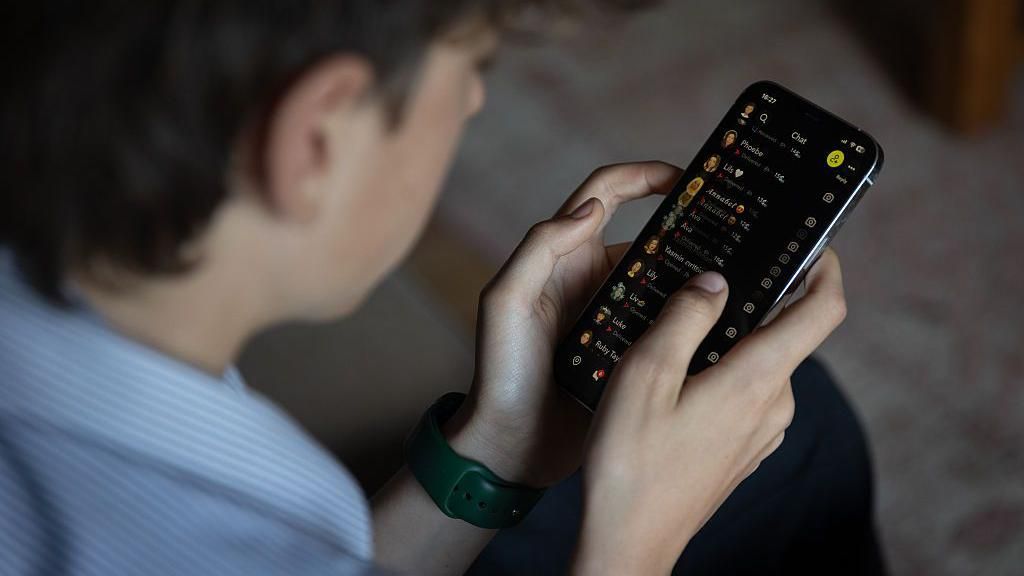
As global leaders prepare to gather for next week’s G7 summit in France, where child online safety and AI regulation will top the agenda, Canada has tabled ambitious new legislation that positions it at the center of the global debate over digital youth protection. Unveiled in the House of Commons Wednesday by Canadian Culture Minister Marc Miller, the Safe Social Media Act (officially labeled Bill C-34) proposes a ban on social media access for children and teenagers under the age of 16 – a framework modeled after Australia’s landmark national ban implemented six months ago, but with a key policy difference that sets it apart from other global regimes.
Unlike Australia’s mandatory prohibition for under-16 users, Canada’s proposal includes a carve-out: tech companies can avoid the full ban if they can formally prove they have implemented robust policies to reduce harm to minor users. The bill goes far beyond social media restrictions, sweeping in broad new regulations for AI chatbots and sweeping powers to crack down on what the legislation defines as harmful online content. To enforce these new rules, the government plans to establish an independent oversight body, the Digital Safety Commission of Canada, whose members will be appointed directly by the federal cabinet. Violators face steep maximum penalties: the greater of CAD 10 million, or 3% of the company’s total global gross annual revenue.
The proposal comes after two failed attempts by Canada’s previous Liberal government to pass online harm legislation, mounting pressure from child safety advocates and parents, and a high-profile national tragedy that intensified calls for action. In February, a mass shooting at a British Columbia school left eight people dead, including six young children. Investigations later revealed the 18-year-old suspect had used OpenAI’s ChatGPT to discuss gun violence months before the attack, sparking widespread public outrage and criticism of OpenAI for failing to flag the dangerous conversations to law enforcement. OpenAI CEO Sam Altman later issued a formal written apology to the victims’ families in the wake of the incident.
Minister Miller framed the legislation as an urgent priority for the Canadian government, telling reporters this week that “kids are dying” and that the administration would pursue all reasonable steps to protect young people online. The timing of the bill is deliberate: it lands just one week before G7 leaders gather to discuss coordinated global action on AI safety and child protection, with Canada positioning itself as a policy leader on the issue.
Not all stakeholders have welcomed the proposal, however. Free speech advocacy groups have raised sharp concerns that the new law will expand government censorship of online content, arguing that harm to minors can be adequately addressed through existing provisions in Canada’s criminal code, rather than new stand-alone legislation. The bill defines seven distinct categories of prohibited harmful content, including material that bullies children, incites violence, or foment racial and ideological hatred, but the Canadian justice and culture ministries did not immediately respond to a BBC request for additional clarity on how these criteria will be implemented and enforced.
Child safety advocates, however, have struck a largely positive tone on the bill’s unique exemption clause. Sara Austin, CEO of child advocacy group Children First Canada, which has long pushed for federal online harm legislation, noted that the exemption creates a direct incentive for tech companies to implement stronger platform-wide safety protections that will benefit all users, not just children. “While Canada has lagged behind peer nations in rolling out online safety rules, this proposal gives the country an opportunity to set a new global precedent ahead of the G7 summit,” Austin said. She added that the framework “will not only benefit children, but will also benefit all Canadians” who use social media and AI platforms.
Canada’s move comes as a growing wave of countries adopt or consider age-based restrictions on social media for minors. Six months ago, Australia became the first nation in the world to implement a national ban on under-16 social media use. The law requires platforms to deactivate existing under-16 accounts and block new account creation, and mandates the use of multiple age verification technologies including ID checks, face recognition, and voice recognition. Serious or repeat violations carry fines of up to AUD 49.5 million.
But Australia’s policy has already faced significant criticism over its effectiveness. A recent Australian government survey of parents found that roughly 70% reported their under-16 children still have active social media accounts, and many noted that platforms had not requested any age verification following the ban’s implementation. To date, the Australian government has opened five formal investigations into alleged non-compliance by major platforms including Facebook, Instagram, Snapchat and TikTok.
Other nations are moving forward with their own restrictions: the United Kingdom is expected to announce a national ban on under-16 social media use next week, while Greece will implement a ban for users under 15 that goes into effect in January 2026. The UK has already passed a broader Online Safety Act regulating digital content, joining other nations including France and New Zealand that have already enacted national online harm frameworks.