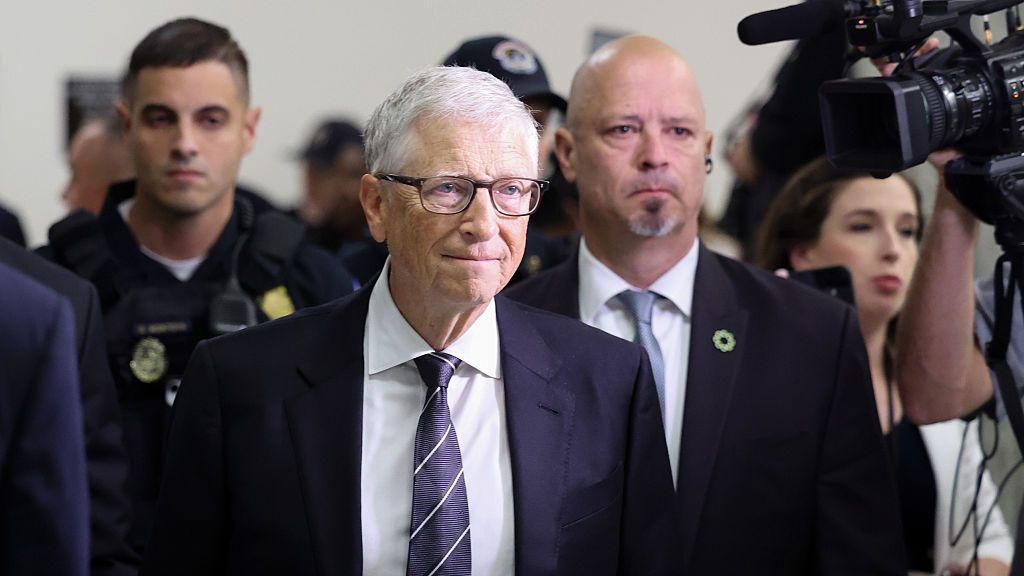
On Wednesday, billionaire philanthropist and Microsoft co-founder Bill Gates appeared voluntarily behind closed doors before the U.S. House Oversight Committee, which is conducting a bipartisan investigation into the network of deceased convicted sex offender Jeffrey Epstein. During his testimony, Gates addressed long-swirling rumors about his relationship with Epstein, issuing a flat denial of any personal connection to the disgraced financier and pushing back against unsubstantiated claims of involvement in Epstein’s criminal activity.
Gates told the panel that his only interactions with Epstein began in 2011, three years after Epstein had pleaded guilty to state-level prostitution charges in Florida, and centered entirely on Epstein’s promises to arrange major fundraising for Gates’s global health philanthropic initiatives. Gates emphasized that from the start of their interactions, he explicitly barred Epstein from any role in the Bill & Melinda Gates Foundation and made clear the financier would never receive compensation for any donations he helped secure. By 2014, Gates said, he realized Epstein’s fundraising pledges were empty: after Epstein assembled a group of purported potential donors, none expressed interest in moving forward with contributions. At that point, Gates cut off all contact with Epstein, saying he never met or communicated with him again.
In his opening statement, Gates repeatedly denied any knowledge of or involvement in Epstein’s well-documented criminal conduct. “I never went to his island, his ranch, or his Florida home. I have never victimized anyone,” Gates told the committee. “While he may have sought to foster a personal relationship, I was never interested in that and never reciprocated.” He added that he never witnessed any illegal activity and had no indication of the exploitation Epstein was carrying out. Gates also addressed the unverified claims included in recently released court documents, including allegations that Epstein facilitated illicit affairs for Gates and that Gates sought to hide a sexually transmitted infection from his then-wife Melinda. Gates denied all of the false claims, but publicly admitted to having extramarital affairs years ago — a fact he said Epstein exploited to attempt to blackmail and pressure him. “Epstein was working to use information about my infidelities – in addition to many lies that he layered on top – to pressure me to re-engage with him,” Gates explained. He closed his opening remarks by expressing his hope that all survivors of Epstein’s crimes would ultimately receive the justice they deserve, echoing a previous public statement that every minute he spent with Epstein was a mistake he deeply regrets, and that he exercised poor judgment in ever agreeing to meet with him.
During the hearing, Gates reportedly provided committee members with the names of powerful individuals that Epstein approached for fundraising during his interactions with Gates, though the panel has not released those names publicly. Committee members from both parties echoed a consistent assessment of Epstein’s modus operandi: the financier actively collected relationships with high-profile, influential figures to bolster his own power and public standing. “It’s pretty clear to me that Epstein was a friend collector. He just liked to have people around him that were big deal and get his picture made with them and hang out with them, and I think that’s how he reeled them,” Republican committee member Tim Burchett told reporters after the hearing. Democratic ranking member Robert Garcia noted that Gates acknowledged he knew Epstein had been convicted of a serious crime, but still continued interactions to pursue philanthropic funding. Democrat Emily Randall added that Gates’s testimony reinforced a pattern: many prominent men who interacted with Epstein only saw what they wanted to see during their encounters, ignoring obvious red flags. Lawmakers also pressed Gates on how the tech billionaire, a leading figure in the global information industry, failed to look into Epstein’s publicly available criminal record beyond a vague awareness that Epstein had faced some form of legal restriction. Burchett added that Gates appeared notably reserved during the hours of intense questioning, describing him as “down-trodden for a guy worth several billions.”
Gates is the latest in a string of high-profile figures to be questioned by the committee’s investigation, joining former President Bill Clinton, former Secretary of State Hillary Clinton, and current U.S. Commerce Secretary Howard Lutnick, among others. Epstein died by suicide in a New York jail cell in 2019 while awaiting federal trial on sex trafficking charges. His long-time associate Ghislaine Maxwell was convicted of multiple felonies related to Epstein’s crimes and is currently serving a 20-year prison sentence; she appeared virtually before the committee in February but invoked her Fifth Amendment right against self-incrimination to refuse to answer questions. The testimony comes months after the U.S. Department of Justice released millions of pages of documents from the Epstein investigation earlier this year, in which Gates’s name appeared thousands of times, including in multiple photographs of Gates alongside Epstein. Gates has repeatedly denied any wrongdoing or knowledge of Epstein’s illegal activity since the documents were published.