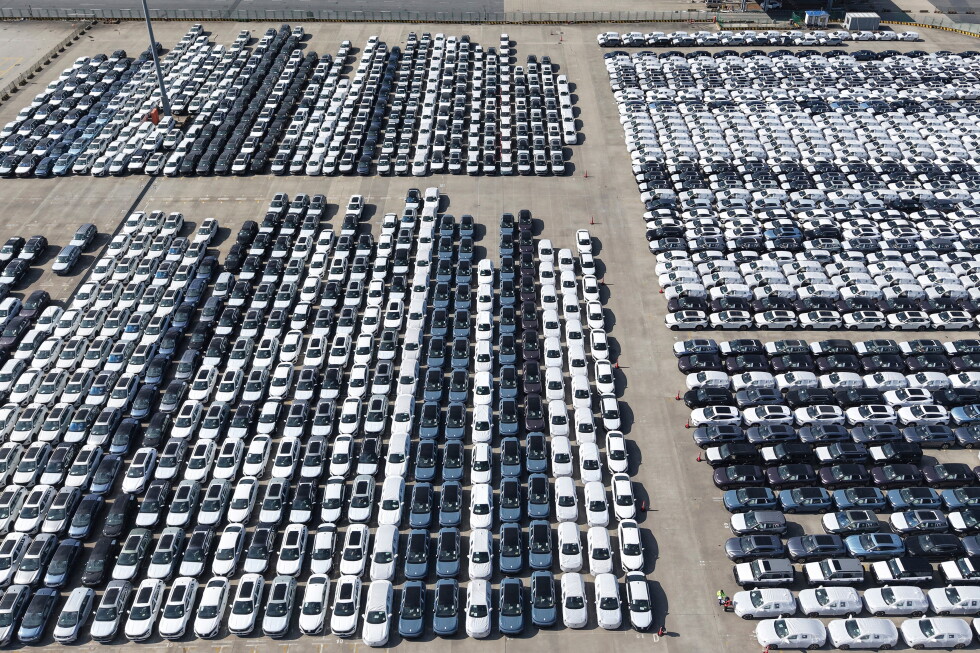
New data released by China’s leading automotive industry body confirms that the country’s passenger vehicle exports posted explosive year-on-year growth in May, jumping 73% to hit roughly 809,000 units. Analysts point to surging global demand for electric vehicles (EVs), triggered in part by elevated gasoline and diesel prices tied to geopolitical instability in Iran, as the core catalyst behind the unexpected strong performance.
The China Association of Automobile Manufacturers (CAAM) revealed Wednesday that combined exports of pure battery EVs and plug-in hybrid models more than doubled from May 2025, reaching approximately 435,000 units. This figure accounts for more than half of China’s total passenger car exports for the month, and represents a modest uptick from April’s total export volume of 796,000 passenger vehicles.
The export boom comes as major domestic Chinese automakers, including industry leader BYD, have accelerated their global expansion strategies, targeting high-growth markets across Latin America, Southeast Asia, and the European Union. The push overseas comes at a time when domestic demand for new vehicles in China remains under persistent pressure, following cuts to national government incentives for consumers transitioning from gasoline-powered cars to EVs.
CAAM data shows domestic passenger car sales fell 23.4% year-on-year in May to 1.44 million units, marking the seventh consecutive month of annual declines. Sales of traditional internal combustion engine vehicles, which run on gasoline and diesel, plummeted nearly 42% from a year earlier as EVs continue to capture growing market share across China.
Industry analysts broadly expect China’s passenger car export growth to maintain strong momentum through 2026. UBS analysts project full-year 2026 passenger car exports will rise around 40% from 2025, with EV exports alone forecast to climb by as much as 80%. Paul Gong, head of UBS’s China automotive industry research, noted that persistently high global crude oil prices have directly translated to greater consumer interest in electric models across key export markets.
“China’s car exports outperformed market expectations through the first five months of this year, while domestic sales have lagged behind consensus forecasts,” Gong explained.
Claire Yuan, an auto analyst at S&P Global Ratings, echoed this optimistic outlook for exports, projecting full-year 2026 growth of between 30% and 50% year-on-year.
Shifting global auto market trends back up this forecast. The International Energy Agency (IEA), in its annual global EV outlook released in May, reported that one out of every four new cars sold worldwide in 2025 was electric. Despite a slow start to the year for global auto sales, the IEA expects that share to grow substantially in 2026, with EV sales projected to hit 23 million units this year, accounting for nearly 30% of all new car sales globally.
China, which already holds the title of the world’s largest EV producer, supplies the majority of all electric vehicles sold across global markets. BYD, the country’s top EV maker, notched more than 160,000 overseas sales in May alone, marking an 80% increase from the same month last year. The Shenzhen-based automaker, which overtook Tesla in 2025 to become the world’s top-selling EV manufacturer, has set an ambitious full-year overseas sales target of 1.5 million units for 2026 — a more than 40% jump from 2025’s total of 1.05 million units.
For Chinese automakers, growing overseas sales also offer a critical path to improving profit margins. A fierce year-long price war for market share within China’s domestic auto market has significantly eroded profitability for most brands across the sector. While domestic demand remains soft for now, Yuan noted that a recovery may take hold in the second half of 2026, as consumers bring forward purchases following the launch of new vehicle lineups by major manufacturers.