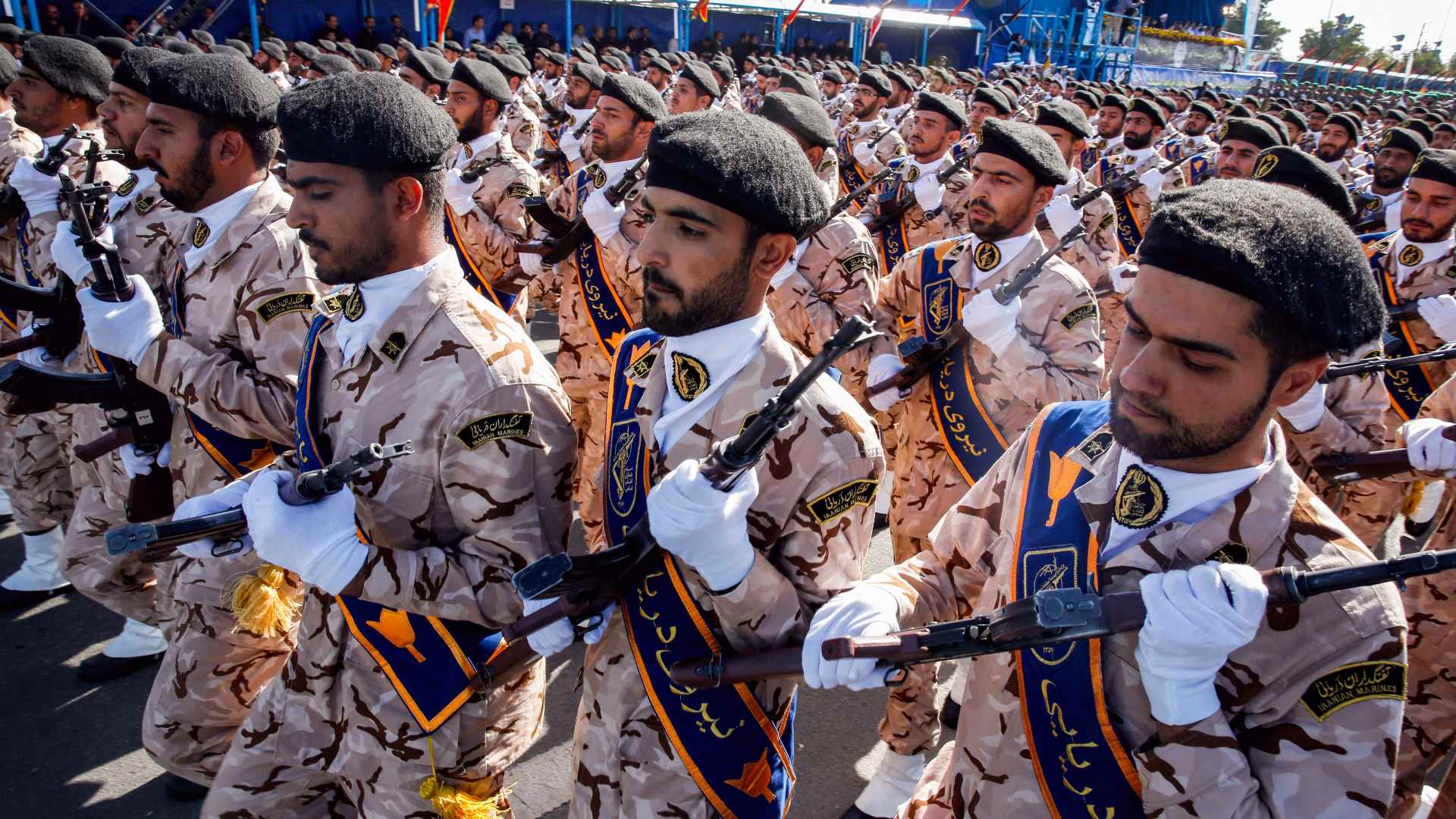
On Wednesday, Iran initiated a broad series of drone and missile strikes targeting multiple United States military installations scattered across the Middle East, launching the assault in direct retaliation for recent American military operations near the Strait of Hormuz, one of the world’s most strategically critical maritime chokepoints.
Iran’s highest joint military authority, the Khatam al-Anbiya Central Headquarters, confirmed the operation in an official statement distributed by the country’s state-run media outlets. The command emphasized that the attacks were a direct response to what it labeled unprovoked American aggression against targets in southern Iran. The statement also carried a stark warning to Washington: if the United States continues its military actions against Iranian soil and interests, Iran will respond with even more extensive and destructive strikes in the future.
According to the Islamic Revolutionary Guard Corps (IRGC), Iran’s elite military force, the operation specifically targeted the regional headquarters of the US Fifth Fleet based in Bahrain, alongside multiple US military facilities located in Kuwait and Jordan. The IRGC also claimed that the strike campaign successfully hit 21 distinct US targets across the Middle East, encompassing both key air bases and naval installations.
Footage obtained by Middle East Eye, an independent regional news outlet, showed a bright flash of light near the US military compound in Bahrain timed to coincide with the reported attacks. However, US officials have pushed back against Iran’s claims of a successful operation, downplaying any major damage or accurate hits. A senior anonymous official speaking to the Financial Times confirmed that multiple Iranian missiles and drones were launched toward targets in Bahrain and Kuwait, but stressed that there was no conclusive evidence that any of Tehran’s projectiles hit their intended objectives. The official further added that there is no proof any US facility in Jordan was damaged or struck during the assault.
This is not the first time US officials have downplayed the impact of Iranian attacks on American interests; in past incidents, initial official statements minimizing damage have later been contradicted by independent media reports revealing extensive destruction to infrastructure. Local authorities across the region offered conflicting details on the attack’s outcome. Jordanian officials confirmed that their national air defense systems successfully intercepted multiple incoming projectiles launched by Iran. Meanwhile, emergency response protocols were activated in both Bahrain and Kuwait, and air raid sirens sounded across populated areas of the Gulf states as the attack unfolded.
The Iranian strike campaign came just hours after the United States carried out what it described as defensive self-defense strikes against Iranian military infrastructure. The American strikes were launched in response to the downing of a US Apache attack helicopter over the Strait of Hormuz. Local Iranian media reported multiple explosions across sites in southern Iran, including Qeshm Island, Bandar Abbas, Jask, and Sirik. The IRGC released a statement noting that the American strikes damaged a telecommunications tower in the coastal city of Sirik and destroyed two large water storage tanks at the targeted site, but inflicted no other major damage.
US defense officials clarified that the selection of targets for Wednesday’s American strikes was designed specifically to limit civilian casualties while reducing Iran’s capacity to threaten international commercial shipping and US military assets operating throughout the Gulf region. The escalating exchange of strikes has raised fresh concerns across the international community about a broader regional conflict unfolding amid already heightened tensions between Washington and Tehran.