The Australian Football League (AFL) has locked in a concrete timeline to deliver long-awaited upgrades to its contentious goal review system, with high-performance new cameras set to launch before this year’s final series gets underway. AFL football chief Greg Swann confirmed the rollout plans in a recent media interview, addressing a string of controversial high-profile decision errors that have sparked widespread debate around the current system throughout the 2024 season.
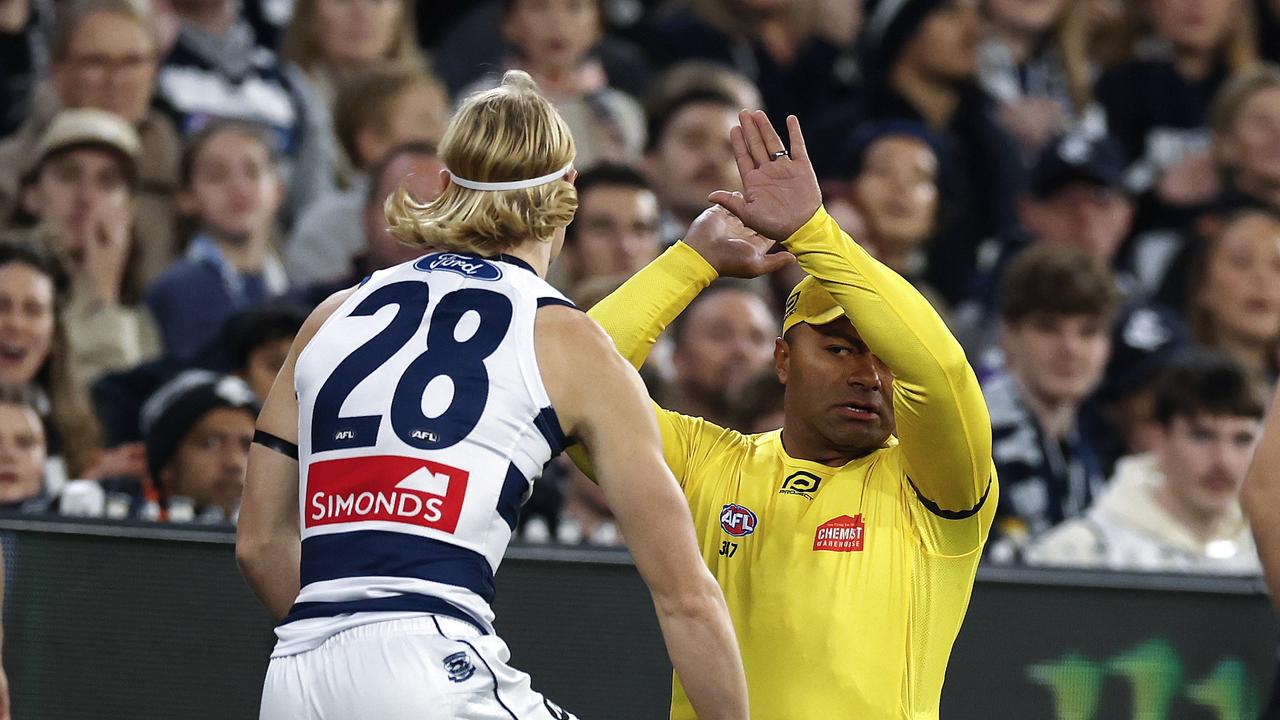
Two major incidents have put the AFL Review Centre (ARC) under intense public and fan scrutiny this year. First, a delayed free kick call involving St Kilda player Rowan Marshall prompted early incremental adjustments to protocols. Just weeks later, umpires failed to detect a clear goal scored by Geelong’s Ollie Dempsey, a mistake that amplified calls for systemic overhauls. Swann noted that the Dempsey non-call stemmed more from umpires failing to initiate a full review than a flaw in the ARC infrastructure itself, but he nevertheless acknowledged the urgent need for technical upgrades to the current camera setup.
“By August, ahead of the final round of regular season matches and leading into finals, we will roll out an entirely new suite of cameras,” Swann told SEN radio. “This upgrade should deliver faster processing and far sharper image definition, which will make the whole review process more efficient.”
Swann explained that common public criticism of the ARC often centers on how long reviews take, but added that the current system’s limitations are rooted in outdated hardware. With only 10 to 11 cameras currently covering goal mouth action, review officials often need to cross-check multiple angles to reach an accurate decision, a process slowed by the current hardware’s 50 frames per minute shutter speed. The upgraded cameras will boost that rate to 250 frames per minute, enabling clearer, faster analysis of contested goal line scenarios.
“I’ve looked at plenty of plays where one angle clearly shows the ball was touched, while another shows it missed by more than a meter,” Swann explained. “Getting the call right always takes time, but the new faster cameras will cut down that delay significantly. We may even introduce a formal time cap for reviews down the line, but one thing is certain: we don’t want reviews stretching out to 50 seconds anymore.”
Beyond the ARC upgrades, Swann also addressed growing scrutiny around umpiring decision-making, including a recent high-profile incident where Carlton forward Harry McKay took 41 seconds to complete a late-game set shot against Essendon, well in excess of the nominal 30-second rule. The incident reignited debate around how the game’s shot clock rules should be enforced.
Swann explained that current protocol requires players to begin moving toward the ball within 30 seconds of being given the all-clear to take a set shot. In McKay’s case, the forward initiated his walk at the 29-second mark before taking extra time to line up his kick from 60 meters out, finishing with a total time of 41 seconds. Swann acknowledged that an early hurry-up call may have been warranted, but added that enforcement ultimately falls under individual umpire discretion.
Crafting a one-size-fits-all hard rule for set shot timing has long proven tricky for the league, Swann noted, especially when accounting for variable game conditions. In windy venues like Tasmania or Ballarat, or for elite long-distance kickers like McKay, forcing a player to rush a shot from outside 50 meters can have an unfair impact on game outcomes. “It’s a really nuanced issue. This is the first blatantly obvious instance of this scenario we’ve had this year, so we’re not rushing to make knee-jerk changes. But we will continue monitoring similar situations for the rest of the season to decide if further adjustments are needed,” he said.
Despite the ongoing scrutiny of key decisions, Swann reaffirmed the league’s confidence in the overall quality of umpiring across the 2024 competition.