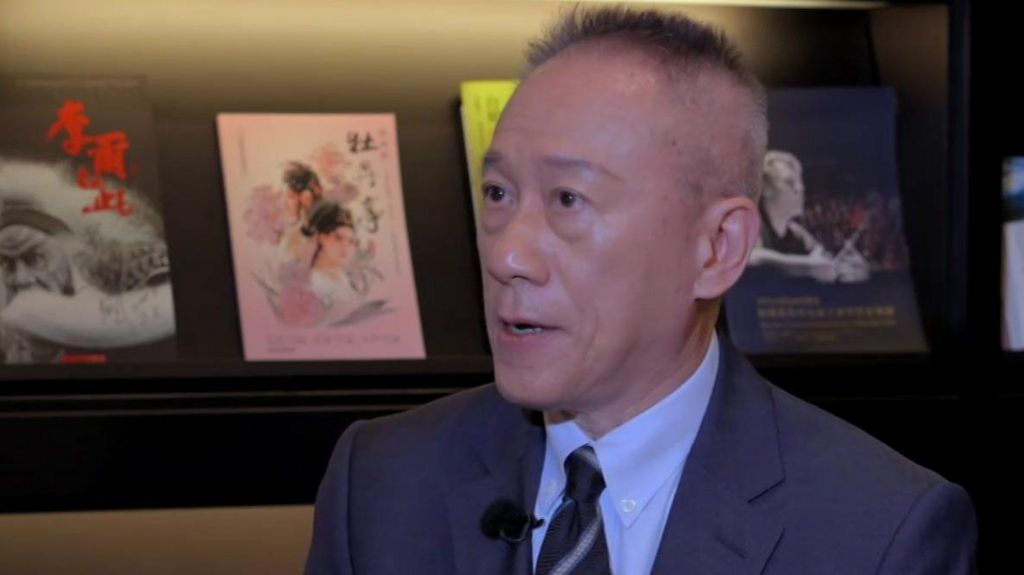
In a rare, exclusive interview held at the Taiwan Semiconductor Manufacturing Company (TSMC) headquarters in Taiwan’s Hsinchu Science Park, the top financial leader of the world’s most advanced chipmaker opened up about a range of pressing industry and geopolitical issues that are shaking global tech and economic sectors.
As the dominant producer of cutting-edge semiconductors designed by industry leaders including Nvidia, AMD and Apple, TSMC’s every decision ripples across global supply chains. During the conversation with the BBC on the sidelines of the firm’s annual shareholder meeting, chief financial officer Wendell Huang confirmed that persistent global inflation has driven up operational costs across the company’s business, and he declined to rule out future price increases for its manufacturing services. Any pricing adjustment from TSMC would have far-reaching consequences: it would likely lift costs for AI infrastructure providers, and eventually translate to higher price tags for consumer electronics ranging from smartphones to laptops.
Huang, however, moved quickly to reassure markets and clients that the firm would not impose extreme, sudden hikes such as four- or five-fold increases. He argued that TSMC’s pricing has always been aligned with its unmatched industry position, citing the company’s long-held technology leadership and proven manufacturing excellence as justification for its value proposition. The company’s chairman and CEO CC Wei echoed this framing earlier to shareholders, noting that he would support a price increase in line with moves already made by competing chip manufacturers.
The interview also tackled two of the most debated questions surrounding TSMC and the global semiconductor industry right now: the sustainability of the AI boom, and the drivers behind the firm’s ongoing global expansion. Amid recent stock market volatility that saw sharp sell-offs in AI and chip stocks across the U.S. and Asia, fueled by investor worries that inflated valuations signal an AI bubble, Huang pushed back firmly on those concerns. He said TSMC maintains strong confidence in the long-term AI megatrend, based on direct conversations with its clients and end-users, most of which are large-scale hyperscale cloud and technology firms. These companies hold strong balance sheets and substantial financial resources, Huang noted, meaning they can sustain continued investment in AI infrastructure for years to come.
On the geopolitical front, TSMC sits at the heart of escalating U.S.-China tensions over Taiwan, the self-governed island that Beijing claims as its territory and which produces over 90% of the world’s most advanced semiconductors. At a recent summit between U.S. President Donald Trump and Chinese President Xi Jinping, Xi warned that mishandling the Taiwan issue could push relations between the two superpowers into an extremely dangerous situation. Washington has spent years pressuring leading chipmakers including TSMC to expand production capacity on U.S. soil to shore up resilient critical supply chains, leading many analysts to frame TSMC’s expansion projects in the U.S., Germany, Japan and Taiwan itself as a response to geopolitical pressure from major world powers.
Huang rejected this framing outright in the interview. He emphasized that TSMC’s decision to build new capacity outside of Taiwan is driven entirely by customer demand, not government requests from Washington, Beijing or any other national government. When it comes to the most cutting-edge chip manufacturing, however, Huang was unambiguous: advanced production will remain centered in Taiwan for the foreseeable future. He noted that building a complete semiconductor manufacturing ecosystem from scratch in the U.S. would take five to 10 years, or even longer — a timeline that directly complicates the ambitions of U.S. industrial policy, which has incentivized TSMC’s $165 billion investment in its Arizona fabrication operations.
Even with the positive long-term outlook on AI, Huang acknowledged that TSMC is facing unprecedented pressure to scale up production fast enough to meet exploding client demand for AI chips. TSMC’s share price has surged dramatically over the past 12 months as AI demand boomed, but the company is still racing to keep up. “We’re doing everything we can, wherever we can, and however we can,” Huang said. “The customers ask us to grow so much, but all we can do is try to grow as fast as possible. So far, still trying.”