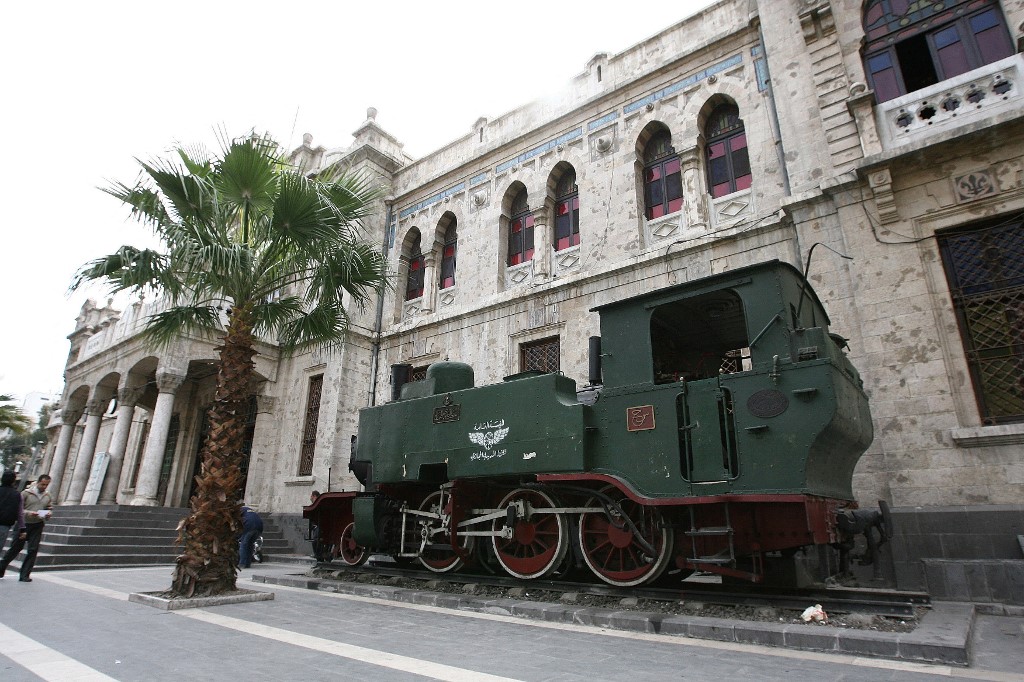
On Tuesday, Turkey and Saudi Arabia formalized a new step in deepening bilateral infrastructure collaboration by signing two distinct memorandums of understanding focused on expanding railway development and cross-border connectivity. This agreement marks Saudi Arabia’s entry into the multi-country project to revive the centuries-old Hejaz Railway, a historic transport route that will link Turkey, Syria, Jordan and Saudi Arabia once completed.
The deal was signed during an official working visit by Turkish Transportation Minister Abdulkadir Uraloglu to Riyadh, where he held in-depth strategic talks with his Saudi counterparts. At the signing ceremony, Uraloglu emphasized the urgent priority of securing unbroken trade and supply chain operations amid the heightened geopolitical uncertainty currently roiling the Middle East. “At this sensitive time our region is going through, the uninterrupted functioning of trade and the logistics chain has become more critical than ever. In this period, removing the obstacles facing the transportation sector is a strategic necessity,” he stated. The minister also outlined Ankara’s broader strategic goal: to reactivate dormant overland transport routes running through Syria, Jordan, and Iraq, opening up new corridors for regional trade.
Uraloglu confirmed that two successful trial runs of the proposed route, starting from Turkish territory and traversing Iraq to reach Saudi Arabia, have already proven that the corridor is logistically and commercially feasible. Turkey first publicly announced its ambition to restore the Hejaz Railway last year, and has steadily advanced the project through diplomatic and bilateral agreements in the months since.
The long-term vision for the revived railway extends far beyond the original historic route, with planners envisioning an extension all the way to Oman and the Indian Ocean coast. The core strategic objective of the project is to create a major alternative trade corridor that bypasses the Strait of Hormuz, one of the world’s most congested and geopolitically vulnerable chokepoints for global energy trade. If the project is fully realized, Turkey is positioned to emerge as a central transit hub connecting Gulf states to European markets, a regional railway logistics base, and a critical junction where both energy and commercial trade corridors converge.
This latest bilateral deal follows a broader trilateral agreement signed in April between Turkey, Syria, and Jordan that established a comprehensive framework for boosting regional connectivity, integrating national transportation systems, and streamlining cross-border movement of goods and people. That earlier accord covers cooperation across all modes of transport—road, rail, maritime, air, and multimodal logistics—and addresses key areas including infrastructure investment, alignment of technical standards, digitalization of transport systems, workforce capacity building, private sector engagement, and coordinated management of cross-border corridors.
The original Hejaz Railway was first launched as an ambitious infrastructure vision in 1900 by Ottoman Sultan Abdulhamid II, who sought to connect Istanbul, the seat of the Ottoman Empire, directly to Mecca, one of Islam’s holiest sites located in what is now western Saudi Arabia. The railway takes its name from the Hejaz region of the Arabian Peninsula, which hosts both Mecca and Medina, the two holiest sites in Islam. Remarkably, the project was built at impressive speed for the era and funded entirely by donations from Muslim communities across the world, mixing voluntary contributions with mandatory religious levies. At its peak operation, the main line stretched from Istanbul through Damascus all the way to Medina, with a spur branch connecting the network to the port of Haifa in historic Palestine.