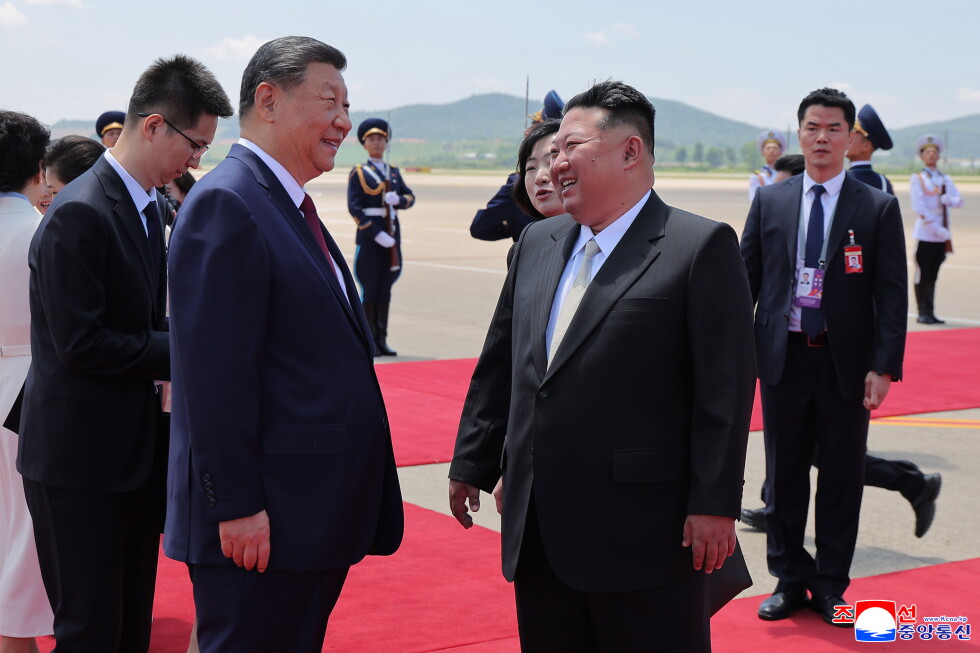
In a high-profile diplomatic trip that marks Chinese President Xi Jinping’s first visit to North Korea in seven years, the Chinese leader concluded his two-day stay in Pyongyang and returned to Beijing on Tuesday, capping a series of engagements that reaffirm the long-running bilateral alliance between the two neighboring nations. Xi arrived in the North Korean capital on Monday, and within hours held a formal summit with North Korean leader Kim Jong Un, according to official statements released by both countries’ state media outlets.
During the meeting, Xi outlined China’s readiness to deepen collaborative work across a broad spectrum of sectors, including cross-border trade, agricultural development, infrastructure construction and technological exchange. For his part, Kim characterized the preservation of China-North Korea friendship as the nation’s “most important top-priority strategic work,” signaling North Korea’s commitment to advancing the bilateral relationship. This meeting marked the first interaction between the two leaders since their September gathering in Beijing, setting the stage for a series of symbolic and substantive engagements on the second day of the visit.
On Tuesday, Xi and Kim traveled together to the North Korea-China Friendship Tower, a monument dedicated to Chinese troops who fought alongside North Korean forces during the 1950–1953 Korean War. The two leaders jointly emphasized the need to carry forward the two countries’ shared traditional friendship and their shared spirit of resistance against the United States, Chinese state media reported. Following the tower visit, the pair toured a training facility operated by North Korea’s ruling Workers’ Party and planted a fir tree, a symbolic gesture meant to represent the steady growth of bilateral ties. After attending an official luncheon and a formal farewell ceremony, Xi departed Pyongyang for Beijing.
Beyond the public displays of camaraderie, independent analysts point to deeper strategic calculations driving both leaders’ agendas for the summit. In recent years, North Korea has shifted much of its foreign policy focus toward deepening alignment with Russia, a move that has eroded China’s historical exclusive influence over Pyongyang. Experts note Xi’s trip was largely aimed at rebuilding that influence, while Kim stood to gain tangible economic and political concessions from China in exchange for reaffirming closer ties.
A notable absence from official summaries of the summit has been any discussion of North Korea’s controversial nuclear weapons program, a longstanding sensitive security flashpoint for the Indo-Pacific region. During Xi’s 2019 visit to Pyongyang, the Chinese leader explicitly stated Beijing was willing to play a constructive role in advancing denuclearization of the Korean Peninsula. This time, however, neither Chinese nor North Korean state media made any mention of the nuclear issue being raised during talks.
This silence on nuclear matters represents a significant diplomatic win for Kim, according to analysts, who have long sought international recognition of North Korea as a legitimate nuclear weapons state— a status he intends to leverage to push for the lifting of crippling international economic sanctions. Ban Kil Joo, an assistant professor at the Korea National Diplomatic Academy in Seoul, noted that China’s failure to raise denuclearization opens the door to the interpretation that Beijing is moving beyond mere acquiescence to North Korea’s nuclear ambitions, and is effectively signaling potential acceptance of Pyongyang’s nuclear status. In exchange for this diplomatic flexibility, Ban added, North Korea has reaffirmed its unwavering support for China’s “one-China” policy on the Taiwan issue, a key diplomatic priority for Beijing.
Kim Gyubeom, an analyst with the Seoul-based Institute for National Security Strategy, framed China’s current approach as a deliberate “managerial approach” to its relationship with Pyongyang. Under this framework, China neither gives full, unqualified backing to North Korea nor imposes harsh, public pressure on the regime, instead prioritizing steady strategic communication and maintaining overall stability on the Korean Peninsula. Rebuilding China’s influence over North Korea would also grant Xi additional diplomatic leverage in future interactions with U.S. President Donald Trump, who has repeatedly stated he is open to restarting formal diplomatic talks with Kim.
In recent years, regional powers have increasingly questioned the extent of China’s remaining influence over North Korea, as Pyongyang has deepened its economic and military support for Russia’s full-scale invasion of Ukraine. North Korea has provided Russia with large shipments of ammunition and troops to support its war efforts, in exchange for economic aid and military technical assistance, a shift that has reshaped the geopolitical dynamic of Northeast Asia.