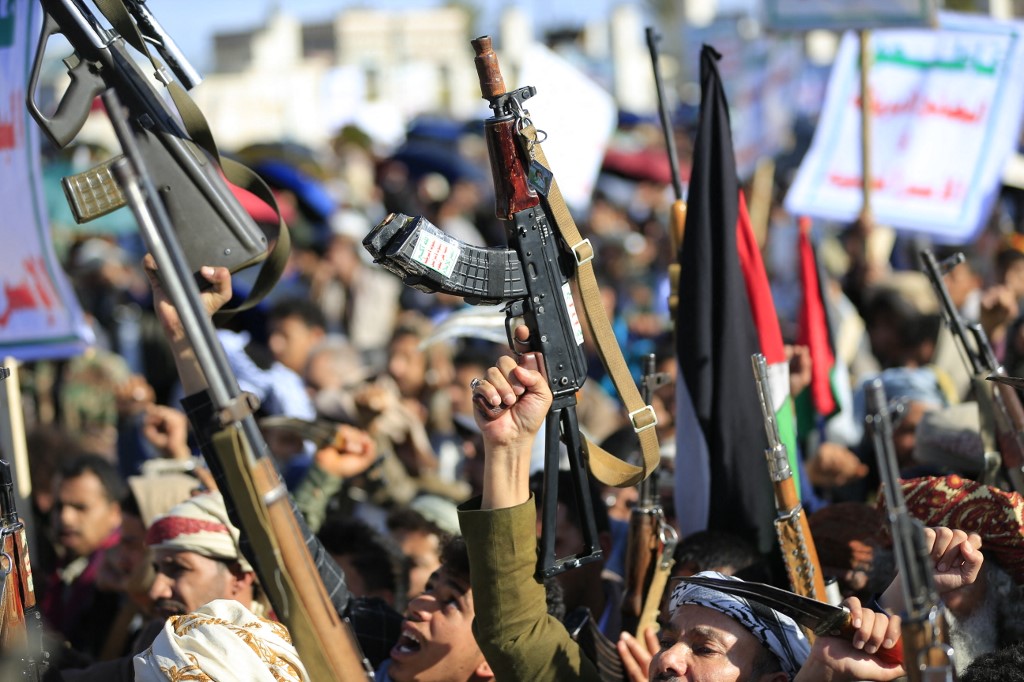
On a tense Monday in the Middle East, Yemen’s Houthi movement (officially Ansar Allah) made two sweeping announcements that sent ripples across the region: the group had launched a volley of missiles toward Israel, and it was imposing a full ban on all Israeli-flagged or affiliated maritime traffic traversing the Red Sea. Israeli media later confirmed the attack, noting that all incoming projectiles had been successfully intercepted by Israeli air defenses.
This formal declaration marks the Houthi’s official re-entry into open conflict against Israel, part of the Iran-aligned bloc known as the Axis of Resistance. The group has pledged to ramp up its operations until Israel halts military actions against Palestinian groups, Lebanese militant movement Hezbollah, and Iranian targets across the region.
Hours after the Houthi statement, Esmail Qaani, commander of the Islamic Revolutionary Guard Corps’ elite Quds Force, doubled down on the bloc’s unified posture. In a public address on Monday, Qaani announced that a new coordinated “security belt” of the Axis of Resistance would stretch from the Strait of Hormuz at the entrance of the Persian Gulf all the way to the Bab al-Mandab strait at the southern mouth of the Red Sea. He praised the Houthi’s latest actions as clear proof of deepening coordination among Iran-aligned groups, warning that the entire Resistance Front would respond collectively to any Israeli or American military moves in the region, and that additional factions would join the fight if escalation continues. “From the Strait of Hormuz to Bab al-Mandab and from the Persian Gulf to the Red Sea, a new security belt of the Resistance will be established,” Qaani said, adding that continued “aggression” from Israel and its allies would trigger a broader regional response.
Iran had already issued a stark warning the prior week: if Israel does not end its ongoing regional military campaign, the bloc will escalate by closing the Bab al-Mandab strait, a critical global maritime chokepoint that borders southeastern Yemen and carries roughly 10% of global maritime trade and 12% of global oil shipments. As the group that already controls most of Yemen’s Red Sea coastline and has targeted Israeli, American, and British-affiliated shipping in the region since 2023, the Houthis are the only faction in the bloc with the capacity to enforce such a closure.
The Houthi’s decision to re-escalate has exposed deep divisions within Yemeni society, where a decade of brutal civil war has already left millions grappling with humanitarian catastrophe and displacement. For some Yemenis, like 48-year-old Sanaa resident and independent food distributor Ahmed Al-Faqeeh, the move is a necessary and honorable stand in solidarity with co-religionists under attack across Palestine, Lebanon, and Iran.
Al-Faqeeh, who has no affiliation with the Houthis or any other Yemeni political faction, says the ongoing violence against Palestinian and allied groups demands a unified response from all Muslims. “It isn’t in accordance with Islam or humanity to see our brothers being subjected to genocide and remain silent,” he told Middle East Eye in an interview. “All Muslim countries have a duty and must participate in this fight against the primary enemy of Muslims, Israel.” Al-Faqeeh has already taken personal action, boycotting all goods from companies linked to Israel, and says he is proud his country has chosen to take a public stand. Even after experiencing the 2025 Israeli air strikes on Sanaa that killed multiple senior government officials and civilians in retaliation for prior Houthi operations, Al-Faqeeh says past losses should not deter the group from continued action. He points to the 2023 Houthi Red Sea shipping campaign, which included the seizure of the Israeli-affiliated cargo ship Galaxy Leader and its 25-member crew (who were ultimately released in January 2025 via Omani mediation) as proof that Yemeni action has had an outsized impact that other regional nations have failed to match. Al-Faqeeh added that Yemen has held a consistent opposition to Israel since the 1973 October War, when the former People’s Democratic Republic of Yemen collaborated with Egypt to enforce a Red Sea naval blockade on Israel targeting oil and cargo shipments bound for the southern Israeli port of Eilat.
But for many other Yemenis, who have already lived through 11 years of civil war that has killed an estimated 377,000 people and displaced more than 4.5 million, the prospect of dragging Yemen into a wider regional conflict is a nightmare they cannot bear. Ahmed Daghez, a 39-year-old bus driver who travels regularly between Houthi-held Sanaa and government-controlled Taiz, has seen the human cost of war firsthand: his childhood home in Taiz now sits in an active frontline conflict zone, and he has not been able to access it for years. “Eleven years of internal war is more than enough. The damage that has already occurred will take decades to rebuild, so we don’t need to be involved in a regional war that could have an even worse impact on us,” Daghez said. He still remembers the terror of the 2025 Israeli air strikes on Sanaa, and fears Israel could expand its attacks on Yemeni territory if the Houthis continue their campaign. “Wars bring nothing good; it is simply a source of misery. If the Houthis escalate further in this war, they could drag Yemen into a regional conflict that the country simply cannot afford,” he added.
Critics of the Houthi move go further, arguing that the group is acting as a proxy for Iranian regional interests rather than prioritizing the well-being of the Yemeni people. Mohammed Ali, a veteran Yemeni journalist, argues that the Houthis’ decision to re-escalate directly follows Iran’s threat to close the Bab al-Mandab, and that all key strategic decisions are made in Tehran, not Sanaa. “As a Yemeni, I don’t feel the Houthis care about us; they only care about their own interests. Iran helped them seize control of northern Yemen, and now they must serve Iranian interests,” Ali said. “The decision-making power is not in the Houthis’ hands, but in Iran’s. This was clearly reflected in the recent threats made by Iran.” Ali notes that the Bab al-Mandab has become an increasingly critical energy shipping route in recent months, as exports through Iran-controlled Strait of Hormuz have dropped sharply amid ongoing regional tensions. He predicts that the Houthis will follow Iran’s lead and announce a temporary pause on Red Sea attacks in the coming days, pointing out that even after Iran announced a temporary halt to its own strikes against Israel on Monday morning, the Houthis launched another attack overnight. Late Monday, the Israeli military confirmed it had intercepted a suspicious aerial target originating from Yemen over the southern city of Eilat. Separately, Saudi Arabia announced Monday afternoon that a ballistic missile launched from Yemen had landed in an unpopulated area near the Saudi-Yemen border, after veering off course while en route to another country in the region.