The 2026 FIFA World Cup, the first iteration of the expanded 48-team tournament, is just weeks away, with 78 of its 104 matches including the final hosted across U.S. cities. But for thousands of passionate fans from qualified nations across Africa, the Middle East, and beyond, the dream of cheering on their national teams inside a World Cup stadium remains out of reach, blocked by a web of restrictive U.S. visa policies, security-related service suspensions, and systemic barriers that have sparked widespread accusations of discrimination.
Iraqi football supporter Abdulla Adnan embodied this heartbreak long before the first kickoff. When Iraq secured only its second World Cup qualification in history in March 2026, the first since 1986, Adnan jumped at the once-in-a-generation opportunity. He immediately purchased tickets for Iraq’s group stage matches against Norway in Boston and France in Philadelphia, already imagining the roar of the crowd and the rush of seeing his national team compete on soccer’s biggest stage. “To go to a match, a stadium, a crowd, cheering, and see my team – that is worth the world to me,” Adnan said. “It’s a feeling that no other feeling can compare to.”
But what seemed like a done deal quickly unraveled when it came to securing a U.S. travel visa. Unexpectedly, Iraq is not included in the Trump administration’s current travel ban list, so Adnan’s barrier came from another source: in the wake of heightened regional tensions following the outbreak of the US-Israel conflict with Iran, the U.S. suspended routine consular visa services across Iraq over security concerns. Since all tourist visa applicants are required to complete an in-person interview, there is no way for Iraqi fans to apply for a visa within their own country.
Adnan’s solution? He spent hundreds of dollars traveling to neighboring Jordan to apply at the U.S. embassy in Amman. When he arrived for his scheduled appointment, however, consular staff turned him away immediately, informing him that non-Jordanian citizens could not process visa applications at that post. He considered traveling to Turkey to apply, but learned the wait for an interview could stretch to two weeks, a timeline he could not accommodate due to work and family commitments. In total, Adnan spent roughly $1,800 on match tickets and travel to Jordan, all for a visa application he never got to submit. He has since abandoned his dream of attending the tournament.
Adnan is far from alone in his struggle. A new analysis of travel and visa data from BBC World Service has found that fans from more than a quarter of the 48 qualified World Cup nations face outright travel bans, sharply tightened entry restrictions, or disproportionately high visa rejection rates that have put attendance out of reach for most supporters.
For fans from four qualified nations – Haiti, Iran, Senegal, and Ivory Coast – barriers stem directly from the Trump administration’s entry bans and enhanced visa restrictions, which bar citizens of these countries from accessing the B1/B2 visitor visas U.S. authorities recommend for World Cup fans. Strict immigration controls and a crackdown on undocumented migration were a central plank of Trump’s 2024 re-election campaign, and administration officials defend the rigorous system as a necessary measure to manage cross-border population flows and national security risks.
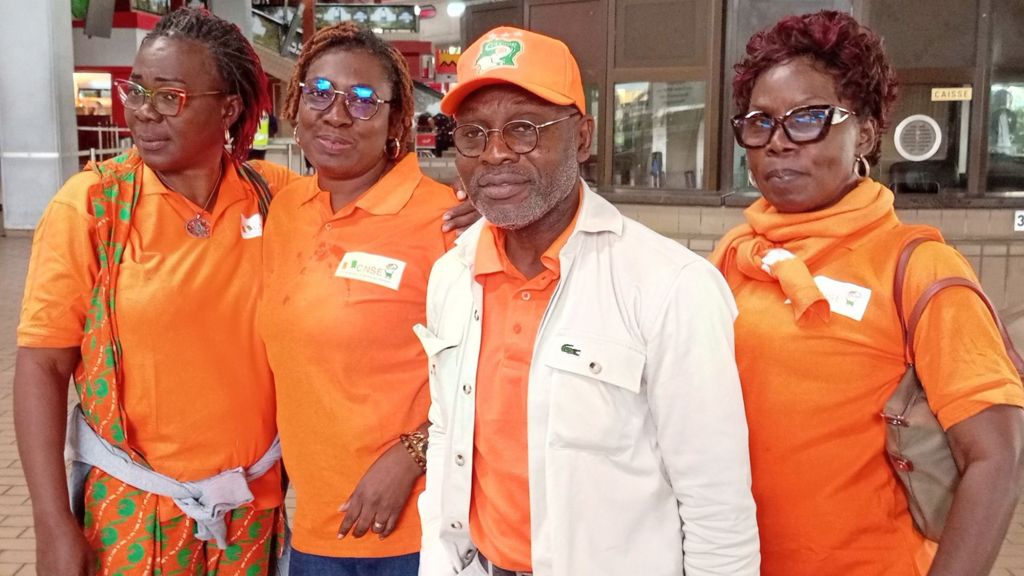
But fans and fan association leaders say the rules amount to open racial and geographic segregation. Julien Kouadio Adonis, a leader of Ivory Coast’s official fan association the National Committee for the Support of the Elephants, says his group scrapped all plans to send a delegation of supporters to the tournament this year after reviewing the visa rules. “It’s a form of segregation that doesn’t dare speak its name, but the proof is there,” Adonis said. “No European country has faced this kind of restriction. Why Africa?”
Adonis added that a host nation that refuses to welcome supporters from all qualified teams does not deserve to host the world’s biggest sporting event. “Football is a spectacle and a spectacle needs people watching,” he noted.
Systemic inequities are baked into the U.S. visa waiver program, which grants pre-approved, visa-free entry to citizens of 42 mostly wealthy nations, none of which are located in Africa. For fans from visa-required countries, the recommended B1/B2 tourist visa costs $185 per applicant, requires an in-person interview, and demands that applicants prove they will depart the U.S. after the tournament and can cover all travel costs.
In a partial concession to fan outcry, the U.S. announced in May that it would drop the requirement for cash deposits of up to $15,000 for fans from five qualifying African nations – Algeria, Cape Verde, Ivory Coast, Senegal, and Tunisia – so long as they hold valid match tickets. Even with that change, however, fans face overwhelming odds of rejection.
Senegalese fan Aliou Ngom, who attended the 2018 World Cup in Russia and the 2022 tournament in Qatar, has already decided not to even apply for a visa. For Ngom, one of the greatest strengths of the World Cup is its ability to bring global cultures together inside stadiums, but he sees little point in wasting time and money on an application he expects to be rejected, following a pattern of visa denials that led to the cancellation of a U.S. training camp for Senegal’s women’s national basketball team last year.
BBC analysis of U.S. State Department data from October 2024 to September 2025 found that citizens of 11 qualified nations face an overall B1/B2 visa rejection rate higher than 40% – well above the global average of 34% for all visitor visa applicants. The 11 countries include Ecuador, Egypt, Haiti, Algeria, Uzbekistan, Cape Verde, Jordan, Iran, the Democratic Republic of the Congo, Ghana, and Senegal.
These high rejection rates put fans in an impossible position: buy tickets in advance for hundreds or thousands of dollars, risking total loss if their visa is denied, or wait for visa approval and risk missing out on tickets altogether. FIFA does allow ticket holders to resell unused tickets on its official platform for a small fee, and launched the FIFA Pass system to prioritize ticket holders for earlier visa interview slots. Immigration attorney Celine Atallah, who runs a practice near Boston, called FIFA Pass a positive step to streamline scheduling, but noted it does nothing to improve the odds of a visa being approved.
“The visa system is the invisible gatekeeper of the World Cup,” Atallah said. “Fifa can sell a ticket, but the US government decides who gets a visa, and CBP [Customs and Border Protection] decides who actually enters.” Even with an approved visa, border officials retain the authority to deny entry to any traveler on arrival.
For Jordan, which qualified for its first ever World Cup in June 2025 after beating Oman in qualifying, 57% of all U.S. visa applications were rejected in the 12 months ending September 2025 – one of the highest rejection rates of any qualifying nation. Abu Kass, head of Jordan’s national football fan association, says he has yet to hear of a single Jordan-based fan who has successfully obtained a U.S. visa for the tournament. Kass himself brought more than 42 supporting documents to his visa interview in Amman, only to have his application rejected without explanation – U.S. authorities do not typically provide reasons for visa refusals.
“This World Cup is not ours,” Kass said. “It’s not for Arabs this World Cup, it’s for them. If the head of the fan association was refused, who will be accepted?”
In a statement to the BBC, a State Department spokesman said the administration was “prepared to welcome visitors from around the globe for the largest and greatest Fifa World Cup in history.” The spokesman noted that most overseas fans already do not need visas to enter the U.S., either because they are from visa-waiver countries, Canadian citizens, or already hold valid U.S. visas. “We will take the time necessary to ensure an applicant does not pose a risk to the safety and security of the United States,” the statement said, adding that all applications are adjudicated on a case-by-case basis after rigorous security vetting.
U.S. Department of Homeland Security officials have emphasized ongoing concerns over visa overstays, pointing to more than 538,000 overstay events between October 2023 and September 2024. Prior to the Trump administration’s expanded crackdown on undocumented migration, Pew Research Center estimated there were roughly 14 million undocumented immigrants residing in the U.S. in 2023.
While the U.S. hosts the vast majority of 2026 World Cup matches, co-hosts Canada and Mexico face their own barriers for traveling fans. Canada has not enacted country-wide travel bans, but recently introduced entry restrictions for nations affected by the 2026 African Ebola outbreak, which includes qualified nation the Democratic Republic of the Congo. Canada also requires biometric scanning for all visa applicants, but has no in-country scanning facilities for two qualified nations: Iran and Cape Verde. Canada’s overall visa refusal rate hit 54% in 2025, and does not publish disaggregated data by country or visa type.
Mexico, which does not publish official visa refusal data, requires all visa applicants to complete an in-person interview at an embassy or consulate. For eight qualified nations – Cape Verde, Democratic Republic of the Congo, Ivory Coast, Senegal, Uzbekistan, Bosnia and Herzegovina, Tunisia, and Iraq – Mexico has no diplomatic mission, leaving fans with no domestic path to apply for a visa, mirroring the issues Iraqi fans face with U.S. consular services.
For millions of passionate football fans who waited decades to see their nations qualify for the World Cup, the systemic barriers across the three host nations mean a once-in-a-lifetime opportunity has been lost before the tournament even begins.