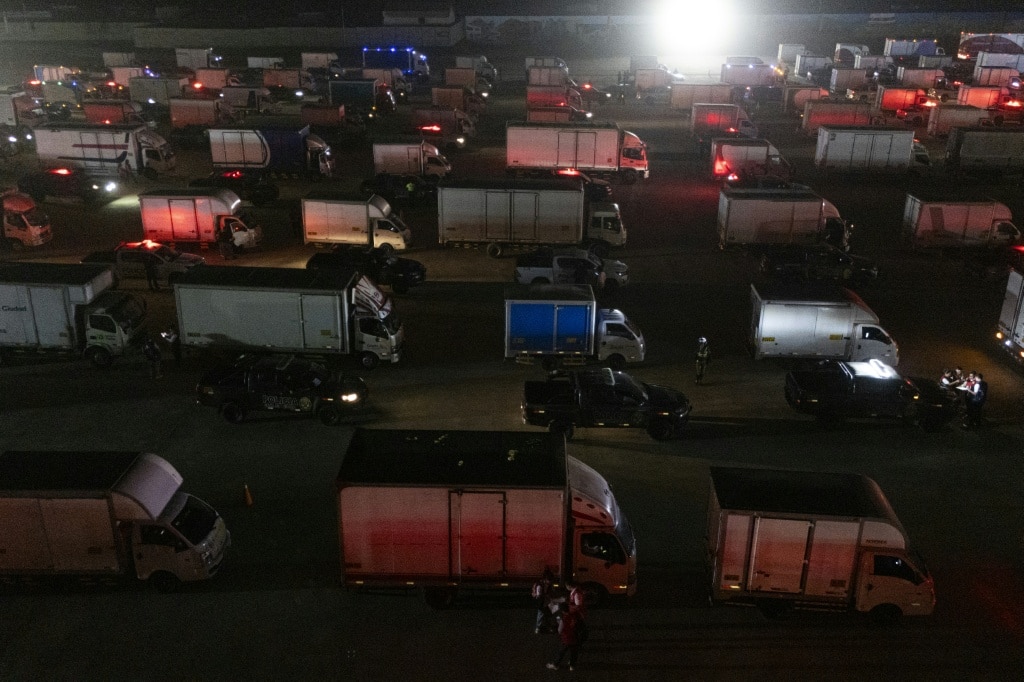
On Sunday morning, voting booths opened across Peru for a tightly contested presidential runoff that will shape the future of a country that has already seen eight leaders hold office over the past 10 years. With rising violent crime and persistent political instability top of mind for voters, roughly 27 million eligible Peruvians from the high Andes Mountains to the remote Amazon basin are casting ballots to select a chief executive for a five-year term.
The race pits two ideologically opposed candidates against each other: conservative Keiko Fujimori, a 51-year-old veteran who has run for the presidency four times previously, and 57-year-old leftist former cabinet minister Roberto Sanchez. Pre-election opinion polling has shown the pair neck-and-neck, with a late campaign surge from Sanchez fueled by overwhelming support from rural communities pushing him into the runoff after an unexpectedly strong first-round performance.
The lead-up to Sunday’s vote has been overshadowed by lingering institutional distrust and last-minute political drama. Peru’s first round of voting was delayed for weeks by crippling logistical failures and a slow vote count, deepening public skepticism of the country’s already fragile democratic institutions. A day before polls opened, a judge ruled that Sanchez must stand trial on charges of past financial irregularities tied to his political party, a decision that has sparked accusations of judicial interference in the election. If Sanchez wins the presidency, he will gain legal immunity, though he will still face a hostile right-leaning legislature that has already removed multiple sitting presidents from office in recent years.
For Fujimori, her campaign leans heavily on the complicated legacy of her late father, Alberto Fujimori, who served as president in the 1990s. While he is credited with stabilizing Peru’s economy and defeating the violent Shining Path Maoist insurgency, he died in prison while serving a sentence for corruption and crimes against humanity. Keiko Fujimori has positioned herself as part of a broader right-wing wave across Latin America, where U.S.-backed conservative candidates have claimed victory in recent elections in Bolivia, Chile, Ecuador and other regional neighbors. She has campaigned on hardline security pledges, promising to militarize the country’s prison system and expel irregular migrants with the same “force” her father used against insurgents in the 1990s.
Sanchez, a trained psychologist and sitting congressman, draws his political roots from the rural, working-class base of his political mentor, former president Pedro Castillo, who was removed from office and jailed in 2022 after he attempted to dissolve Congress. A visible marker of that connection is the wide-brimmed palm straw hat Sanchez always wears in public, a gift from Castillo; he has pledged to pardon Castillo if elected. Over the course of the campaign, Sanchez has moderated his early calls for “radical change” and distanced himself from radical ultranationalist factions, saying he seeks a “respectful” working relationship with U.S. President Donald Trump. He frames his opponent as a product of the powerful, corrupt political establishment controlled by a deeply partisan Congress that he labels a “dictatorship.”
Public frustration with the status quo runs deep across the country. Many voters say they see no ideal option on the ballot. “There is a lot of disorder and corruption, and we’re going to vote, as always, for the ‘lesser evil’,” Hugo Vasquez, a 67-year-old craft vendor in the capital Lima, told reporters. Early voter Evelyn Pazos, 43, echoed the widespread desire for a fair process, saying “I hope the entire process is carried out transparently, that the people’s vote is respected.”
For most Peruvians, the top issue driving their vote is public safety. Criminal gangs have expanded their control across much of the country, and official reports show extortion complaints have jumped ninefold over the past five years. “They kill, dismember, demand protection money. Enough!” said Roberto Lovaton, a 58-year-old Lima taxi driver. Sanchez has campaigned on rooting out systemic corruption within the police and judiciary, which he says has allowed criminal networks to flourish with impunity.
Economically, the next president will inherit a mixed picture: official indicators show steady GDP growth of more than 3% and low inflation, but 70% of all working Peruvians remain trapped in the informal sector with no labor protections or social benefits. Fujimori runs on a platform of neoliberal economic reform, strong protections for private property rights, and attracting increased foreign direct investment from the United States. Sanchez, meanwhile, has promised to raise minimum wages for working Peruvians but has sought to reassure nervous investors by committing to maintain an open market economy and preserve the independence of Peru’s central bank, two key pillars of the country’s current economic stability.
Political analysts warn that no matter the outcome, Peru is unlikely to see a quick end to its long-running instability. Neither candidate holds a majority in the 130-seat unicameral legislature, meaning the next president will be forced to build cross-party alliances to pass legislation and complete their full five-year term, a requirement that has sunk previous administrations. “Whoever wins will face questions of legitimacy if the result is close. That means more instability,” said analyst David Sulmont. The winner of the runoff will be sworn in to replace interim president Jose Maria Balcazar on July 28.