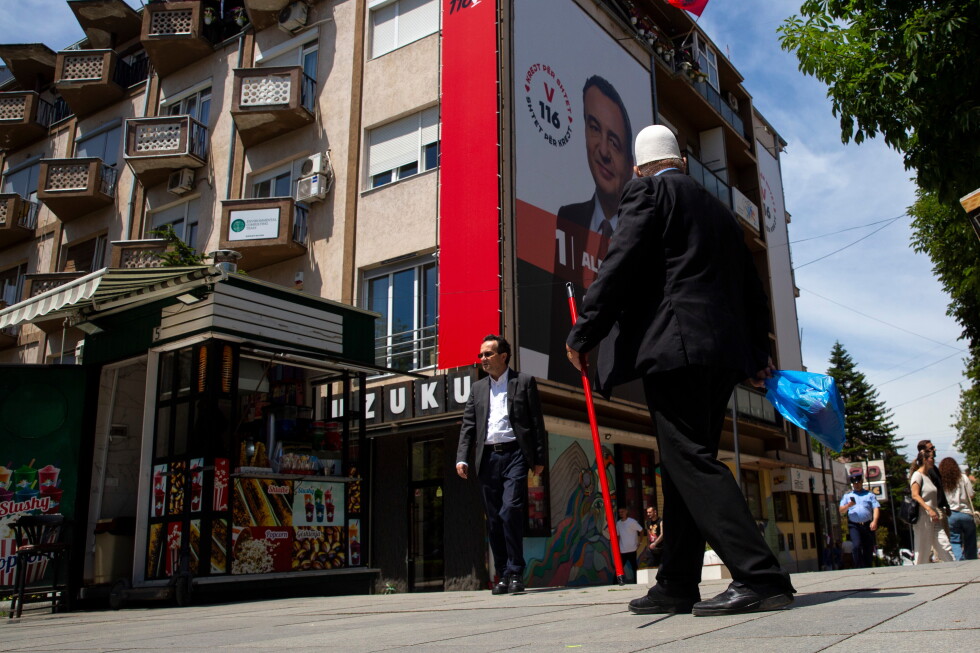
PRISTINA, Kosovo — Kosovo’s 2 million eligible voters cast their ballots at polling stations across the small Balkan nation on Sunday, heading to the polls for the third early parliamentary election in just a year and a half. This latest electoral cycle was called to break a months-long institutional gridlock that has stalled the country’s bid for European Union and NATO accession, leaving key policy and governance initiatives on hold.
The current crisis traces its roots back to an inconclusive February 2025 election that left Kosovo without a fully functional governing administration for most of 2025, forcing a second snap vote that December. The latest impasse emerged after the Balkan country’s major political blocs failed to reach an agreement by a March deadline to select a successor for former President Vjosa Osmani, triggering the requirement for another round of national voting.
This extended period of political instability has hit Kosovo’s already fragile economy particularly hard. The country, one of the youngest and poorest in Europe, has already grappled with severe headwinds from the global energy crisis and soaring fuel prices in recent years. The ongoing institutional vacuum has also blocked Kosovo’s access to much-needed European Union and international development funds, deepening economic strain for ordinary citizens.
Kosovo’s modern political history has been shaped by its 2008 declaration of independence from Serbia, a step that came nine years after the 1998-1999 Kosovo War, which concluded with a NATO bombing campaign that forced Serbian military forces to withdraw from the territory. While the United States and most EU member states recognize Kosovo’s sovereignty, Serbia continues to claim the region as its own, backed by key allies Russia and China. Both Pristina and Belgrade have been明确 told by EU officials that normalizing bilateral relations is a non-negotiable prerequisite for advancing their respective EU membership applications.
The current governing party, Prime Minister Albin Kurti’s center-left Vetevendosje movement, has held a solid parliamentary majority since December’s early election. However, Kosovo’s constitution requires presidential candidates to win the support of at least 80 of the 120 members of the national assembly, meaning no candidate can secure the position without cross-party consensus that has remained out of reach throughout the crisis.
Kurti and Vetevendosje now face sharp challenges from the country’s two largest opposition blocs: the Democratic Party of Kosovo and the Democratic League of Kosovo (LDK). The opposition has levied accusations that Kurti is aggressively pursuing unilateral control over all of Kosovo’s governing institutions, a charge the ruling party has rejected. Former President Osmani, who fell out with Kurti after he refused to support her bid for a second presidential term, is running for parliament in this election as part of the LDK’s opposition candidate list.
As key political actors have traded blame for the ongoing deadlock, widespread frustration has bubbled up among Kosovo’s electorate. Voters across the country have repeatedly expressed that they want political leaders to set aside disagreements to focus on urgent priorities: boosting economic growth, raising living standards, and expanding access to jobs and public services, rather than being stuck in repeated cycles of electoral conflict.
Political analysts broadly agree that the outcome of Sunday’s vote is unlikely to deliver a major shakeup compared to December’s election, with few signs of a dramatic shift in voter support that would break the current balance of power between ruling and opposition blocs. Ahead of voting, European Council President António Costa used an official visit to Pristina last week to deliver a clear message: Kosovo’s political leaders must end the stalemate and unify around the shared national goal of EU integration to move the country forward.