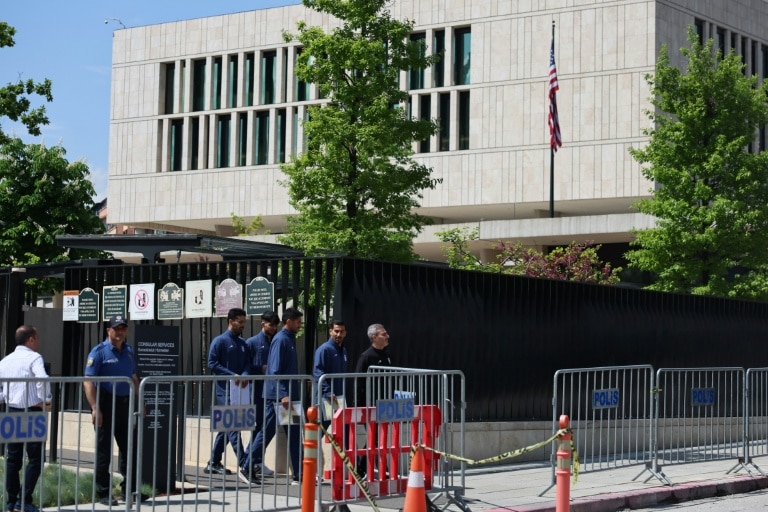
A fragile months-long truce between the United States and Iran collapsed into fresh cross-border strikes on Friday, raising new fears of a wider regional conflict just as Washington granted entry visas to Iran’s national men’s football squad for the 2026 FIFA World Cup co-hosted by the US, Canada and Mexico.
The ceasefire, which has held since April 8, was implemented nearly 100 days after coordinated US and Israeli strikes eliminated Iran’s top military and political leadership. For weeks, tense, roundabout negotiations riddled with threats and intermittent violence have failed to produce a permanent peace agreement or secure the reopening of the Strait of Hormuz, the world’s most critical chokepoint for global oil and natural gas shipments.
Tensions boiled over Friday when US Central Command (CENTCOM) announced it had first downed four Iranian drones headed toward the Strait of Hormuz, then launched targeted strikes on Iranian coastal radar sites located in Goruk and on Qeshm Island. In a public statement, CENTCOM emphasized the attack drones posed an immediate threat to commercial maritime traffic passing through the strait, and that the radar strikes were a defensive measure to disrupt future hostile actions by Iran.
Within hours of the US strikes, air raid sirens blared across Kuwait and Bahrain, two Gulf Arab states that host key US military installations and are longstanding Washington allies. Agence France-Presse correspondents on the ground in both countries reported hearing loud explosions.
Early Saturday local time, Iran’s Islamic Revolutionary Guard Corps (IRGC) confirmed it had launched a retaliatory missile strike against what it called “enemy bases in the region”, framing the US operation as an “invasion” of Iranian territory near Sirik and Qeshm Island. Iranian state broadcaster IRIB quoted IRGC officials saying the retaliatory strike was a direct response to the US incursion.
CENTCOM later clarified that Iran had fired seven ballistic missiles toward targets in Kuwait and Bahrain. Six of the missiles were intercepted and destroyed by US and allied air defenses, while the seventh missed its intended target entirely. The command confirmed there were no reported casualties among US personnel, and outright rejected Iranian claims that the strike had damaged the headquarters of the US 5th Fleet, based in Bahrain.
This sharp escalation of hostilities comes even as the US moved forward with a long-awaited concession to Iran: granting entry visas for members of its national football team ahead of the World Cup. On May 21, Iranian players and delegation members submitted their visa applications at the US Embassy in Ankara, Turkey, and US Ambassador to Turkey Tom Barrack confirmed the approvals, noting “sports transcends borders, and we look forward to welcoming competitors and fans from around the world.”
Not all members of the Iranian delegation have secured entry, however. Iran’s semi-official Fars News Agency reported that visas are still pending for a number of technical and executive staff members. An unnamed senior US administration official added in a statement that Washington would not allow the team to exploit the visa process to infiltrate terrorists into the US under false cover.
The Iranian team is scheduled to depart Turkey for Spain on Saturday, before traveling on to its pre-tournament base camp in Mexico, where it is expected to arrive Sunday.
The latest exchange of fire comes amid a broader breakdown in diplomatic efforts to turn the temporary ceasefire into a lasting peace deal. The ongoing conflict has already roiled global energy markets and amplified domestic political pressure on US President Donald Trump ahead of upcoming midterm elections.
In comments to CNN Friday, Mohsen Rezaei, a military adviser to Iranian Supreme Leader Ayatollah Mojtaba Khamenei, said negotiations were at a complete deadlock, and called on Trump to unlock $24 billion in Iranian assets frozen by Western sanctions as a confidence-building measure. During an interview with NBC News Friday, Trump acknowledged that Iran still retains roughly 21 to 22 percent of its original missile stockpile, an increase from the 18 percent figure he cited earlier in May, contradicting previous US administration claims that Iran’s military capacity had been permanently crippled.
The conflict has also spilled over into Lebanon, which was dragged into the wider war when Iran-backed Hezbollah launched an attack on Israel on March 2. Following the collapse of a proposed truce between Israel and Hezbollah, Lebanese Prime Minister Nawaf Salam issued a blunt public appeal to Iranian leaders Friday, urging them to end interference in Lebanese affairs. “Have mercy on our south, stop treating it and its people as merely a bargaining chip,” Salam said during a press conference. “We are the people of a sovereign nation that refuses to serve as an open battlefield for their wars.”
Early Saturday, Iranian Foreign Minister Abbas Araghchi pushed back against similar criticism from Lebanese President Joseph Aoun, calling on Aoun to focus on protecting Lebanon from what Araghchi called its “real foe”. Iranian negotiators have repeatedly insisted during peace talks with Washington that the fighting in Lebanon and the Gulf conflict are inseparable, meaning any final peace deal must address both issues simultaneously.
Days earlier, a strike on Kuwait’s international airport killed one civilian and wounded dozens of people, and Kuwaiti military confirmed early Saturday that its air defense systems were still responding to ongoing hostile missile and drone incursions, though the military did not name the source of the attacks.