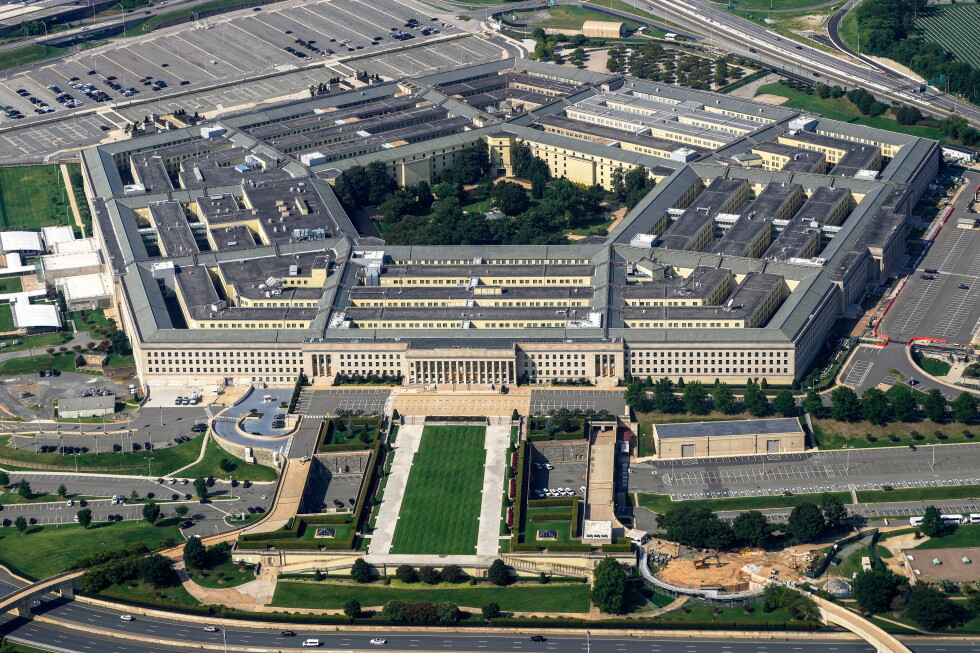
Amid ongoing confusion sparked by conflicting White House directives on U.S. troop levels in Europe, the U.S. military remains stuck waiting for clear guidance from the Pentagon — a state of uncertainty that has upended the lives of service members and already drained tens of millions of taxpayer dollars, two senior U.S. defense officials confirmed to the Associated Press on condition of anonymity to discuss sensitive internal matters.
The chaos traces back to a diplomatic dispute between former President Donald Trump and German Chancellor Friedrich Merz over the Iran conflict earlier this year. Shortly after Trump ordered 5,000 U.S. troops withdrawn from Europe, he reversed course and announced he would deploy the same number of troops to Poland, leaving NATO allies stunned and military planners scrambling. The Trump administration has maintained that planned troop reductions in Europe have long been in the works and coordinated with alliance partners, but the sudden about-face on deployments has thrown that planning into disarray.
Two weeks before the officials spoke with AP, Trump announced the Poland deployment on social media — a decision that came on the exact same day the Pentagon had formally issued orders to cancel a scheduled rotation of troops bound for the country, one defense official recalled. At the time of the cancellation order, the unit’s heavy equipment was already en route to Europe. U.S. Transportation Command, the branch responsible for moving troops and military gear across global supply lines, confirmed that just moving that equipment to Poland already cost $32 million.
The repeated last-minute changes have forced military planners to “retroactively engineer” new policy to match the president’s latest public statements, the official added.
The 4,000-strong 2nd Armored Brigade Combat Team from the 1st Cavalry Division, based at Fort Hood, Texas, had its rotational deployment to Poland scrapped in a Pentagon memo issued in early May, with European allies only notified of the change two weeks later. Hundreds of troops already received pre-deployment orders and were just hours from boarding flights to Poland when they were told to stand down, while roughly 1,000 advance personnel already in Eastern Europe remain in limbo, with no official confirmation of whether they will be recalled to the U.S.
Military leaders are still awaiting detailed instructions from the Pentagon on how to implement Trump’s order to deploy 5,000 troops to Poland. Current working assumptions within the defense department suggest the troops will be drawn from units already stationed in Europe, rather than adding a new deployment from the continental U.S.
Beyond the $32 million already spent to move the canceled rotation’s equipment, additional unbudgeted costs are likely mounting. U.S. Transportation Command had chartered a dedicated vessel to carry the incoming unit’s gear to Poland and return the outgoing rotation’s equipment to the U.S. It remains unclear how much of the $32 million could have been saved if the cancellation order had been issued before the deployment process began, but defense experts note that any unscheduled repositioning of personnel and gear was not included in the Pentagon’s annual budget.
Calculating the full cost of the last-minute deployment changes is extremely complex due to the number of overlapping moving parts, according to Joe Costa, former senior Pentagon official and current director of the Atlantic Council’s Forward Defense program. While the direct cash outlay is likely to be a relatively small share of the rotation’s total baseline cost, the broader harm to troop readiness is far more significant: units that spent months training for a specific deployment in Poland may now be reassigned to entirely different missions, eroding their preparedness.
John Deni, a senior nonresident fellow at the Atlantic Council and former U.S. military planner focused on European force posture, added that military transportation contracts with private vendors almost always include penalty clauses that impose extra fees for last-minute cancellations or changes of plan. “The real question is what additional costs we incur from sending people and gear back prematurely, tearing up existing arrangements and scrapping months of detailed planning,” Deni explained. It remains unclear whether the Pentagon can recoup any of these unexpected expenses, and the department has not responded to repeated requests for comment on the total cost of the plan changes. The White House also declined to comment, referring all questions to the Defense Department.
Pentagon officials have repeatedly framed planned European troop reductions as part of a long-planned “comprehensive, multilayered process” designed to shift more defense responsibility to European allies. But the last-minute changes also scuttled a separate planned deployment of a long-range rocket and missile battalion to Germany last month.
When Trump first publicly threatened to withdraw 5,000 troops from Europe, Pentagon planners initially considered pulling the 2nd Cavalry Regiment, a permanently stationed unit based in Germany, according to one defense official. That plan was ultimately set aside in favor of canceling the planned Poland rotation — a decision Trump upended weeks later with his new deployment order.
Costa noted that withdrawing the Germany-based permanent regiment would carry an even far higher price tag, likely costing billions of dollars. The U.S. currently lacks dedicated domestic infrastructure and housing to accommodate the full regiment and their families, so any forced withdrawal would require breaking up the unit, dispersing equipment across multiple bases, and reassigning personnel to unrelated posts — a process that inflicts lasting harm to unit readiness.
Beyond fiscal costs, the constant uncertainty has also taken a toll on troop and family morale. Service members and their families often begin planning for deployments months or even years in advance, so last-minute cancellations and shifts are deeply disruptive, Deni said. “This is the last thing you want to put military families through,” he noted.
Multiple long-term options are still on the table, including permanently moving some Germany-based units to Poland, but that type of large-scale infrastructure and force shift would take years to complete and carry additional hundreds of millions in construction and repositioning costs. To date, no final decision has been made, leaving the entire U.S. force posture in Europe in limbo.
The chaotic deployment changes come at an especially difficult time for the U.S. Army, which is already facing a major budget shortfall estimated between $2 billion and $6 billion, according to an Army official who spoke on condition of anonymity. The service has already been forced to cut back on routine training courses for troops across the country to conserve funds, a cut first reported by ABC News.
In a formal statement, an Army spokesperson said the service has issued guidance to all commands to “make tough and sound resource decisions that optimize and prioritize resources toward their most critical requirements, to include major training and readiness events.”
The budget strain has been exacerbated by multiple unplanned additional missions assigned to the service in recent months, including deployment of National Guard troops to Washington D.C. and a bolstered border security presence along the U.S.-Mexico border, alongside the U.S. role in the Iran conflict. The Department of Homeland Security has agreed to reimburse the Army for border mission costs, and Army Secretary Dan Driscoll told lawmakers at a May 15 hearing he expected reimbursement “within a week or two.” As of the reporting date, no reimbursement has been processed.
U.S. Army Europe has already responded to the budget crunch by scaling back all non-combat training support and focusing exclusively on high-priority core missions to stretch remaining funds, according to the military official.
(Reporting from London by Burrows)