In the shadow of the world’s highest peak, a remarkable story of survival has emerged from Nepal’s Mount Everest, where a veteran Sherpa guide is now recovering in a Kathmandu hospital after spending an entire week stranded on the mountain’s notoriously dangerous upper slopes. The ordeal, however, has sparked fierce anger from the guide’s family, who are blaming systemic negligence and inequity for the costly delay in launching his rescue, and have already initiated formal legal and regulatory action against the responsible parties.
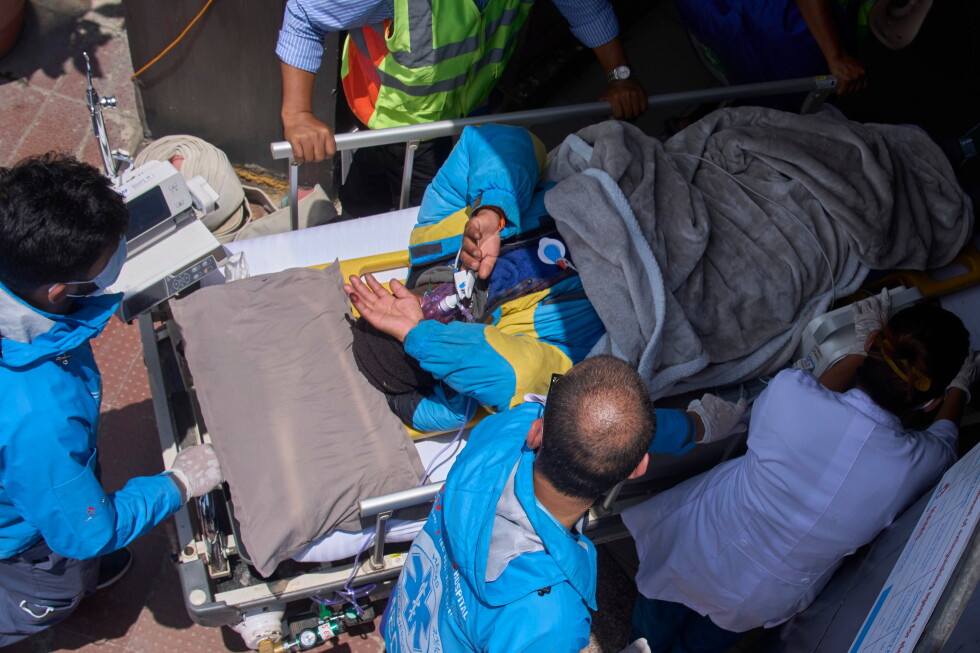
Fifty-seven-year-old Dawa Sherpa was located by chance on Thursday, crawling across frozen snowfields near the Khumbu Icefall, just above Everest’s base camp, seven full days after he was first reported missing. He was immediately evacuated by air to the capital Kathmandu, where he was reunited with relatives who had already begun funeral rites for him, having abandoned all hope of finding him alive. HAMS Hospital, the facility treating Dawa, confirmed in an official statement Friday that he remains in stable condition despite suffering from frostbite, severe dehydration, and soft tissue damage to his thighs as he recieves ongoing care.
Dawa was last spotted on May 29 descending from the high slopes, alongside two foreign climbers who both made it safely back to base camp — leaving Dawa unaccounted for. The pair was among the final groups on the mountain as the 2024 spring climbing season drew to a close, when fixed routes and safety infrastructure on the mountain are normally disassembled. His last confirmed position was at the Yellow Band, a rocky outcrop located above Camp 3, roughly 7,200 meters above sea level, far above the 5,300-meter base camp.
The two foreign climbers with Dawa that day have confirmed the circumstances of his disappearance. British climber Chris Thrall, who was part of the group, posted an explanation to his Instagram account noting that he was forced to prioritze evacuating Polish climber Mariusz Chmielewski, who was already suffering from severe frostbite and declining health. Thrall explained that after Dawa spent 19 hours in Everest’s deadly “death zone” above 8,000 meters, the group made the decision to descend through the Khumbu Icefall, leaving Dawa behind with no option to mount an immediate search. Initial helicopter search efforts launched after Dawa was reported missing failed to locate the stranded guide.
It remains unclear why Dawa and his climbing party were still on the high slopes after Nepali authorities had already begun removing fixed ladders from the route on May 29. The guide was ultimately spotted by a crew from the Sagarmatha Pollution Control Committee, an organization that handles installing and maintaining fixed ladders and ropes on Everest’s climbing routes at the start of each season, then removes gear and cleans up waste from the mountain after the climbing window closes.
Dawa’s family has made clear their frustration over the week-long delay in launching an aggressive search for the guide. They have filed a formal police complaint against Dawa’s employer, Kathmandu-based expedition operator Himalayan Traverse, and submitted an official grievance to Nepal’s Department of Tourism, the government body that regulates all mountaineering activity in the country.
Speaking on behalf of the family, Dawa’s nephew Karma Gelje Sherpa called the delay a direct result of clear negligence on the part of the expedition company. He also raised allegations of unequal treatment for local guides versus foreign climbers, saying: “If he had been a foreign climber, rescue would definitely have been organized much faster and prompt, but he happened to be an old Nepali.”
Himalayan Traverse, the company that employed Dawa, did not respond to requests for comment on the allegations when contacted by reporters on Friday. The family’s legal action comes amid growing scrutiny of safety standards and treatment of Sherpa guides on Mount Everest, where overcrowding, poor regulation, and unequal access to rescue resources have been the subject of ongoing debate in mountaineering circles in recent years.