For the first time in nearly 60 years, the flesh-eating parasite New World Screwworm has been detected within U.S. borders, prompting federal agriculture and health officials to roll out a coordinated response plan that is already facing scrutiny over its limited capacity and political fallout.
The confirmation of the infection came Wednesday, when agricultural inspectors identified screwworm larvae in the umbilical region of a three-week-old calf in La Pryor, Texas, a small town located just 48 kilometers from the U.S.-Mexico border. This marked the first established local detection of the parasite in the U.S. since 1966, ending decades of the country being free of the pest.
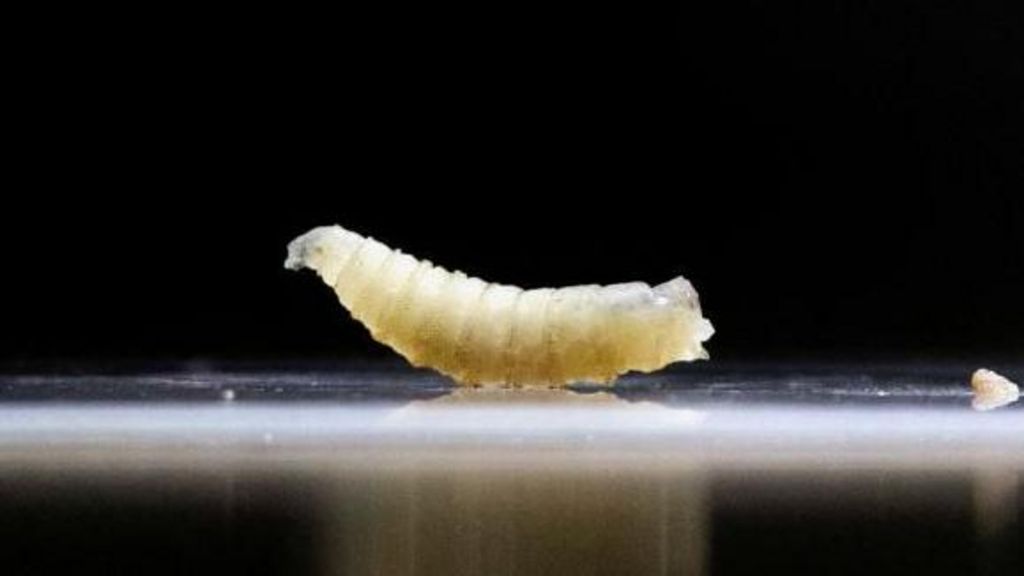
New World Screwworm is a dangerous parasitic fly that poses severe threats to both warm-blooded animals and humans. Female flies lay their eggs in open wounds or mucous membranes of living hosts; once hatched, the hundreds of resulting larvae burrow into living flesh using sharp mouthparts, and can kill the host if left untreated. Full-grown screwworm flies can reach twice the size of common houseflies.
In response to the detection, U.S. officials have moved quickly to implement a multi-layered strategy to stop the parasite from spreading and triggering a full outbreak. At its core is the Sterile Insect Technique (SIT), a decades-old proven method for insect population control that works by releasing massive numbers of radiation-sterilized male flies into the wild. Since female screwworms only mate once in their lifetime, any mating with a sterile male results in unfertilized eggs that never hatch, gradually suppressing the wild population. SIT has been successfully used to control other harmful insect populations, from fruit flies to disease-carrying mosquitoes.
Additional containment measures include establishing a 20-kilometer-wide control zone around the detection site, where the U.S. Department of Agriculture (USDA) has implemented mandatory quarantines, movement restrictions for livestock and other warm-blooded animals, and widespread active surveillance. Along the southern border, U.S. authorities have deployed the specialized “Beagle Brigade”—a team of sniffer dogs trained to detect screwworm in incoming animals and goods—to intercept new introductions of the pest. Officials are also urging private ranchers to proactively cover all open wounds on their cattle to prevent infestations, and advising the public to check themselves and their companion animals for signs of the parasite and report any suspected cases immediately.
Despite these measures, experts and local stakeholders warn that the response currently faces a critical gap: insufficient production capacity for the sterile flies that are the backbone of the eradication effort. USDA officials estimate they need up to 600 million sterile flies per week to reverse the current population growth and halt the parasite’s spread. However, existing production facilities in the U.S. and Mexico combined can only output around 100 million sterile flies weekly. As of Thursday, USDA Secretary Brooke Rollins confirmed that authorities have only released 4 million sterile flies via ground distribution since the calf detection, adding to the 4 million released weekly by air since February—far below the required volume. Sonja Swiger, an entomologist at Texas A&M University, noted that during successful eradication efforts in the 1970s, officials deployed 500 to 700 million sterile flies weekly across Central America to push the parasite south of Panama’s Darien Gap.
While public health officials stress that the immediate threat of widespread human infection is currently low, the U.S. Centers for Disease Control and Prevention (CDC) has reported 2,070 human cases tied to this latest northward spread of the parasite. Cattle ranchers across Texas warn that a full-scale outbreak could have devastating impacts on the multi-billion-dollar U.S. beef industry, threatening livestock populations and disrupting domestic and global markets.
The detection has also sparked intense political controversy over how the parasite reached U.S. soil, with opposing parties blaming each other for policy failures that allowed the incursion. Democratic lawmakers and Texas agricultural officials have criticized the Trump administration’s 2025 decision to eliminate the U.S. Agency for International Development (USAID), which previously ran a long-standing monitoring and control program that tracked screwworm populations across Central America. Texas Agriculture Commissioner Sid Miller condemned the federal response as “slow, bureaucratic, and incomplete,” arguing that failures in prevention allowed the pest to advance unchecked through Mexico to the Texas border. Miller has called for the deployment of insecticide traps, a measure federal officials rejected Thursday, noting the traps are ineffective against screwworm and rely on chemicals classified as probable human carcinogens that harm wildlife. For its part, the Trump administration has pushed back against criticism: Secretary Rollins blamed the parasite’s advance on “open border” policies and criminal cartel smuggling of unregulated livestock and pets, and said Mexico’s own response to the spread has left “a lot to be desired.”
The current northward advance of screwworm comes after decades of regional control efforts that saw mixed results. After pushing the parasite south of Panama in the 1970s, regional cases began to rebound starting in 2022, when Panama reported a sharp spike in infections. Cases spread steadily north through Central America, reached Mexico by 2024, and have now crept across the U.S. border. Entomologists note that while screwworm is native to tropical American regions and naturally prefers warm climates, climate change may be allowing the parasite to expand its range further north than has been recorded in modern history. To address the production shortfall, the U.S. recently opened a new sterile fly production facility at Moore Air Force Base in Edinburg, Texas, though it will take time for the site to ramp up output to the required levels.
Rollins emphasized Thursday that officials are confident they can prevent the parasite from becoming permanently established in the U.S., but critics warn that delays in ramping up response capacity could allow the population to grow out of control before the full eradication effort is in place.