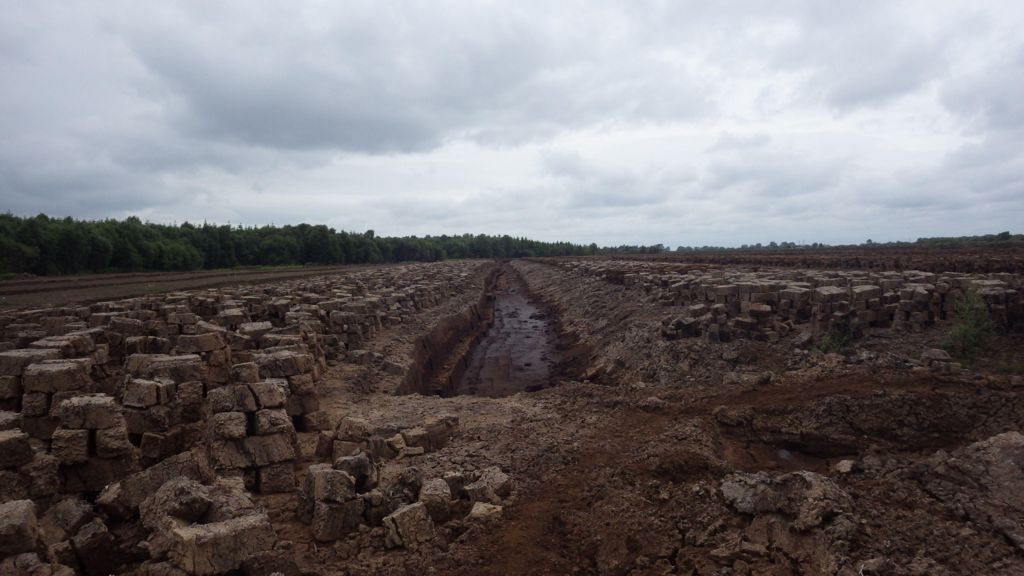
### European Commission Initiates Legal Action Against Ireland at Court of Justice Over Peat Extraction Regulation Failures
The European Commission has announced it is referring the Republic of Ireland to the European Court of Justice, the bloc’s highest judicial body, over persistent claims that Irish authorities have failed to fully enforce strict EU environmental regulations governing commercial peat extraction. This latest development comes years after Ireland implemented a national ban on the sale of peat for fuel use over widespread environmental concerns, but the practice of commercial mining for horticultural compost production remains active.
While the EC has openly acknowledged that Ireland has taken “significant action” to curb large-scale peat cutting, most notably reining in operations by the state-owned extraction firm Bord Na Móna over the past six years, it argues that regulatory and enforcement gaps remain for smaller extraction sites covering less than 50 hectares. According to the commission, numerous active extraction operations on these smaller sites proceed without required planning permissions or mandatory environmental impact assessments (EIAs) — core requirements under EU law for projects expected to cause major ecological harm. “Despite evidence of these ongoing illegal activities, enforcement action at the local level is not being taken,” the EC said in its official statement announcing the legal referral.
Peat extraction itself is not banned under EU legislation, but it is subject to stringent oversight due to the severe ecological damage unregulated extraction can cause. Peatlands are recognized globally as one of the most critical carbon sinks, capable of storing far more carbon per hectare than most forest ecosystems, making them a key natural defense against climate change. They also provide unique, rare habitats for a wide range of native Irish wildlife species.
Irish environmental advocacy groups have welcomed the commission’s legal move. Tristram Whyte, policy officer for the Irish Peatland Conservation Council, a leading charity focused on protecting Ireland’s native bogs, described the long-term damage caused by unregulated commercial extraction. “They go into a bog, strip off the surface and then also drain the bog into the local rivers and lakes,” Whyte explained in an interview with BBC News NI. He added that this practice creates what he calls “brown deserts” across Ireland’s midlands, with far-reaching consequences: silt clogs waterways, and drained peat converts to ammonia, which kills aquatic life. Whyte also noted that commercial peat extraction generates large profits for the horticultural industry, with much of the harvested resource exported abroad, while Ireland is left with permanent ecological damage and degraded habitats.
Irish government bodies have pushed back on the commission’s claims, pointing to existing regulatory frameworks and enforcement efforts already underway. Ireland’s Department of Climate, Energy and the Environment has emphasized that commercial peat extraction is a formally regulated activity in the country. Under current Irish rules, any extraction on sites larger than 50 hectares requires a pollution control license from the Environmental Protection Agency (EPA). For sites between 30 and 50 hectares, both local authority planning permission and an EIA are mandatory. For sites smaller than 30 hectares, planning permission and an assessment are required if the project is expected to cause significant environmental harm, the department explained.
The department also noted that the EC has already acknowledged the “significant enforcement” carried out by the EPA against unauthorised extraction on sites larger than 50 hectares, work that has pushed some private operators to end their activities. All EPA inspection reports are published publicly on the agency’s website and shared with the European Commission, the department added. When it comes to enforcement on smaller sites, the Department of Climate stated that responsibility falls to local planning authorities and the Department of Housing, Local Government and Heritage.
That claim has drawn clarification from the Department of Housing, which says it has no direct role in enforcement or penalty imposition beyond creating the underlying legislation. According to the department, city and county councils hold full responsibility for planning enforcement, including addressing violations of planning rules. If an operator fails to comply with an official enforcement notice, local planning authorities can refer the case to the national courts, where guilty findings can result in criminal convictions, fines, and even prison time.
This latest dispute over peat extraction comes against a long backdrop of tension over peat policy in Ireland. For centuries, cutting peat (known locally as turf) for domestic heating has been a deeply rooted cultural tradition for rural Irish families, passed down through generations. More than a decade ago, the introduction of EU restrictions on turf cutting at 53 protected bog sites sparked large, defiant protests across rural communities. In 2022, the Irish national parliament, the Dáil, voted to ban the commercial sale of turf, but carved out explicit exemptions for small-scale domestic cutting for personal use.
Whyte emphasized that the current legal action brought by the EC does not target these domestic exemptions at all, and will not change the existing rules for personal turf cutting. Instead, the case focuses exclusively on unregulated industrial-scale commercial peat extraction, which continues to operate despite its well-documented environmental harms. “Ireland must demonstrate that it takes its environmental responsibilities seriously,” Whyte added.
The Court of Justice’s core mandate is to ensure that EU law is interpreted and applied uniformly across all 27 member states of the bloc. A ruling against Ireland could result in financial penalties and force the country to tighten enforcement across all sizes of peat extraction sites.