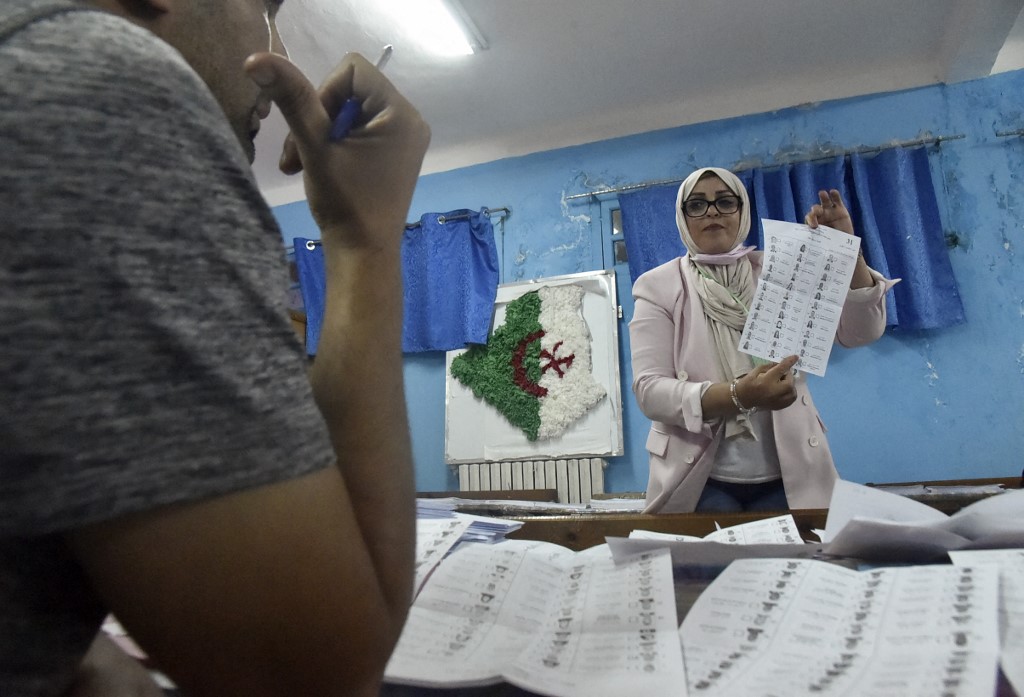
Seven years after the pro-democracy Hirak uprising ousted long-ruling autocrat Abdelaziz Bouteflika, Algeria is set to hold parliamentary elections on July 2, with little optimism among observers that the vote will open new space for inclusive political reform. The North African nation will select 407 members of the National People’s Assembly (APN) for a five-year term, but the election unfolds against a backdrop of deep public disillusionment, tightening state control over political life, and a years-long trend of plummeting voter turnout.
The 2021 legislative election delivered a stark warning to Algeria’s ruling establishment, with official data recording a historic 77% abstention rate — a result amplified by a widespread opposition boycott of the vote. Today, reversing that mass voter disengagement stands as the single biggest immediate challenge for authorities ahead of the 2025 poll. An anonymous Algerian official told Middle East Eye that any turnout above 35% will be framed as proof of political normalization following the unrest of the Hirak era, while a result below 20% would amount to a searing popular rejection of the current political order.
Public apathy toward the election stems from a widespread perception that the APN functions as little more than a rubber stamp for executive branch decisions, offering no meaningful check on ruling elite power. Since Algeria gained independence from French colonial rule, every national assembly has been dominated by parties tied closely to the state establishment. The National Liberation Front (FLN), the former single ruling party born from the independence struggle, holds 105 of the 407 seats in the outgoing assembly, accounting for more than a quarter of the body. It is followed by the Movement of Society for Peace (MSP), a Muslim Brotherhood affiliate with 64 seats, and the National Democratic Rally (RND), a pro-establishment party founded in 1997, which holds 57 seats.
In the years following the Hirak uprising, the Algerian state has steadily consolidated authoritarian power, passing a slate of new laws that expand presidential authority and tighten state oversight of political activity. Ahead of this year’s vote, hundreds of opposition-aligned candidacies have already been invalidated under new regulations. “Through the legislative elections, the Algerian regime wants to project the image of a democratic, pluralistic state,” veteran Algerian journalist Ali Boukhlef told Middle East Eye. With voter abstention long recognized as the defining feature of the country’s electoral politics, authorities are counting on a minimally acceptable turnout to legitimize a process that is widely viewed as pre-rigged to favor ruling parties FLN and RND, Boukhlef added.
Nacer Djabi, a retired sociology professor from the University of Algiers 2, noted that beyond core party activists and their family members, most ordinary Algerians have lost all interest in this type of controlled election — a trend that has only grown sharper in the years since the Hirak movement was suppressed. “The situation is all the more critical [due to the fact] that the legislative body is controlled by the authorities and is completely subservient to the executive branch,” Djabi explained.
To boost public engagement, authorities are pinning faint hope on the decision of several major opposition parties that boycotted the 2021 vote to rejoin the 2025 electoral race. The Socialist Forces Front (FFS), Trotskyist-aligned Workers’ Party (PT), and centre-left Rally for Culture and Democracy (RCD) have all confirmed their participation this cycle. Even so, party leaders acknowledge the systemic biases that shape the current electoral context.
Since the 2019 Hirak uprising briefly opened space for democratic transition, political opposition, independent journalists, and civil society activists have decried a near-total closure of political and media space. Human rights NGOs have repeatedly accused Algerian authorities of restricting civil liberties, relying on arbitrary arrests, unfair trials, and travel bans to target peaceful dissidents. Multiple opposition parties have been suspended from operating entirely, including the Democratic and Social Movement (MDS) since 2023 and the Socialist Workers’ Party (PST) since 2022. As recently as May 2025, authorities refused to grant approval for an RCD rally in Algiers and an RCD party conference in Bejaia, offering no formal explanation for the rejections. Last September, MDS coordinator Fethi Ghares was arrested on charges of “insulting” the president and sentenced to two years in prison.
For the once-boycotting parties, their return to the electoral arena reflects both growing exhaustion with an “empty chair” boycott strategy and a growing fear that prolonged absence from state institutions has only left them further weakened against the dominant ruling establishment. “It is clear that these legislative elections are taking place in a context of persistent political closure,” RCD president Atmane Mazouz told Middle East Eye. “However, leaving the field vacant is essentially giving full rein to the forces that perpetuate authoritarian and clientelist practices. Participating means refusing this abdication. It also means giving political expression to the democratic aspirations that have been expressed massively in recent years, but which remain without institutional outlets.”
Mazouz added: “In short, we find ourselves in a paradoxical situation: participating in a process we criticise, not to endorse it, but to challenge it from within. It’s a demanding, sometimes uncomfortable, but consistent approach with the history and principles of the RCD.”
This framing is shared by many other opposition actors. “The problem lies in a political environment that remains insufficiently open: a lack of spaces for debate, weak channels of expression and an opacity that fuels distrust,” Zouheir Rouis, vice president of centre-left opposition party Jil Jadid, told Middle East Eye. “Under these conditions, it’s difficult to speak of a fully dynamic political life.”
The MSP, a moderate opposition party that has long participated in Algeria’s institutional electoral process, offered a more measured assessment. “Of course, like any political actor, and even more so in the opposition, including as members of parliament, we face real constraints, various difficulties, and sometimes pressures, whether organisational or related to the general context,” MSP MP Abdelouahab Yagoubi said. “However, the national political situation calls for a nuanced interpretation: while limitations exist, dynamics of change are also at work.”
Despite this guarded optimism from establishment-aligned opposition, three new laws passed in the months ahead of the election have reinforced widespread fears that the state is moving to further tighten its grip over political life and electoral outcomes. On March 9, a new political parties law was enacted that critics say expands government control over party operations. While framed as an update to modernize Algeria’s political legal framework, the law imposes stricter rules for party formation and operation, caps party leader term lengths, mandates regular participation in elections to maintain legal status, and raises thresholds for regional representation, all measures that disproportionately disadvantage small and independent opposition groups.
Two weeks later, on March 25, a constitutional amendment marketed as a minor technical adjustment drastically reduced the powers of the Independent National Electoral Authority (Anie), the body created after the Hirak uprising to transfer election management out of the hands of the interior ministry. Key oversight prerogatives have now been returned to the interior ministry, directly under executive control. The amendment also expands presidential power and extends the term of the Senate president from three to six years, doubling the tenure to cement loyalty to the head of state. It also introduced a minimum education requirement for presidential candidates, a rule that further blocks grassroots candidates without elite educational backgrounds from running for office.
Finally, on April 2, an electoral reform law — again framed as a technical update — further expanded the power of incumbent President Abdelmadjid Tebboune and gave the national administration greater direct influence over the electoral process.
“Since the introduction of political pluralism, the current regime has been working to establish rules that frame the political landscape and dictate its pace and limits,” journalist and researcher Lachemot Amar told Middle East Eye, referencing the end of FLN’s 25-year single-party monopoly in 1989. “Despite a carefully calibrated margin of freedom allowing for some diversity in parliament among different political currents, domination will remain in the hands of the system’s functional parties. There will be no fundamental upheaval in the balance of power and influence within the Algerian political system.”
Amar noted that the return of the national administration to direct oversight of the electoral process is a clear indicator of the regime’s desire to control both the vote count and its long-term political outcomes. So far, that control has been visible in the early stages of the campaign: opposition parties have reported widespread administrative obstacles, and hundreds of candidates have been disqualified under Article 200 of the new political parties law, with candidates arguing the rejections are arbitrary. Earlier this week, Anie announced it had struck 3,174 candidates from the ballot, eliminating nearly a third of the 10,168 total candidates who filed to run.
“We are facing difficulties,” Jil Jadid’s Rouis said. “They are not unique to our party, but stem from a broader environment: limited access to spaces for expression, difficulty in structuring a political platform in a context marked by distrust, and administrative and political constraints that weigh on party work.”
The RCD and PT have both issued public statements decrying systemic barriers, with PT particularly highlighting obstacles to collecting the required number of voter sponsorship signatures mandated by new electoral rules. “The administrative obstacles to legalising sponsorships, the blockages observed in several [municipalities], the lack of neutrality of certain institutions supposed to oversee the electoral process… all of this confirms that the system continues to tightly control access to the competition,” RCD’s Mazouz said. “We are not dealing with isolated malfunctions, but with recurring practices aimed at filtering candidacies and limiting the expression of truly independent forces.”
These control mechanisms were already on full display during the September 2024 presidential election, which delivered a second term to Tebboune against two little-known challengers widely seen as token opponents designed only to maintain a facade of democratic competition, with the final outcome widely viewed as predetermined before polls opened.
Boukhlef, the Algerian journalist, noted that these barriers for opposition parties have been building for months, with nearly all public discourse spaces remaining closed to dissident voices. “Even after the election date was announced, these parties have remained banned from public media,” he said. “Added to this are difficulties with the administration, which will obviously benefit the ruling parties, who have the support of the media and the administration. The political landscape will therefore not be reshaped, but it will allow the ruling parties, the RND and the FLN, to maintain their advantages.”