KATMANDU, Nepal — In an extraordinary survival story that has shocked the mountaineering community, a veteran Sherpa mountain guide has been recovered alive from the slopes of Mount Everest seven days after he went missing during the closing days of this year’s record-breaking climbing season, rescue officials confirmed Thursday. A rescue helicopter was transporting the guide to a Kathmandu hospital for urgent evaluation and care Thursday afternoon.
The guide, 52-year-old Dawa Sherpa, was last spotted on May 29 as he descended the world’s highest peak alongside his Polish climbing client. While the client successfully made it to Everest’s base camp to conclude the expedition, Dawa never arrived. The pair was among the final groups of climbers on the mountain as the 2024 climbing season wrapped up, and the fixed safety routes that support summit attempts were already being taken down, leaving the mountain largely unoccupied for the coming off-season.
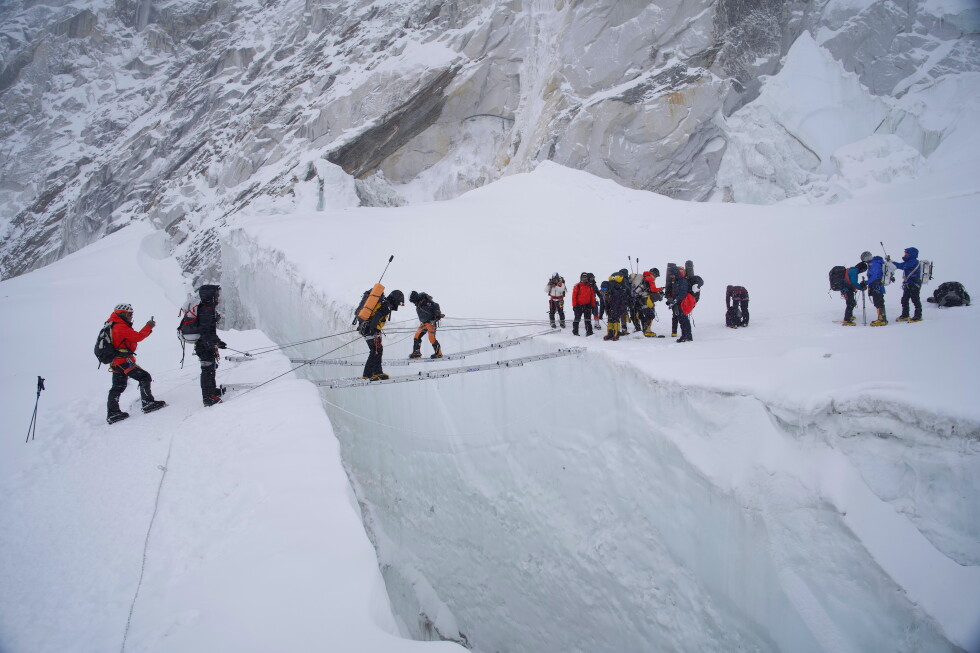
Pemba Sherpa, a representative of 8K Expeditions, the adventure company that was in charge of coordinating the search operation for Dawa, shared that the missing guide was discovered by a mountain cleaning team early Thursday morning. At the time of his discovery, he was slowly crawling down a snow-covered slope in the Khumbu Icefall region, located just above base camp, in one of the most dangerous sections of the entire Everest climbing route.
Shortly after being spotted, rescuers carried Dawa down to a secure lower elevation at base camp, where he was immediately given food, water, and initial first aid to address his week of exposure to extreme high-altitude conditions. A dedicated rescue helicopter was deployed to the site within hours to airlift him to a specialized hospital in Kathmandu, the Nepalese capital.
Despite Dawa going missing a full week before his discovery, search operations were delayed in launching, according to local expedition officials. An initial aerial search carried out by helicopter earlier this week had failed to locate the guide, leaving search teams holding out little hope of finding him alive.
The team that made the life-saving discovery is part of the Sagarmatha Pollution Control Committee, a Nepalese organization that manages Everest climbing infrastructure each season. At the start of every climbing window, the committee installs fixed ladders and safety ropes across the mountain’s icy routes to support climbers; when the season ends, it removes all equipment to minimize environmental impact and cleans up tons of waste left by expeditions each year.
Dawa hails from Okhaldhunga, a mountain town located south of Everest, and works for Himalayan Traverse, a small adventure outfitter based in Kathmandu. This year’s climbing season on Everest made history as the busiest on record, with more than 1,000 climbers and their guides successfully reaching the 8,849-meter (29,032-foot) summit throughout May.
The 2024 season also got off to a late start: a massive unstable ice block formed on the route just above base camp, requiring two weeks of intensive work to clear before climbing could resume. The first successful recorded ascent of Everest was completed on the same date Dawa was last seen this year — May 29 — in 1953, by New Zealand mountaineer Edmund Hillary and Sherpa guide Tenzing Norgay.