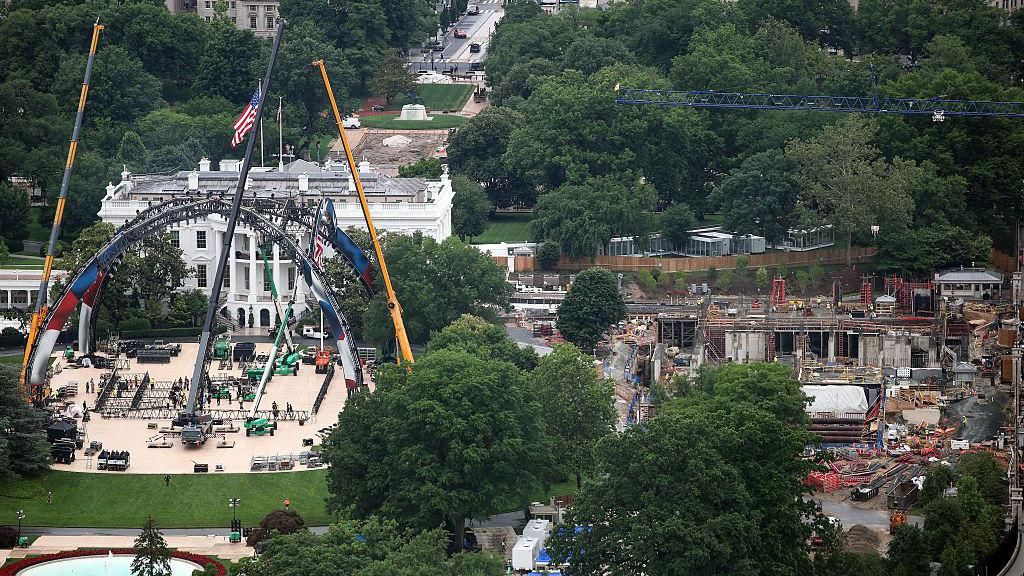
A months-long deadlock on a key US immigration spending bill has broken after Republican lawmakers removed a controversial $1 billion funding allocation earmarked for security upgrades tied to President Donald Trump’s planned new White House ballroom, clearing the way for the Senate to move the legislation forward.
The $1 billion request for U.S. Secret Service security enhancements tied to the construction project was submitted after an April shooting at a Trump-attended hotel gala. Trump has long maintained that the expanded ballroom is a critical upgrade to accommodate large-scale official state events and modernize outdated security infrastructure, and he has repeatedly claimed the entire construction project would be covered exclusively by private donations.
When finalized, the reconciliation bill will allocate approximately $72 billion to federal immigration agencies, including Immigration and Customs Enforcement and U.S. Border Patrol. Democrats had fiercely pushed back against attaching the White House security funding to the immigration legislation, a position that was ultimately upheld by the Senate’s procedural rulekeeper.
On Wednesday, the Senate voted 53-45 to advance the legislation to the floor debate stage. Lawmakers will now consider the bill and propose amendments before holding a final vote, a process that is expected to extend for several hours and potentially bleed into Thursday. If the bill passes the full Senate, it will next move to the House of Representatives for consideration before it can be transmitted to President Trump for his signature.
Democrats have uniformly opposed Trump’s plan to construct a large new ballroom on the site of the demolished White House East Wing. The removal of the funding from the immigration bill marks a clear procedural setback for the project, though the long-term impact on construction timelines and financing remains uncertain.
Progress on the bill, which had been stalled for months, faced an additional hurdle over a separate controversial proposal: a $1.8 billion “anti-weaponisation fund” put forward by the Department of Justice to compensate individuals claimed to have been harmed by government overreach. Critics across the political spectrum have decried the fund as an unaccountable slush fund designed to payout Trump’s political allies, including the rioters who stormed the U.S. Capitol in 2021 in an attempt to block the certification of former President Joe Biden’s election victory.
During testimony before lawmakers on Tuesday, Acting Attorney General Todd Blanche confirmed the Department of Justice would abandon plans to establish the fund, but refused to provide a written commitment of the decision. Speaking to reporters shortly after, Trump indicated the proposal had not been fully scrapped, noting he would “have to ask the lawyers” about the way forward.
Republican Senator Thom Tillis of North Carolina has announced he will introduce standalone legislation to permanently block the creation of the fund. Other GOP lawmakers have also issued sharp criticism of the proposed fund, and congressional Democrats have confirmed they are also preparing their own legislative measures to prohibit its establishment.