In recent developments reshaping transatlantic security architecture, Poland and Lithuania have officially acknowledged they are engaged in early-stage negotiations regarding their potential expanded participation in NATO’s U.S.-led nuclear deterrence framework, a shift that comes as the alliance re-evaluates its defense posture in the wake of Russia’s full-scale invasion of Ukraine.
The discussions, which remain in their preliminary and classified phases, emerge against a backdrop of shifting U.S. defense priorities: former U.S. President Donald Trump had advanced efforts to reduce Washington’s conventional military footprint in Europe, leaving many eastern NATO allies seeking clearer guarantees of ongoing American security commitment. Expanding the scope of NATO nuclear deterrence has been floated as one pathway to reinforce those guarantees for frontline allies located closest to Russia.
Poland’s Deputy Defense Minister Paweł Zalewski confirmed the negotiations in comments to Polish Radio Wednesday, noting the talks are aimed at strengthening deterrence capabilities and carving out a more meaningful role for Warsaw in the alliance’s nuclear posture. At the same time, Zalewski emphasized that Poland has no current plans to permanently host U.S. nuclear weapons, describing such a step as “an extremely serious matter” with profound political ramifications.
Lithuania’s Defense Minister Robertas Kaunas similarly confirmed ongoing talks Tuesday, telling reporters via the BNS press agency that “Lithuania is certainly not standing on the sidelines” of the discussions, while declining to share further details due to classification rules.
The official confirmations follow a Tuesday Financial Times report citing anonymous sources, which claimed the U.S. has signaled openness to potentially stationing elements of its nuclear arsenal in additional NATO member states beyond the six current host countries that participate in the alliance’s longstanding nuclear sharing program.
That report also noted Poland and the Baltic states of Estonia, Latvia, and Lithuania — all NATO members sharing borders with or located adjacent to Ukraine and Russia — have expressed interest in potentially hosting bases for U.S. dual-capable aircraft, platforms engineered to carry both conventional and nuclear warheads.
When contacted for comment, the Pentagon declined to issue an official statement. A senior Defense Department official, speaking on condition of anonymity due to speaking unofficially, noted that the U.S. and NATO “continuously assess the security environment” and regularly update their deterrence frameworks to remain effective against evolving threats.
The U.S. has maintained a stockpile of nuclear weapons on European soil for decades, as a core component of Washington’s collective security guarantees to NATO allies. In the years following Russia’s 2022 full-scale invasion of Ukraine and the heightened security threat Moscow poses to eastern NATO members, calls to expand U.S.-led nuclear cooperation with European allies have grown louder.
A NATO official, also speaking on condition of anonymity, clarified to the Associated Press that the alliance’s work to assess and adapt its nuclear deterrence posture has been ongoing for several years, and is not tied to any U.S. decision to adjust its conventional force footprint in Europe.
Today, NATO’s nuclear sharing program includes U.S. nuclear weapons deployed across six existing host nations: Belgium, Germany, Italy, the Netherlands, Turkey, and the United Kingdom. The alliance structure relies on dual-capable aircraft operated by both the U.S. and allied nations, while the U.S. retains permanent, full control over all deployed nuclear weapons.
Poland has signaled interest in expanding its role in the U.S. deterrence program since 2022, when Russia launched its full-scale invasion of Ukraine. Former Polish President Andrzej Duda even publicly expressed openness to hosting U.S. nuclear weapons on Polish territory. The current Polish government led by Prime Minister Donald Tusk has taken a more cautious approach, framing its position only around seeking a larger role in deterrence efforts rather than full hosting.
Artur Kacprzyk, a nuclear deterrence analyst at the Warsaw-based Polish Institute of International Affairs, explained that Washington has repeatedly warned that stationing permanent nuclear weapons in eastern NATO member states would be excessively provocative to the Kremlin. Instead, Kacprzyk said a middle ground option — dubbed “nuclear sharing light” — has emerged as a likely compromise. Under this framework, eastern NATO allies would certify their own aircraft to carry U.S. nuclear weapons when needed, but no nuclear warheads would be permanently deployed on their territory. The certified aircraft would act as a backup reserve, ready for deployment if existing nuclear-capable aircraft in western Europe were disabled before they could be deployed in a crisis.
Beyond U.S.-led deterrence efforts, Poland and a number of other European allies have moved to expand cooperation on nuclear deterrence with France, the only remaining nuclear-armed member of the European Union following the UK’s 2020 Brexit exit. Earlier this year, Poland confirmed it would join the French-led initiative to coordinate deterrence efforts across European allies.
Kacprzyk noted that the French initiative is complementary to U.S.-led NATO deterrence, but operates with a separate structure. Alongside Poland, Britain, Germany, the Netherlands, Belgium, Greece, Sweden, Denmark and Norway have all expressed interest in the French framework, which allows for temporary deployments of French nuclear-capable aircraft to allied territory, permits partner nation participation in French deterrence exercises, and opens opportunities for allied non-nuclear forces to support French nuclear activities.
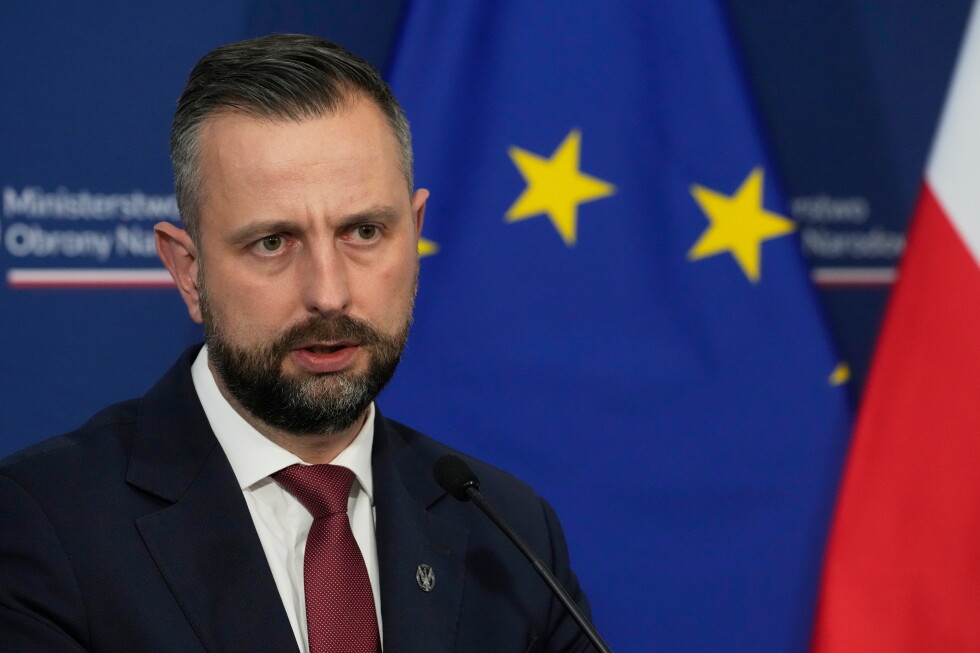
Polish Defense Minister Władysław Kosiniak-Kamysz confirmed Tuesday that expanded nuclear deterrence cooperation will be a key topic for discussion at the upcoming NATO defense ministers meeting scheduled for June 18 in Brussels, noting both the French initiative and the U.S. led program will be on the agenda.
While increased nuclear cooperation can help the U.S. offset planned conventional force reductions in Europe, Kacprzyk emphasized that expanded nuclear participation cannot fully replace the forward deployment of conventional troops, particularly for eastern NATO allies that border Russia. He argued that deterrence requires consistent, cohesive signaling to avoid sending mixed messages to potential adversaries: “Communicating ‘I might risk nuclear war to defend an ally but I don’t want to send my soldiers into the fight’ is a conflicting signal. You need coherent signals at all levels of deterrence.”