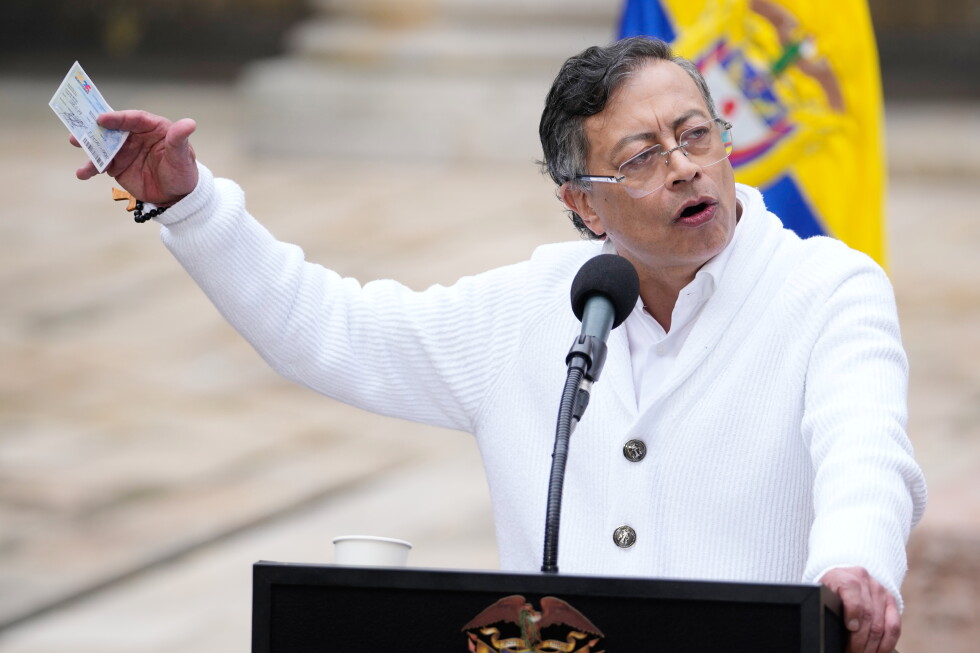
BOGOTA, COLOMBIA – In a clear repudiation of unfounded electoral fraud allegations leveled by Colombian President Gustavo Petro, the European Union’s independent Electoral Observation Mission has formally ruled out any large-scale tampering in Sunday’s first-round presidential vote, confirming the ballot process was conducted with transparency and organizational efficiency.
President Petro, who is constitutionally barred from seeking re-election, sparked deep political uncertainty in the days after the first round by posting repeated claims on social platform X that hundreds of thousands of ineligible voters were illegally added to national voter rolls ahead of the contest. In his most recent allegation shared Tuesday, Petro claimed 885,000 voters were registered after the legally mandated March 31 cutoff, and that multiple polling stations recorded suspiciously high ballot turnout numbers. He offered no concrete evidence to back up either claim.
The mission’s chief, senior European lawmaker Esteban González Pons, told reporters Tuesday that the independent observation team found no evidence of systemic misconduct to support Petro’s accusations. To verify the integrity of the count, observers pulled a random national sample of official tally sheets and cross-checked them against physical paper ballots, finding zero discrepancies between the two datasets. “We can discard any manipulation of data in the quick count and in the final count,” González Pons confirmed, adding that none of the 12 presidential candidates who competed in Sunday’s first round had formally submitted documented claims of electoral irregularities to the mission.
Colombia’s National Registrars Office, the government body tasked with organizing and administering national elections, also pushed back against the fraud claims Monday. By that evening, the office announced it had completed review of 99.98% of all polling stations across the country, finding only a minimal 0.06% variation from the unofficial quick count published hours after polls closed Sunday – a margin well within acceptable statistical ranges.
The first round results have set up a polarized runoff election scheduled for June 21, pitting conservative lawyer Abelardo de la Espriella against left-wing Sen. Iván Cepeda, the candidate from Petro’s ruling Historical Pact coalition. Official certified results show de la Espriella earned 43.7% of the more than 23 million votes cast, while Cepeda finished just shy of the lead with 40.9%. No candidate earned the 50% plus one majority required to win outright in the first round, triggering the mandatory two-candidate runoff.
Cepeda initially echoed the ruling coalition’s doubts over the result Sunday, refusing to accept the preliminary quick count and saying he would wait for a formal audit overseen by independent judges and notaries to comment. By Monday, however, he softened his stance, acknowledging that party-appointed election monitors had not uncovered “irregularities of a sufficient dimension to speak of fraud.” Cepeda has gone on to confirm he will compete in the June 21 runoff, issued a public debate challenge to de la Espriella, and expressed confidence he will secure victory in the second round.
Under Colombian electoral law, final official election results are verified and certified by an independent panel of judges, not the sitting head of state, with certification typically completed within two weeks of voting. Despite the pushback from independent observers and electoral authorities, political analysts warn that Petro’s repeated unsubstantiated fraud claims carry significant risks: the allegations could deepen already sharp partisan divides across the country and stoke the risk of political violence in the weeks leading up to the high-stakes runoff vote.