For nearly a week ahead of the attack, Ukrainians in Kyiv braced for what they knew could be the largest assault on their capital in months. Russian officials had openly threatened to intensify strikes against the city, prompting tens of thousands to seek nightly refuge in underground shelters.
Reporters on the ground described being two levels below the city surface when the first blasts shook the ground, the thunder of explosions echoing through the concrete tunnels. Following the initial missile barrage came Iranian-made drones, some deployed to scout the damage from the first wave, others packed with additional explosives. A second round of missile strikes hit not long after.
Kyiv’s metro system, which has doubled as a massive civilian bomb shelter since the start of the full-scale invasion, reported a new post-invasion record for overnight occupancy: more than 41,000 people, including nearly 4,500 children, crammed into its underground stations and tunnels to ride out the attack.
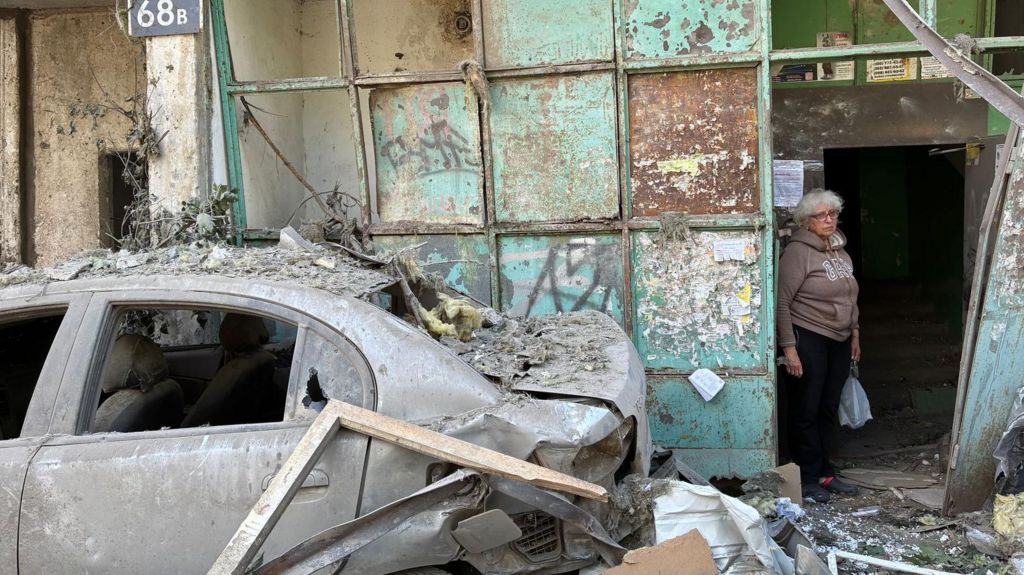
While Russian officials consistently claim their military operations exclusively target military infrastructure, this assault followed a familiar pattern seen across dozens of prior strikes: civilian neighborhoods and infrastructure bore the brunt of the damage. When residents emerged from their shelters at dawn, they found their once-familiar communities turned into scenes of chaos and destruction. Shattered window glass crunched underfoot, and parked cars were reduced to unrecognizable, charred piles of twisted metal.
The human cost of the assault was steep across the country. In Kyiv alone, at least six civilians were killed in the overnight attack. The deadliest toll came in the central Ukrainian city of Dnipro, where two residential apartment blocks were directly hit, killing at least 16 people. Across Kyiv and Dnipro, more than 90 people were admitted to hospitals with injuries. In Kharkiv, a northeastern city that has faced near-constant bombardment for two years, Russian strikes targeted energy facilities and civilian infrastructure, leaving 10 people injured including one child. Multiple other regions across Ukraine also reported targeted strikes.
In Vynohradar, a typically quiet residential suburb of Kyiv, the aftermath of the attack left a landscape of complete devastation. High-rise apartment blocks had every window blown out, burnt-out car husks lined the sidewalks, and a thick haze of dust and smoke hung over the neighborhood. Local residents reported hearing at least three massive detonations in the space of an hour, and multiple neighbors were evacuated to area hospitals with critical injuries.
Anna, a Vynohradar resident who lives in a nine-story apartment building just steps from one blast site, lost her car in the attack. But as she spoke to reporters through tears, she made clear the damage went far deeper than physical property.
“They can repair the building, but they cannot fix our souls,” she said. “The whole building, the whole of Ukraine, is grieving. What did we ever do to deserve this?”
In the hours after the last strike, a massive coordinated response sprung into action to clear debris and support displaced and traumatized residents. Rescue teams went door to door near the blast sites checking for casualties and trapped residents, while government-provided mental health counselors worked one-on-one with shell-shocked, tearful locals. Volunteer organizations distributed free hot meals and bottled water to residents who could not return to their damaged homes. Police cordoned off damaged high-rises to keep civilians away from falling glass and unstable structural elements.
Near a destroyed children’s activity center, local teenage boys joined municipal workers to clear rubble, the faded purple butterflies painted on the building’s remaining broken window panes still visible through the dust.
Even on a day marked by massive destruction, life in Kyiv quickly began returning to its new normal. Just a block away from Anna’s damaged apartment building, two small children played on a neighborhood swing set, pausing every few minutes to stare at the chaos of rescue work unfolding down the street. Further from the blast zone, road crews laid new asphalt on a city street and public buses ran on their regular schedules, as if the deadly attack that unfolded just kilometers away was just another part of daily life in wartime.
This quiet resilience has become Kyiv’s defining response to the full-scale invasion: no matter how heavy the damage, no matter how great the loss, the city carries on with its daily routines, refusing to be broken by constant bombardment.