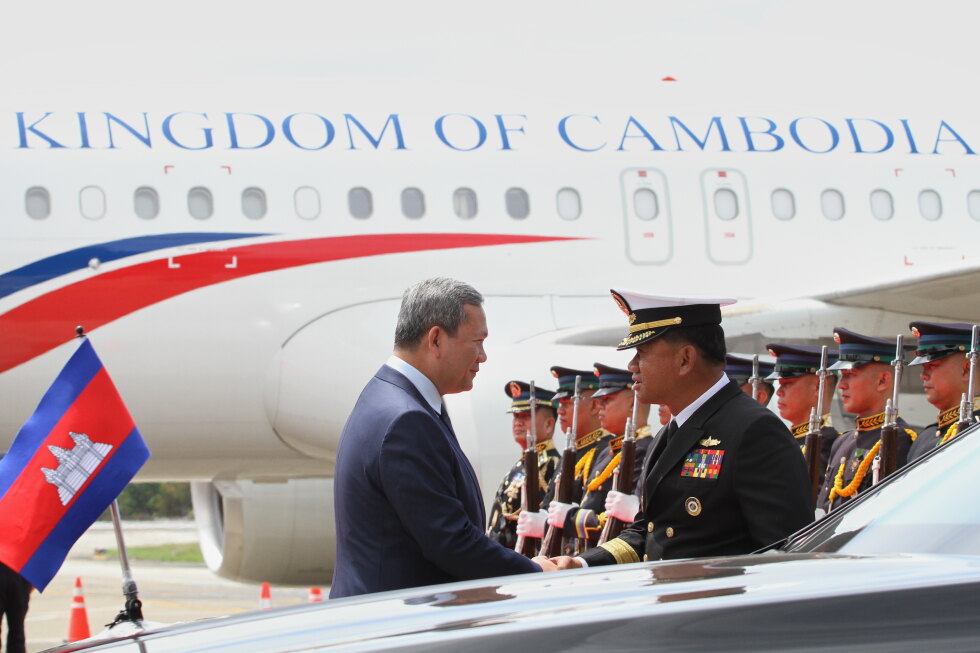
After Thailand unilaterally scrapped a decades-old bilateral agreement aimed at managing overlapping maritime claims, Cambodia has officially launched compulsory conciliation proceedings through the United Nations Convention on the Law of the Sea (UNCLOS) to resolve its long-running sea border dispute with neighboring Thailand, Cambodian Prime Minister Hun Manet announced Tuesday in a live address on national state television.
The contested stretch of water, claimed in full by both Southeast Asian nations, is widely believed to hold significant commercially viable reserves of natural gas and other hydrocarbon resources, making the dispute a high-stakes issue for both countries’ energy and economic outlooks. Tensions between the two neighbors escalated dramatically last year, when deadly armed clashes broke out along their shared land border. The violence stoked widespread nationalist sentiment in Thailand, which put growing domestic political pressure on Thai Prime Minister Anutin Charnvirakul’s administration to walk away from the 25-year-old memorandum of understanding (MoU) that had governed bilateral talks on the overlapping claims. Thailand followed through on that pressure in May, terminating the agreement unilaterally.
In his televised address, Hun Manet confirmed that his government had submitted formal notification of the conciliation request to both the Thai government and UN Secretary-General, triggering the formal process under UNCLOS regulations. He emphasized Cambodia’s commitment to a peaceful, rules-based resolution, saying, “Cambodia has never violated the sovereignty of other states. At the same time, we are unwaveringly determined to defend Cambodia’s sovereignty. Today, we continue to honor that responsibility, not through force, but through international law; not through unilateral action, but through peaceful engagement.”
It remains unclear how long the conciliation process will take or when a preliminary outcome may be reached. Responding to Cambodia’s announcement, Anutin told reporters that the move itself does not create an insurmountable barrier to dialogue, noting that Thailand has long stated it is committed to resolving the dispute in line with UNCLOS frameworks. However, the Thai leader has made clear that his government rejects Cambodia’s push for a forced conciliation process.
Notably, any outcome from the UNCLOS conciliation process is non-binding for all participating parties, even though both Cambodia and Thailand are official signatories to the treaty. Thailand has a long-standing preference for resolving all territorial disputes through direct bilateral negotiations rather than third-party international adjudication, a stance rooted in decades of resentment over a 1962 International Court of Justice ruling that granted Cambodia control over the disputed Preah Vihear hilltop temple along their shared land border. That ruling has remained a persistent source of friction between the two nations, contributing to cycles of tension that have flared repeatedly over the decades.