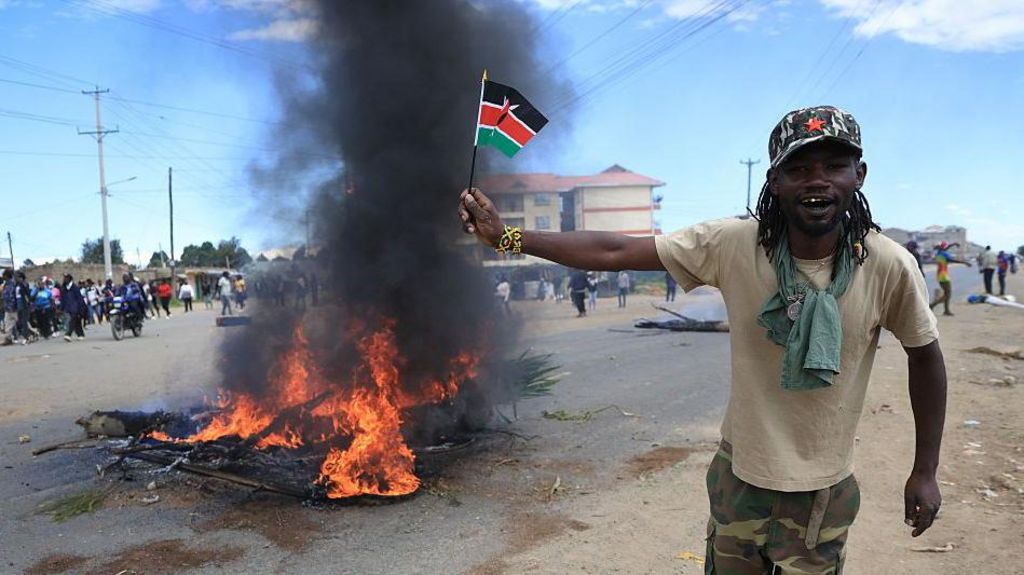
Deadly violence has erupted in central Kenya over a controversial proposal to build a US-operated Ebola isolation facility, leaving two local residents dead and deepening public divisions over the public health and diplomatic initiative. The unrest unfolded in Nanyuki, a town adjacent to Laikipia Airbase, the planned site for the 50-bed treatment center, after hundreds of demonstrators took to the streets to oppose the project.
According to preliminary reports, one fatality was shot near the perimeter of the airbase itself during peak protest activity. Friends transported the wounded individual to Nanyuki’s main hospital, where he later succumbed to his injuries. A second victim was already deceased when military personnel brought his body to the same medical facility. To date, no senior Kenyan official has released an official statement confirming the circumstances of the deaths or assigning responsibility for the gunfire that killed the two men.
The unrest built on growing public anger that first emerged after details of the US plan were made public. The facility is designed to treat American citizens who contract Ebola during the ongoing outbreak in the neighboring Democratic Republic of the Congo, and would be staffed entirely by US medical personnel. Kenya has not recorded any confirmed Ebola cases to date, but critics warn that bringing infected patients into the country creates unacceptable risks of cross-border transmission that could devastate local communities.
Mass demonstrations first organized on Monday saw hundreds of protesters block major thoroughfares through Nanyuki and set burning tires across roads to draw attention to their opposition. In response, police deployed tear gas to clear the crowds and disperse the gathering. The controversy has already made its way through Kenya’s judicial system: last week, a local rights group filed a lawsuit arguing that the facility poses “grave and imminent risks” to Kenyan public health, prompting the High Court to issue an initial order halting all work on the project.
In his first public comments on the dispute Monday evening, Kenyan President William Ruto defended his decision to approve the plan. Ruto framed the initiative as a gesture of long-standing friendship between Kenya and the United States, telling reporters that “When President [Donald] Trump asked Kenya to support them by having a centre in Laikipia Airbase I gave the ok because it was an agreement with friends who have walked with Kenya for 30, 40 years.” He added that the Kenyan government had “deployed every arsenal” to safeguard the country from Ebola risks, and urged opposition politicians not to politicize what he called a critically important public health matter. “We are a responsible government. We know what we are doing,” Ruto said.
Despite the president’s defense of the plan, the High Court doubled down on its suspension on Tuesday, extending the pause on construction and opening and ordering the national government to release full documentation detailing the terms and specifications of the proposed facility. Even with the court order in place, however, independent observers and local experts confirm that military aircraft have continued making regular trips in and out of Laikipia Airbase, indicating that preparatory work for the center is still ongoing.
The proposal has drawn widespread opposition from key Kenyan public health and accountability groups, including Kenya’s national doctors’ union and independent government watchdogs. Both groups reiterate that bringing Ebola patients into Kenya, even for treatment at a secured military facility, creates an unnecessary and avoidable risk of infection for local populations that the government has not adequately addressed.