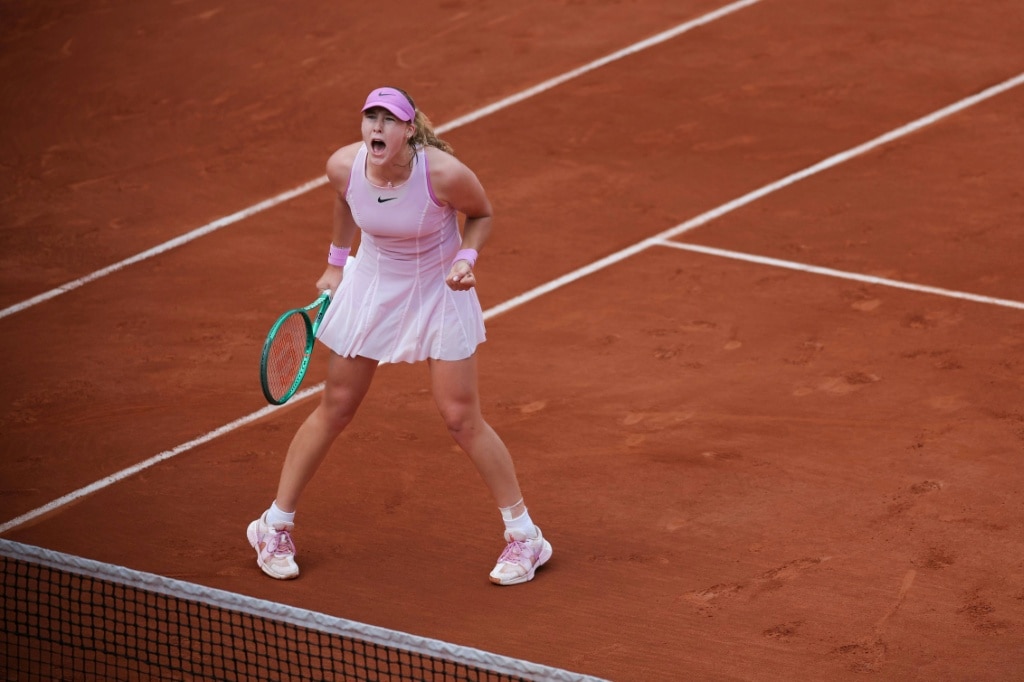
The established young monarchs of men’s tennis have already been dethroned at this year’s Roland Garros, and as the tournament enters its quarter-final round on Tuesday, an even younger cohort of rising stars is preparing to leave their mark on the iconic Paris clay. Over the past two years, 24-year-old Jannik Sinner and 23-year-old Carlos Alcaraz have claimed nine of the 12 available Grand Slam titles, cementing their status as the sport’s new top elite. But an early exit has cleared the way for the next wave: Alcaraz withdrew before the tournament due to injury, while Sinner crumpled under the unforgiving Parisian heat and suffered a shock second-round defeat, opening the door for three teenagers to compete in their first ever Grand Slam quarter-finals.
Leading the charge of this new generation is 19-year-old Rafael Jodar, Spain’s next prodigy molded in the mold of legendary clay-court great Rafael Nadal. He will face off against Alexander Zverev, the highest-seeded player remaining in the men’s draw, to kick off Tuesday’s quarter-final action. Closing out the day on Court Philippe Chatrier will be 20-year-old Jakub Mensik, a rising Czech talent, against 19-year-old Brazilian Joao Fonseca – the undisputed breakout sensation of this year’s tournament. The only 19-year-old on Tuesday’s schedule with prior Grand Slam late-round experience is women’s eighth seed Mirra Andreeva, who will contest her third consecutive Roland Garros quarter-final against Romania’s Sorana Cirstea.
History has long proven that the French Open is uniquely welcoming to teenage prodigies. Of the five youngest men to win a Grand Slam in the Open Era, four – Michael Chang, Mats Wilander, Rafael Nadal and Bjorn Borg – lifted the Coupe des Mousquetaires at Roland Garros. Among the 16 women who have claimed a major title as teenagers, seven captured their Roland Garros crown in Paris, including tennis icons Monica Seles, Steffi Graf, Chris Evert and current world No. 1 Iga Swiatek.
On Monday, two of the sport’s most famous teenage champions returned to Paris for the annual reunion of former Roland Garros title holders, and both shared their insights into what makes this generation of young stars so dangerous. Chang, who became the youngest men’s Grand Slam winner in history when he took the 1989 Roland Garros title at 17, now coaches 18-year-old American rising star Learner Tien. He noted that youth brings unique advantages on court, but also added that modern young players carry a heavier burden of expectations than he did decades ago.
“In some ways it’s easier when you’re young because you don’t overthink the moment,” Chang explained. “But at the same time, a lot of these kids already have massive spotlight on them, and that brings a lot of pressure. That pressure doesn’t always let them go out and play freely. When I was 17, no one expected me to win. I got to be the underdog through the second week, and that gave me all the freedom in the world.”
Wilander, who won the first of his three Roland Garros titles at 17 in 1982, argued that today’s teenagers hold a distinct mental edge over more experienced opponents. “You can’t find a 19-year-old playing this well that feels fear. None of them do,” the Swede said. “There’s no pressure, no nerves – I don’t think that, I know that. They don’t have a history of losing big matches yet. Losing a quarter-final doesn’t feel like the end of the world the way it does for a player who’s been around longer. That freedom lets them swing without hesitation, and that’s what makes them so tough to beat.”
Wilander is one of the most high-profile fans of Fonseca, who has already claimed three stunning upsets to reach the quarter-finals. The Brazilian rallied from a two-set deficit to beat Dino Prizmic in the third round, followed by an even more historic upset of 23-time Grand Slam champion Novak Djokovic in the round of 16, before outlasting former finalist Casper Ruud to book his spot in the final eight. Wilander called Fonseca a future great, and the teenager himself says the rising generation is ready to compete at the top of the sport long-term.
“It’s amazing to see the next generation coming through together,” Fonseca said after his win over Djokovic. “It’s not just me, Jodar and Mensik. There’s Learner Tien, Alex Michelsen, Martin Landaluce – so many of us pushing each other to get better, putting on great matches. That can only make all of us stronger.”
Chang, meanwhile, has been equally impressed by Jodar’s run through the draw. “On clay, he’s just taken off this tournament,” Chang said. “He’s riding this incredible wave, he’s not overthinking anything, and that’s why he’s playing such great tennis right now.” Jodar, for his part, says he is still finding his footing at the highest level, even as he advances deep into the draw. “I’m still building my game, I know I still have a huge margin for development,” he said after reaching the quarter-finals. “I’m just going to keep going out there and competing.”
The final match of the day on Tuesday shifts focus to the women’s draw, where two Ukrainian compatriots will face off: 31-year-old veteran Elina Svitolina will take on 23-year-old Marta Kostyuk in an all-Ukrainian quarter-final. Svitolina noted that it is the first time two Ukrainian women have advanced this far in the same Grand Slam, and Kostyuk credited her older compatriot for paving the way for the next generation of Ukrainian tennis. “She’s a legend of our sport in Ukraine,” Kostyuk said. “None of us would be here without what she’s done for our country.”