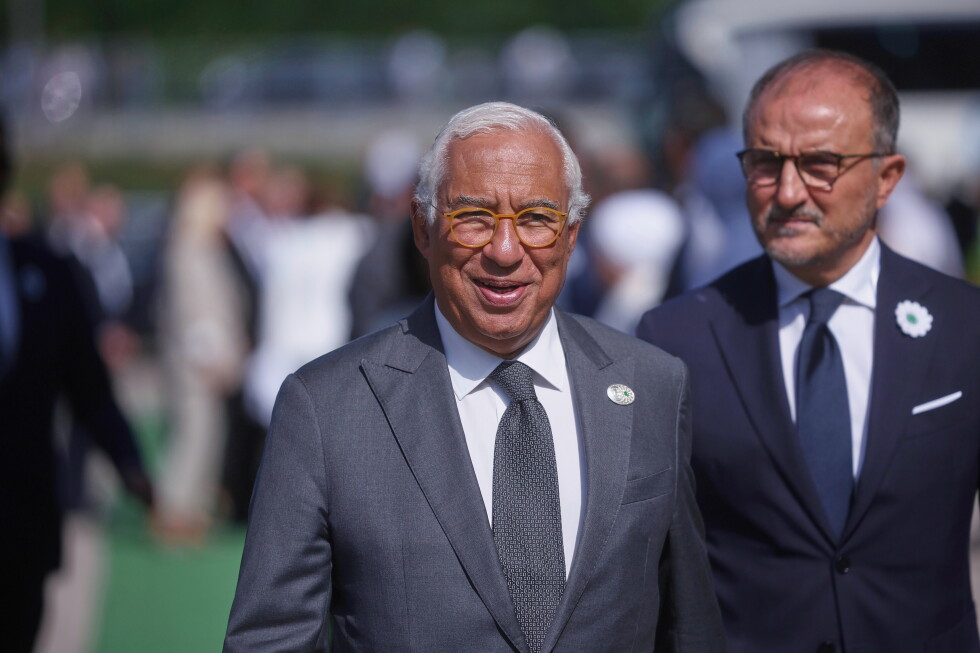
SARAJEVO, Bosnia-Herzegovina – Ahead of a landmark EU-Western Balkans summit this week, European Council President António Costa has reaffirmed that the European Union’s enlargement push for the region is not empty rhetoric, but a tangible and priority goal for the bloc. Making the first stop of his pre-summit tour through the Western Balkans in Sarajevo on Monday, Costa framed EU expansion as a critical geostrategic investment at a moment of rising global uncertainty.
Against a backdrop of shifting global power dynamics and widespread economic volatility across the globe, Costa emphasized that enlargement delivers long-term dividends for the entire European continent. “Enlargement is an investment in the peace, stability and security of our continent,” he stated, adding that his regional tour itself serves as concrete proof that the EU’s commitment to Western Balkan aspirants is as genuine as the membership opportunity on offer.
This Friday, Costa will co-chair the high-stakes summit in the Adriatic coastal resort of Tivat, Montenegro. The gathering will bring together heads of government and senior officials from all 27 EU member states, alongside leadership from six Western Balkan candidate countries: Albania, Bosnia-Herzegovina, North Macedonia, Kosovo, Serbia, and host nation Montenegro. Each of the six nations is progressing through the accession process at different speeds, with Montenegro and Albania currently leading the pack in meeting the bloc’s requirements.
In recent years, the EU has ramped up its outreach and encouragement for reform across candidate nations, driven in large part by concerns over growing geopolitical influence from Russia and China in the Western Balkans. Ukraine and Moldova are also part of a wider group of roughly 10 countries that hold aspiring member status, expanding the bloc’s ongoing enlargement agenda beyond the Western Balkans.
Accession to the EU requires candidate states to align their entire legal and regulatory frameworks with 35 distinct policy areas, known as “chapters”, that cover everything from judicial standards and human rights protections to agricultural policy and fishing regulations. Every chapter requires unanimous approval from all 27 current EU members both to open negotiations and to finalize its completion, making the process deliberately rigorous and slow.
Costa made clear that Friday’s summit is designed to build on existing momentum, reinforcing cooperation and accelerating progress toward membership. “The event will be a clear demonstration of our determination to bring forward our cooperation and build on the momentum of the European Union’s enlargement,” he said.
Among the six candidates, Bosnia-Herzegovina lags furthest behind, still grappling with deep ethnic divisions decades after the 1992-1995 Bosnian War that left over 100,000 people dead and displaced millions. The country’s pro-Russia Bosnian Serb separatist leadership has continued to push for greater autonomy, a dynamic that originally fueled ethnic conflict following the collapse of the former Yugoslav federation and continues to undermine post-war reconciliation today.
Costa’s visit coincides with a key leadership transition for the international peace architecture governing Bosnia. The Peace Implementation Council, the international body established by the 1995 U.S.-brokered Dayton Peace Accords to oversee the country’s post-war stability, is set to appoint a new High Representative this week following the resignation of German diplomat Christian Schmidt.
The High Representative holds broad authority to revise legislation and remove public officials who threaten the country’s post-war reconciliation process. Local Bosnian media reports have indicated that PIC member states remain deeply divided over the choice of Schmidt’s successor. Speaking on the appointment, Costa stressed that the incoming representative must align with Bosnia’s stated European integration goal. “If the future of the country is in the European Union it’s important that the new high representative … embodies Bosnia and Herzegovina choice to pursue European Union accession,” he said.
Costa also urged Bosnian officials to set aside internal divisions and prioritize the accession process, calling for immediate action to speed up required reforms. “Now is the time to focus on your goal and accelerate the pace of reforms,” he told local leaders.