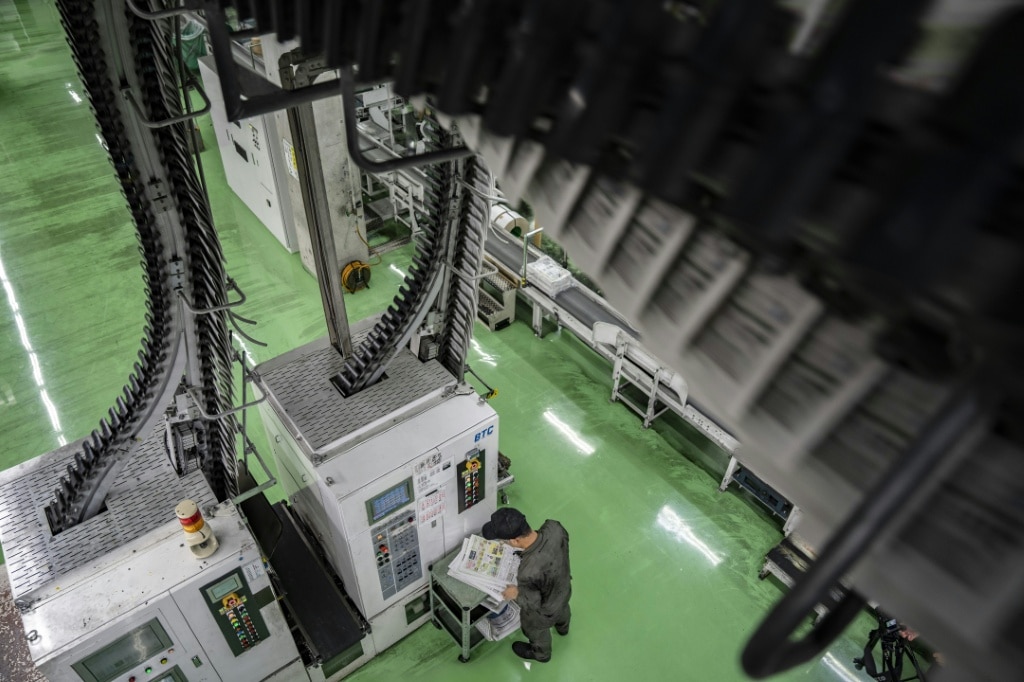
In a Kyoto print factory, the steady hum of machinery and rustle of freshly printed paper fill the air as two creators watch their collaborative photo essay roll off the press onto thick broadsheet newsprint. For artists Kazuma Obara and Akihico Mori, this physical, tactile process is more than just a production choice—it is a deliberate stand against the homogenization of digital content and artificial intelligence in the modern creative landscape.
Their project is one small thread in a rapidly growing movement across Japan: amid the decades-long decline of traditional print media, handmade self-published zines are winning legions of new fans, particularly among young creators and audiences. This renaissance underscores Japan’s enduring cultural affection for tangible paper media even as digital platforms and AI-generated content reshape the creative industry globally.
Obara, a 40-year-old photographer whose ink-stained hands betray his hands-on work, explains that unlike algorithm-driven social media feeds, print engages all five human senses. “Mobile phones are very insular,” he told AFP during a visit to the factory. “Print media is incredibly open. You can hand it to someone, you can read it together.” His creative partner Mori, a 44-year-old writer, echoed that sentiment, noting that holding a handmade zine lets readers directly feel a creator’s unique passion. “That’s what makes it so appealing,” Mori said. “AI simply can’t replicate it.”
The pair’s finished work went on to display at Kyotographie, the popular international photography festival that wrapped up in Kyoto this past May. Their printing was made possible through a new program from Kyoto Shimbun, a major regional newspaper that has opened up its underutilized printing presses to independent creators as traditional newspaper subscriptions continue a steady decline.
Yoshihiko Okazaki, a representative of Kyoto Shimbun Printing, said the program has drawn creators across generations, from teenage artists to creators in their 70s. “Surprisingly, it resonates with younger people,” Okazaki said. “I even hear comments like, ‘it’s interesting precisely because it’s old.’”
Japan’s broader print industry has faced steep contraction for decades. Data from the Japan Newspaper Publishers & Editors Association shows national newspaper circulation peaked at 53.76 million copies in 1997, and has fallen to less than half that number by 2025. Overall book and magazine sales have dropped even more sharply, sliding to just 40% of the industry’s 1996 peak of 2.6 trillion yen ($16.3 billion). Fears of further disruption from AI have spread across the global creative industry: a 2025 UK study found half of all novelists believe AI will likely replace their professional work in the coming years.
But unlike traditional mass print, the small-scale, DIY zine sector is expanding rapidly. Zines, which first emerged in 1930s United States among science fiction fan communities, have seen explosive growth in Japan in recent years, especially among younger creators. Forecasts from a Japanese private research firm, cited by public broadcaster NHK, project the total Japanese self-publishing market will reach 150 billion yen in the 12-month period ending March 2026—nearly double the market size just four years earlier.
This growing popularity was on full display at a recent Tokyo zine fair, where hundreds of visitors crowded aisles lined with handmade publications of every size, format, and theme—from abstract art collections to personal photography zines and raw personal essay monologues. For 22-year-old attendee Harumi Kikuchi, zines offer a diversity of perspective that algorithm-driven platforms cannot match. “AI and social media are driven by algorithms that feed us nothing but what we want to see or what suits us best,” she explained. “But the fact that many zine makers are here suggests there are many different worldviews.”
Watashi Kishino, a zine creator who draws hand-illustrated comics about her daily life in black and white, agrees that digital and AI tools have their place—but argues tangible print has an irreplaceable charm. “People can make a lot of things with AI and digital technology,” Kishino said, gesturing to her stack of hand-bound zines. “But I believe there’s a charm in having something tangible to hold in your hands like this.”
Even established traditional book retailers are leaning into the zine boom, as younger audiences move away from mass-produced physical books. Sanseido, a 145-year-old bookstore located in Tokyo’s historic Jimbocho book district, added zine sections to its shelves nearly a year ago. “We felt that zines could appeal to a different audience than traditional readers,” said Masato Sugiura, deputy head of the store’s sales promotion unit. “Everyone is looking for something that really speaks to them. Readers are perhaps drawn more to zines, which are niche and cover a broader range of topics.”
For creators like Kishino, the zine renaissance offers a hopeful sign that physical paper media will persist even in an increasingly digital world. “There’s warmth that only paper can offer,” she said. “There’s definitely people who are looking for that.”