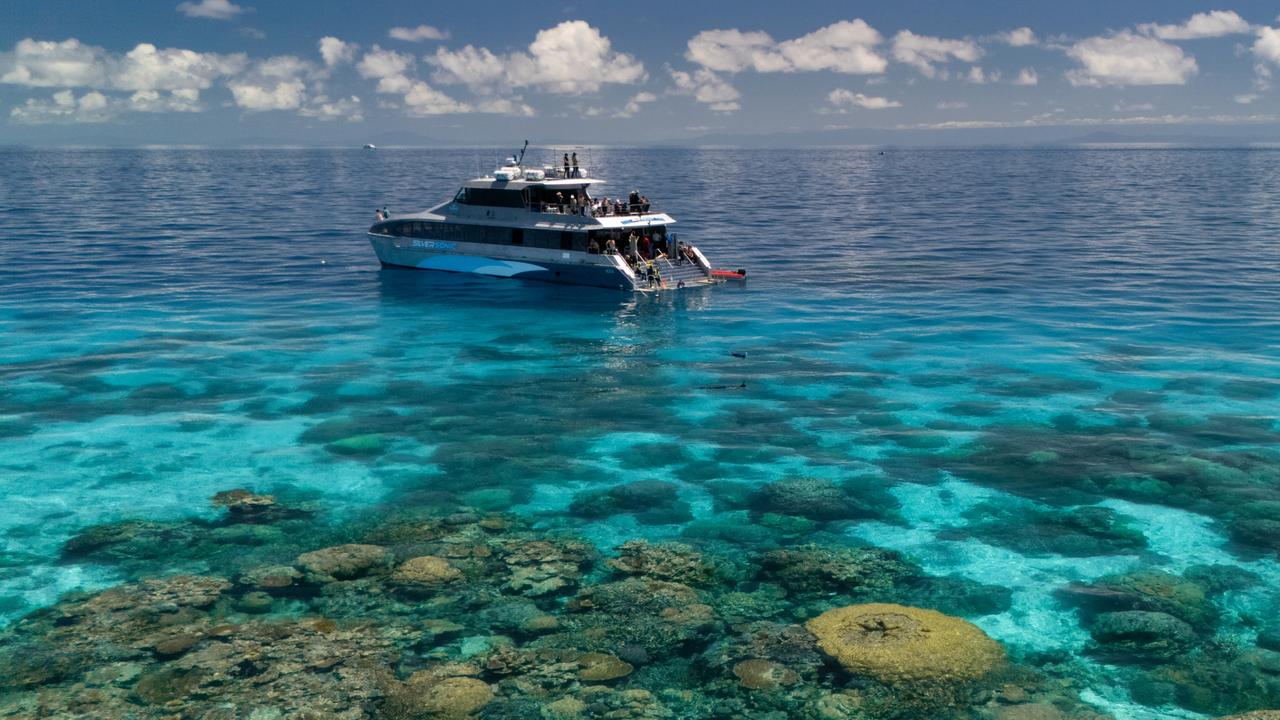
As the United Nations prepares to convene a critical global meeting on the future of one of Australia’s most cherished natural landmarks, five of the nation’s largest environmental advocacy organizations have issued an urgent formal appeal to the world body to place Great Barrier Reef land clearing practices under ongoing annual international oversight.
Drafted in April and signed by the Australian Climate and Biodiversity Foundation, Greenpeace Australia, the Australian Conservation Foundation, WWF Australia, and the Wilderness Society, the open letter calls on UNESCO to mandate annual progress reports from the Australian federal government through 2030, requiring verifiable evidence that rates of harmful land clearing in reef catchment areas are steadily declining.
Stretching more than 2,300 kilometers along Australia’s northeast coast, the Great Barrier Reef was inscribed on UNESCO’s World Heritage List in 1981. It contributes more than AUD $9 billion annually to the national economy and supports tens of thousands of jobs, cementing its status as both an ecological and economic cornerstone of the country. In recent decades, however, UNESCO has labeled the reef a site of “utmost concern” amid mounting threats from climate change, rising ocean temperatures, and declining water quality driven by upstream human activity.
Of all the hazards facing the reef ecosystem, unregulated land clearing in the river catchments that drain into the Coral Sea is ranked among the most damaging. Environmental advocates warn that large-scale deforestation loosens dry sediment and allows toxic agricultural pesticides to wash downstream directly onto reef systems, where sediment smothers living coral and blocks the sunlight coral needs to survive. In response to growing pressure, the federal Albanese government passed landmark reforms to the Environment Protection and Biodiversity Act late last year, introducing mandatory federal environmental assessments for all new land clearing projects within 50 meters of waterways that flow into the reef catchment.
While the letter acknowledges that the new reforms represent a promising first step toward addressing runoff and poor water quality, the groups warn that implementation could range from highly effective to completely inadequate to address the concerns UNESCO first flagged in 2025. The advocacy groups emphasize that securing strong, consistent enforcement of the updated national environment laws would offer a once-in-a-generation opportunity to reverse decades of damage to water quality caused by large-scale deforestation in upstream catchments.
The letter outlines that it will take between 12 and 36 months to accurately assess whether the reforms are successfully protecting high-value native vegetation and cutting harmful runoff that impacts the reef’s World Heritage-listed values. Several key gaps remain in the regulatory framework that have delayed meaningful oversight, the groups note: Queensland’s state government retains primary regulatory authority over most land clearing in reef catchments, and it remains unclear whether the state will fully cooperate with the new national rules or strengthen its own existing regulations. Additionally, the national environmental standards that will guide land clearing assessment decisions have not yet been finalized, there is no comprehensive public data on ongoing clearing activity, and no formal compliance mechanisms to enforce reporting requirements—current rules rely entirely on voluntary self-referral by landholders. The new federal National Environmental Protection Agency, tasked with enforcing the reforms, will not launch until at least July 2026, leaving a years-long gap in formal regulatory oversight.
New details of regulatory gaps emerged last week during Senate estimates hearings, where it was revealed that out of 248 calls and 11 emails from landholders seeking clarification on land clearing rules from the Department of Climate Change, Energy, the Environment and Water (DCCEEW), only six landholders received a formal pre-referral consultation meeting. Department officials confirmed they expect only two or three of these inquiries to progress to full formal assessment, and they have yet to confirm how many of the requests relate specifically to projects within the Great Barrier Reef catchment. During questioning, Declan O’Connor-Cox, head of Queensland’s Environment Assessments branch, clarified that exemptions for ongoing continuous clearing do not apply to projects within 50 meters of reef catchment waterways: even if a property cleared the same stretch of land two years ago, any new clearing requires fresh assessment under the new rules.
Lyndon Schneiders, executive director of the Australian Climate and Biodiversity Foundation, emphasized that the reef is a defining Australian icon that requires urgent government action to protect. “The time is now for Environment Minister Murray Watt to lead and put in place strong protections to ensure the clearing stops and the reef is given a helping hand,” Schneiders said. “As a Queenslander, he knows the reef is special, and as a former agriculture minister, he also knows that sometimes a small number of cowboy beef farmers make the whole industry look bad. It is in everyone’s interest to stop the clearing and help the Reef.”
The appeal comes less than two months before the UNESCO World Heritage Committee convenes its annual meeting on July 19, where the future of the Great Barrier Reef and Australia’s management of the site will be a core item on the meeting’s agenda.