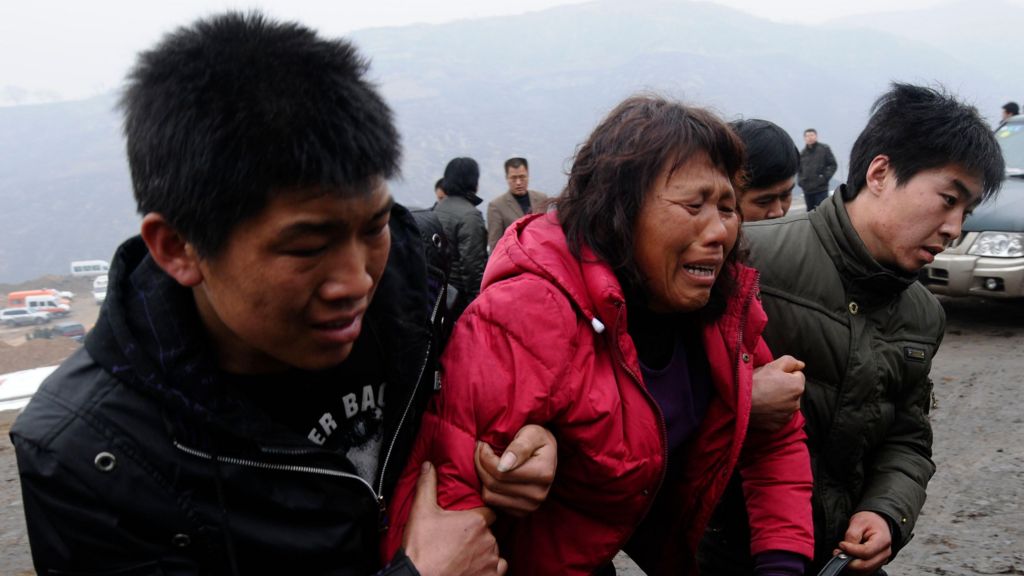
For generations, coal mining in China has been synonymous with deadly risk, a reality etched into local lore in Shanxi province – the beating heart of the nation’s coal industry. For decades, a common saying in the region warned that no one would descend into a coal pit unless they had no other choice, with miners widely described as trading their lives for a paycheck, staking their survival on each shift underground, where gas explosions, floods, and shaft collapses lurked around every unmarked turn. Over the past 15 years, sweeping national safety reforms had drastically reduced fatalities and pushed the industry’s lethal legacy into the rearview mirror for most Chinese citizens. That collective sense of progress was shattered on May 22, when a massive methane explosion tore through the Liushenyu coal mine in central Shanxi, leaving 82 miners dead and more than 120 others injured. The disaster is China’s deadliest coal mining accident in over 15 years, and it arrives at a pivotal moment: as Beijing pursues an ambitious transition to renewable energy, the tragedy serves as a brutal reminder that the country remains tied to an industry that has claimed tens of thousands of lives over the past half-century.
Multiple accounts from current and former workers paint a picture of flagrant, long-unaddressed safety failures at the mine. Chen, a former Liushenyu miner who spent two years at the operation, told the BBC that everyone in the area knew the site was a high-methane mine with a complex, criss-crossing network of unregulated tunnels and unrecorded working faces. For him, the disaster was not an unexpected tragedy – it was only a matter of time. One survivor recalled the chaos of the blast to Chinese state broadcaster CCTV, describing how the explosion’s shockwave knocked all workers to the ground, choking the tunnels with thick, blinding dust that left disoriented survivors scrambling for the exit for more than 10 minutes. Rescue efforts concluded with no remaining hope of finding survivors, and authorities have launched a full investigation into the cause of the blast.
Industry experts note that most coal mine explosions are triggered when accumulated methane or coal dust comes into contact with an ignition source, and even in inherently risky underground environments, fatal accidents are almost always tied to preventable human failures: inadequate management oversight, broken safety protocols, and systemic non-compliance with regulations. Hong Chen, a professor at Jiangnan University’s Institute for National Security and Green Development, emphasized that modern Chinese coal mine safety systems are fully capable of preventing catastrophic explosions with proper safeguards. Speaking to the BBC, he stated clearly: “Based on the coal mine safety management and technical systems we have in place today, this accident should not have happened.”
Initial official investigations confirm that Liushenyu, a privately operated mine run by the Tongzhou Group, committed serious, ongoing illegal violations, though authorities have not yet released a full public breakdown of their findings. The BBC has been unable to reach Tongzhou Group for comment, and the company has not issued any response to the allegations. State media reports have uncovered a pattern of deliberate violations that put workers at extreme risk: on the day of the blast, only half of the miners working underground were officially registered; most workers were barred from carrying mandatory location tracking devices; the operation included unapproved secret tunnels, and an inaccurate site blueprint that slowed rescue efforts. One current worker told Chinese outlet Lengshan Record that the company banned tracking devices specifically to hide their illegal mining of unapproved coal seams, noting “Wearing trackers would expose it.”
Public records also confirm that the Liushenyu mine was flagged for severe safety hazards as early as 2024, when it was added to a high-risk watchlist published by the Chinese National Mine Safety Administration. The following year, Tongzhou Group was fined twice for repeated safety violations at the site. In the wake of the disaster, authorities have placed all senior management of Tongzhou Group under investigative control and suspended operations at all of the company’s other mining holdings.
The Liushenyu tragedy comes after decades of dramatic progress in coal mine safety across China. Since 1990, annual coal mining fatalities have fallen by more than 90%, even as total coal output has more than doubled. The transformation followed sweeping national reforms: tighter regulatory oversight, mandatory gas monitoring infrastructure, clearer accountability for mine operators, and the closure of thousands of unregulated small-scale private mines. Mechanization and automation have also reduced the number of workers required underground, aligning with the industry’s modern safety mantra: “Fewer people, more safety; no people, absolute safety,” according to Professor Hong Chen.
This push for safety has run parallel to China’s global-leading effort to transition to green energy, a core priority laid out in the country’s latest Five-Year Plan. Beijing has set a target to double national clean energy capacity by 2035 and reach net-zero carbon emissions by 2060, with massive solar and wind farms already constructed across the Tibetan Plateau and the deserts of Xinjiang, planned to send low-carbon power to China’s largest southern and western megacities. Coal’s share of China’s energy mix has shrunk gradually: coal-fired power generation declined for the first time in a decade last year, and industry profits fell 41.8% year-over-year, according to official data.
Even with this transition, China remains the world’s largest coal producer, accounting for just over half of global coal output in 2024, with 4.8 billion tonnes produced. Beijing has long framed coal as the “ballast stone” of national energy security, a reliable buffer against volatile global energy markets. That logic was validated most recently after the Iran war disrupted shipments through the Strait of Hormuz: when many other Asian economies faced severe oil price shocks, China’s stable coal supply insulated its economy from the worst impacts.
“China’s green energy push has not made coal disappear; it has changed coal’s role,” explained Roc Shi, a professor of energy and environmental economics at the University of Technology Sydney. “Coal is moving from being the engine of growth toward being a backstop for energy security and power system reliability.”
For the people of Shanxi, which contributes nearly 30% of China’s total coal output, coal remains more than an energy source – it is an economic lifeline for communities with few other employment options. “I’ll keep doing this job, because in our county, apart from work at the mines, it’s hard to find anything else. Otherwise you have to leave home and go somewhere else,” one electrician who works above ground at a local mine told the BBC. After hearing news of the Liushenyu blast, he said his mind went completely blank. Another local worker summed up the frustration of mining communities: “Ordinary people’s lives are wretched.”
Even with the well-known risks, former Liushenyu miner Chen notes that mining will always draw workers who have no other options to support their families. “Miners all work voluntarily” to put food on the table, he said. The Chinese government has vowed to hold all responsible parties fully accountable for the Liushenyu disaster, but for Chen and other local miners, any accountability measures come too late. “The state attaches great importance to it. But can the miners who died come back to life?” he asked.