Diplomatic efforts to resolve a months-long conflict between the United States and Iran have hit a new impasse, with Tehran’s top negotiator rejecting Washington’s toughened new peace framework and warning that the US cannot be trusted to honor its commitments.
The standoff comes after weeks of fraught, on-again off-again negotiations that have unfolded against a backdrop of military strikes, broken temporary ceasefires and escalating regional tensions that have disrupted global energy supplies. The core points of dispute remain Iran’s nuclear program, control over the strategically critical Strait of Hormuz, and the spreading conflict on the Lebanese border between Israel and Iran-backed Hezbollah.
On Sunday, Iran’s chief negotiator Mohammad Bagher Ghalibaf said in a televised address that Tehran would not sign off on any final deal until the full rights of the Iranian people are formally secured and upheld. His comments came shortly after multiple US outlets, including The New York Times and Axios, reported that former President Donald Trump had sent a revised, harder-line negotiating framework back to Iranian officials for review, leaving key details of the proposal still undisclosed.
Trump has publicly laid out two non-negotiable priorities for any final agreement: a permanent halt to all Iranian nuclear weapons development and the full reopening of the Strait of Hormuz, a critical global oil shipping chokepoint that Iran blockaded after the outbreak of the war earlier this year. In an interview with his daughter-in-law Lara Trump on Fox News, Trump claimed Iran had already agreed to the zero-nuclear-weapons stipulation, though Tehran has repeatedly pushed back on that assertion. “The one guarantee that I have to have is that there will be no nuclear weapons. They’ve agreed to that, and it was very interesting,” Trump told the program.
The current diplomatic push grew out of indirect talks that were already underway in February, when the United States and Israel launched a coordinated air and missile campaign that killed most of Iran’s top senior leadership. The US and its Western allies have long suspected Iran’s civilian nuclear program is a front for developing nuclear weapons, a charge Tehran has consistently denied.
Iran’s core demands remain unchanged: the release of an estimated $12 billion in Iranian assets that have been frozen by international sanctions, a concession Trump has not publicly committed to. Tehran has also dismissed Trump’s claims that Iran has agreed to destroy its stockpile of enriched uranium as completely baseless, according to state-run Iranian media. As of Sunday, Iranian state news agency Tasnim confirmed that negotiations on the draft text are still ongoing, with both sides submitting regular amendments, but no final agreement has been reached, and a total collapse of talks remains on the table.
“No agreement has yet been finalised, and it is possible that any agreement will be rejected,” the agency reported.
Military developments have further complicated the diplomatic process. The US stated one of its core war aims was the complete destruction of Iran’s ballistic missile program, with top US General Dan Caine claiming in April that more than 80 percent of Iran’s missile facilities had been destroyed in coalition strikes. But new CNN analysis of satellite imagery released Sunday found that Iran has already repaired and reopened 50 of the 69 tunnel entrances hit at 18 separate underground missile sites, undermining US claims of major progress on the objective.
While a temporary ceasefire between the US and Iran that took hold in April halted large-scale daily air strikes across Iran and the Persian Gulf, sporadic violence has continued. Iran’s state broadcaster IRIB reported last week that the Iranian Revolutionary Guard Corps shot down an American military drone that was approaching Iranian territorial waters, a claim US officials have not yet confirmed.
Negotiations over the Strait of Hormuz have also hit a snag. After Trump claimed any final deal would require Iran to charge no tolls or fees for commercial ships passing through the strait, Iranian officials quickly pushed back. State-run Fars News Agency reported no such clause exists in the current draft, and Iranian parliamentary news agency ISNA reported Saturday that a new bill formalizing Iranian sovereignty over the strait, including the right to charge administrative fees for shipping, is set to be introduced to parliament imminently.
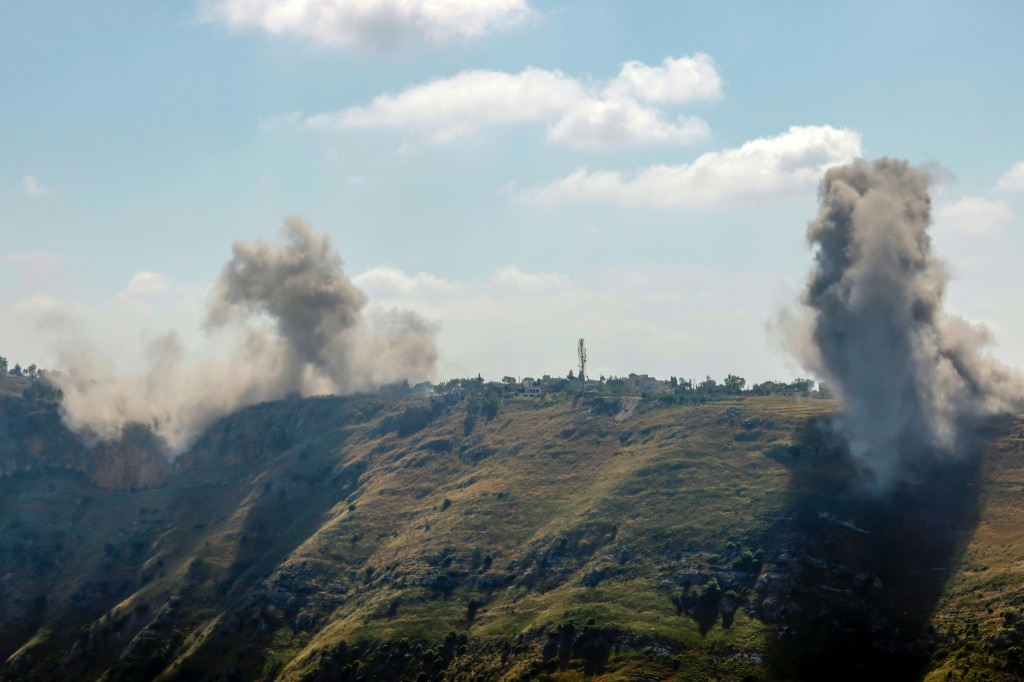
The conflict has also spilled over into Lebanon, where Israeli forces have escalated their offensive against Iran-backed Hezbollah in recent days. Tehran has insisted that any final peace deal with the US must include a resolution to the Lebanese front, where a fragile truce that went into effect April 17 has been violated repeatedly by both sides. Over the weekend, Israeli forces captured the strategic Beaufort Castle, a medieval fortress that served as an Israeli military base during the country’s 22-year occupation of southern Lebanon. AFP photographers captured footage of an Israeli military flag raised above the castle, with heavy smoke billowing from the surrounding area.
Israeli Prime Minister Benjamin Netanyahu called the capture of the castle a major turning point in Israel’s campaign against Hezbollah. “The capture of Beaufort is a dramatic stage and a dramatic shift in the policy we are leading,” Netanyahu said. But Hezbollah lawmaker Hassan Fadlallah pushed back on the Israeli narrative, noting that the castle was not used as a military outpost by the group, and calling the flag raising a deliberate provocation. “The raising of the Israeli flag there should provoke the feelings of every loyal patriot,” Fadlallah said.
Lebanese officials have accused Israel of carrying out a scorched-earth policy as it expands its ground offensive, and have called for an immediate permanent ceasefire. The United Nations Security Council has scheduled an emergency meeting for Monday to address the escalating violence, diplomatic sources confirmed to AFP.