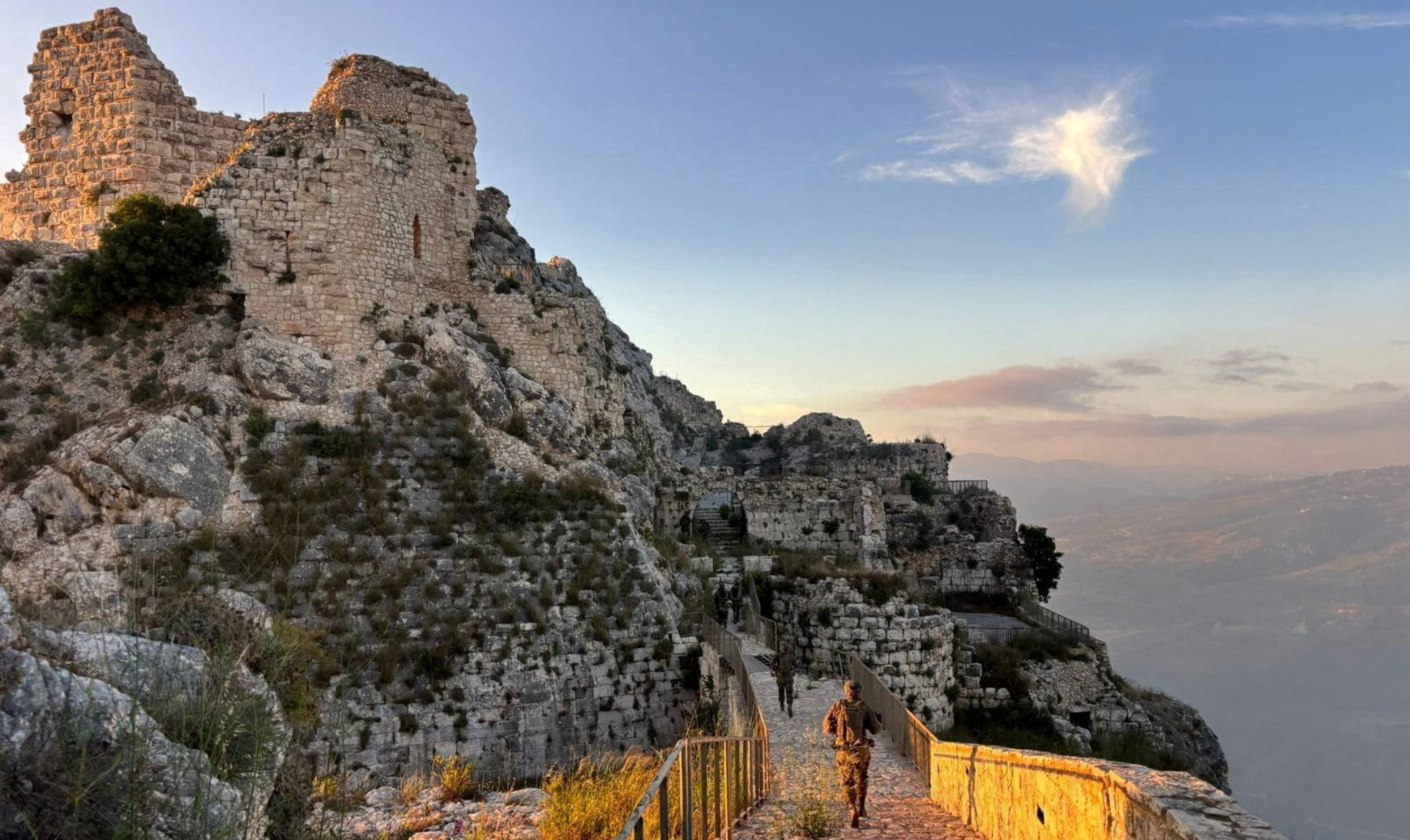
In a significant escalation of its ground campaign in southern Lebanon that defies an existing nominal ceasefire, the Israeli military announced Sunday it has seized control of the 900-year-old Beaufort Castle and the strategic high ground surrounding the historic site. The takeover pushes Israeli military presence deeper into Lebanese territory, extending well beyond the “Yellow Line” demarcation zone established under a ceasefire agreement in April.
The capture of the castle, which bears the Arabic name Qalaat al-Shaqif, comes after days of brutal close-quarters combat and heavy Israeli airstrikes on nearby villages, where infantry forces have battled Hezbollah militants across the region’s rugged terrain. Sitting just five kilometers from Nabatieh, southern Lebanon’s major population center, the medieval fortress occupies a critical vantage point that overlooks vast swathes of both southern Lebanon and northern Israel. This is not the first time Israeli forces have held the site: troops first captured Beaufort Castle during the 1982 invasion of Lebanon, retaining control until Israel’s full withdrawal from the country in 2000.
Israeli Defence Minister Israel Katz confirmed he had explicitly ordered the military to widen the scope of its operations in Lebanon, cross the Litani River — which had previously served as a de facto boundary for Israeli forces — and seize control of the Beaufort Ridge. Following the castle’s capture, Katz announced Israeli troops would remain positioned at the site as part of a newly expanded Israeli “security zone” inside Lebanese territory.
The latest territorial advance coincided with a new mass evacuation order issued by the Israeli military covering areas between the Zahrani River to the south and the Litani River to the north, a stretch of land extending roughly 40 kilometers from the Israel-Lebanon border. In a social media statement, Israeli military spokesperson Avichay Adraee warned: “Anyone present near Hezbollah elements, facilities, or combat means endangers their life. Any building used by Hezbollah for military purposes may become subject to targeting.” The Israeli military added in an official briefing: “A significant number of ground soldiers commenced offensive operations aimed at expanding the Forward Defense Line… The operation is currently expanding to additional areas.”
Casualties continue to mount on both sides amid the escalating fighting. Lebanon’s health ministry reported Saturday’s Israeli strikes killed at least 16 people and injured 34 more, bringing the total death toll in Lebanon since the outbreak of hostilities in early March to 3,371, with an additional 10,129 people wounded. On the Lebanese side, Hezbollah continued to resist the advance Saturday, launching a series of attacks against targets in northern Israel and engaging Israeli troops in southern Lebanon. The militant group confirmed it was confronting Israeli forces on the outskirts of the towns Zawtar al-Sharqiyah, Yohmor al-Shaqif and Dibbine, noting Israeli troops “had not yet succeeded in taking control of the towns.”
The Israeli military documented more than 25 projectiles fired from Lebanese territory into Israel on Saturday. Israel’s Home Front Command confirmed air raid sirens activated in the northern Israeli cities of Karmiel and Safad, marking the first time alerts have sounded in those urban centers since the April ceasefire took effect. On Sunday, the Israeli military also announced one of its soldiers had been killed a day earlier in a Hezbollah explosive drone attack, pushing the total number of Israeli troops killed in Lebanon operations since early March to 25. Hardline Israeli Finance Minister Bezalel Smotrich doubled down on calls for escalated retaliation this week, demanding Israel “destroy one hundred buildings” in Lebanon for every drone strike that kills an Israeli soldier. A recent report from Israeli public broadcaster Kan found Hezbollah’s advanced drone capabilities are currently limiting 80 percent of Israeli ground assaults across southern Lebanon.
Diplomatic efforts to de-escalate the conflict remain ongoing. Military delegations from both Israel and Lebanon held US-brokered security talks in Washington on Friday, with a new round of negotiations scheduled for next week. Lebanese Prime Minister Nawaf Salam acknowledged the outcome of the diplomatic process remains uncertain, but framed negotiations as the best available path forward. “It is not guaranteed, but it is the least costly path for our country and our people,” Salam said.