On the final day of the 2026 Shangri-La Dialogue defence summit in Singapore, Japanese Defence Minister Shinjiro Koizumi delivered a pointed rebuke of Beijing’s accusations that Tokyo is pursuing a path of “new militarism,” turning the tables to cast China’s rapid military expansion and lack of transparency as the primary source of international concern.
Koizumi’s remarks marked one of the sharpest public responses from Tokyo to date, coming in the wake of repeated criticism of the military buildup spearheaded by Japanese Prime Minister Sanae Takaichi, who took office in October 2025. A week ahead of the summit, Chinese Ministry of National Defence spokesperson Jiang Bin had issued a stark warning, claiming that “the grey rhino of a remilitarised Japan is gathering speed” and urging the global community to coordinate efforts to contain Japan’s resurgent militarism.
Long-running friction between the two powers is rooted in Japan’s World War Two invasion of China, a historical rift that continues to shape modern diplomatic relations. For Japan, the current military expansion marks more than a decade of consistent growth in defence spending: the country has broken annual defence budget records for 12 consecutive years, with its latest cabinet-approved budget topping 9 trillion yen ($57 billion), putting Tokyo on track to hit its target of devoting 2% of GDP to military expenditure.
Addressing an audience of regional defence officials — including representatives from Asian nations that suffered Japanese occupation during World War Two — Koizumi framed Japan’s military upgrades as a responsible and necessary step. “It is only natural that every country, including Japan, updates its defences to meet new challenges and to contribute to peace in the region,” he stated, promising that Tokyo would maintain “a high degree of transparency” and sustain open dialogue with global partners. “What are we developing these capabilities for? And based on what thinking? Japan will move forward while making a clear explanation to the international community.”
Directly pushing back on the new militarism label, Koizumi said the claim was “nothing further from the truth.” Pointing obliquely to China’s arsenal, he argued: “There’s a country that has a huge arsenal of nuclear weapons and strategic bombers. Japan has neither of these weapons. And yet Japan is labelled with ‘new militarism’. Isn’t it strange?”
After his keynote address, a Chinese military delegate pressed Koizumi on whether Japan would issue a formal apology to World War Two victims across China, South Korea, and Southeast Asia. Koizumi sidestepped the apology question, instead doubling down on criticism of Beijing. “China continues to increase its defence spending at a high level and is rapidly expanding its military capabilities across a wide range of areas without sufficient transparency,” he said, adding: “China’s external approach and military activities are matters of serious concern for Japan and the international community.” Despite the sharp exchange, he noted that “Japan’s door is always open” for diplomatic communication with China.
The question of official apologies for wartime atrocities has remained a persistent sticking point in bilateral relations for decades, with Beijing repeatedly rejecting past Japanese apologies as insufficient. Notably, Koizumi’s own father, former Prime Minister Junichiro Koizumi, issued multiple formal apologies for Japan’s wartime aggression during his tenure.
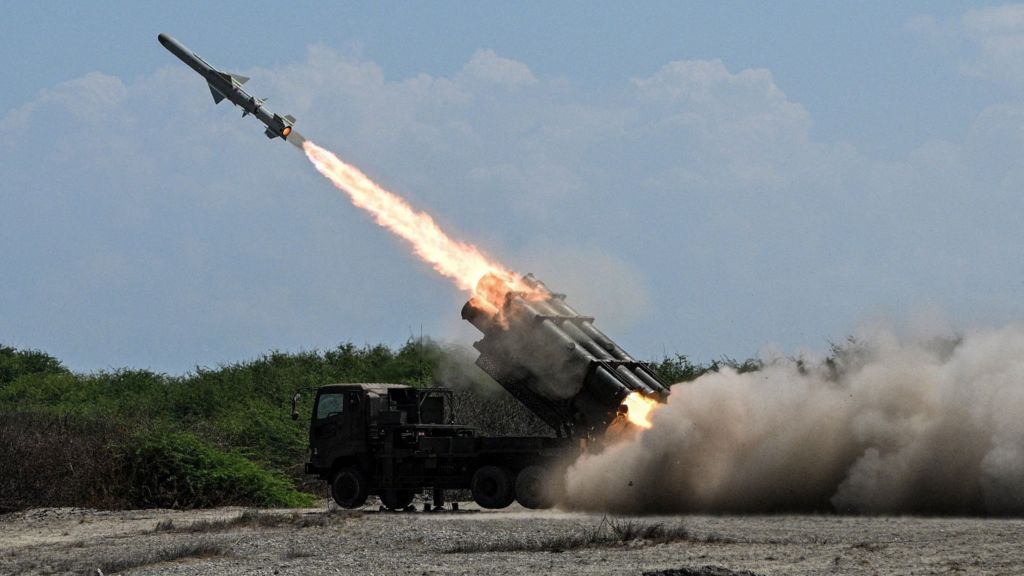
Since taking power, Takaichi has advanced sweeping changes to Japan’s post-war security framework. Beyond expanding the defence budget, her administration plans to invest in new surface-to-ship missiles and land- and underwater-deployed unmanned drones. Tokyo has also recently relaxed regulations to allow the export of lethal weapons to foreign nations, a move designed to strengthen Japan’s domestic defence industrial base, and is set to revise key national security policy documents by the end of 2026.
Most controversially, Takaichi has pushed for amendments to Article 9 of Japan’s constitution, the landmark pacifist clause that formally renounces war as a tool of state policy. Tensions between Tokyo and Beijing hit a new high in November 2025, after Takaichi stated that Japan could deploy its Self-Defense Forces in response to a Chinese attack on Taiwan, drawing fierce pushback from Beijing.
Takaichi’s security shifts have also deeply divided Japanese public and political discourse. While supporters argue that increased defence capabilities are critical to deterring potential aggression from China, critics warn that the moves will inflame regional tensions and abandon the post-war pacifism that has been a core pillar of Japanese national identity for 80 years. In recent months, large-scale anti-war protests have swept across the country, with some demonstrations ranking among the largest Japan has seen in decades.