When the week began, the tentative ceasefire between Iran and the United States looked far less like a concrete step toward lasting peace and more like a drawn-out negotiation over the core political purpose of the conflict itself. By week’s end, that surreal, muddled state of affairs had not changed.
Over the course of the week, Tehran accused Washington of continuing offensive military strikes, while U.S. officials maintained all their actions were strictly defensive in nature. Rumors of a proposed 60-day ceasefire extension circulated alongside official denials, conflicting counterclaims, and fierce disputes over control of the Strait of Hormuz, the blockade of Iranian ports, and the conditions under which commercial shipping could resume regular operations through the strategic waterway.
As frontline fighting has tapered off, the underlying political stakes of the conflict have been thrown into sharp relief. Ceasefires are often dismissed as nothing more than temporary pauses in violence, but their true function is to reveal the moment when military force has hit its political limits. As military theorist Carl von Clausewitz famously argued, war is simply the continuation of political dialogue by other means; a ceasefire fits squarely within that framework. It is the turning point when leaders begin to question whether continued force still advances their core goals, or whether escalating violence now threatens priorities they value more.
This question is uniquely fraught in the current conflict because Washington’s core objectives have never been clearly defined. At different turns, the conflict has been framed as a deterrence campaign, a punitive operation, a pressure campaign targeting Iran’s nuclear program, and a maritime crisis centered on Hormuz. While these goals overlap, they demand different approaches to warfare and do not align on a single core political end state — and crucially, they also require very different types of ceasefire agreements. A ceasefire after a punitive operation requires claiming that deterrence has been restored. A ceasefire ending a maritime crisis needs tangible arrangements that shipping companies and maritime insurers can trust. A ceasefire emerging from nuclear pressure requires a structured sequence of diplomatic talks. A ceasefire tied to regime change demands far larger, far less sustainable concessions.
Historical analysis shows that durable ceasefires almost always emerge from one of three conditions: the warring parties have reached a military stalemate, fighting has opened a viable path for diplomatic negotiation, or continued conflict has begun to undermine the very political project it was intended to advance. Three landmark 20th century conflicts — the 1950–1953 Korean War, the 1973 Yom Kippur War, and the 1980–1988 Iran-Iraq War — illustrate this pattern: conflicts only end when military force can no longer deliver the political outcomes leaders initially sought.
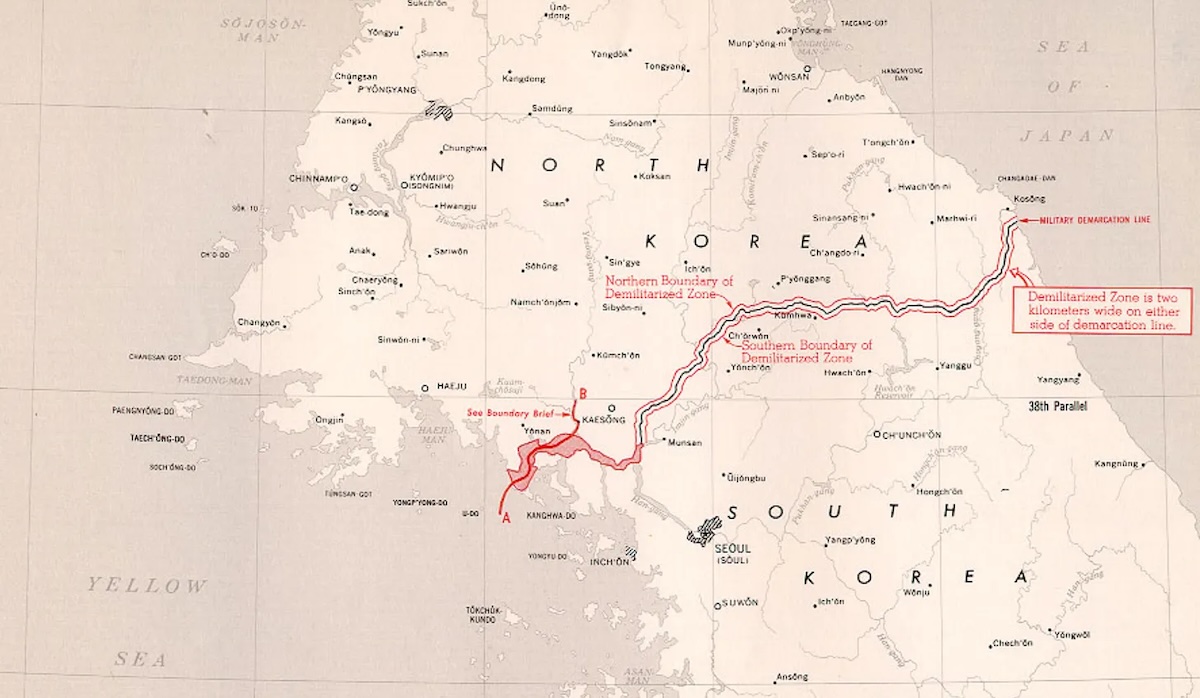
The Korean Armistice Agreement was a ceasefire born of exhausted ambition. The war began when North Korea launched a forceful attempt to reunify the Korean Peninsula by force, expanded after the U.S.-led coalition shifted from repelling the invasion to rolling back communist control in the North, and shifted again when China entered the war to prevent that outcome. By 1953, after three years of catastrophic human and material loss, frontline positions had stabilized close to where the conflict started. The armistice simply formalized a reality the battlefield had already made clear: neither side could impose reunification at a cost it was willing to continue paying. Though the armistice never evolved into a formal peace treaty — its greatest limitation — that same ambiguity is what gave it its remarkable durability. It reduced large-scale violence by accepting that the core political question of Korean unification would remain unresolved. The Korean Peninsula has remained in a state of frozen conflict for 70 years, managed across a demilitarized border and maintained by deterrence, and the ceasefire has endured precisely because it demanded less from political negotiation than the war demanded from military force.
This same dynamic is playing out in the current standoff between Iran, the U.S., and Israel. All three sides still retain the capacity to inflict significant damage on one another, yet none can convert that damage into a stable, widely accepted political outcome. Israel can launch strikes to degrade Iranian military capabilities; Iran can retaliate, disrupt global shipping, and raise the cost of regional instability for its adversaries; the U.S. can deploy overwhelming air and naval power in the region. But the core question is no longer whether any side can hurt its opponents — it is whether additional harm will improve the political position of the party inflicting it.
This is where the U.S. position becomes particularly precarious. Air and naval power are politically feasible for Washington in a way that a full ground war with Iran is not. That does not mean a ground invasion is imminent, or even likely, but it does mean that any further escalation of the conflict is politically far harder to pursue. If Washington’s goal is simply deterrence, limited strikes may be sufficient. But if the goal is to force lasting changes to Iran’s behavior, secure the Strait of Hormuz on terms acceptable to Tehran, or negotiate a durable nuclear agreement, the military tools currently available start to look far less decisive. The U.S. retains vast overall military capacity, but the share of that capacity that is politically usable shrinks as its stated objectives expand.
The 1973 Yom Kippur War offers a separate, more hopeful lesson. In October 1973, Egypt and Syria launched a surprise attack on Israel, shattering the confidence Israel had gained after its 1967 victory and restoring Arab strategic initiative through force. While Israel ultimately recovered its military position, the early shock of the attack transformed the political landscape of the conflict. It created significant risks, including the threat of direct superpower escalation, but it also opened a new path for diplomatic negotiation. The ceasefire mandated by UN Security Council Resolution 338 quickly led to formal negotiations, disengagement agreements, and U.S.-led mediation. In this case, the structure of the ceasefire gave all sides room for diplomatic compromise: Egypt could frame the war as a restoration of Arab national honor after the 1967 defeat; Israel could frame the outcome as survival and successful military recovery; the U.S. could turn a dangerous regional crisis into an opening for diplomatic progress. The ceasefire became more than a temporary pause because it gave every party a way to frame restraint as a political victory. While it did not resolve the deeper Arab-Israeli conflict, it broke years of diplomatic deadlock and created meaningful progress where the status quo had stagnated.
This is the most optimistic reading of the current proposal for a 60-day ceasefire extension. The 60-day timeframe itself is less important than what the parties choose to build within it. If the extension creates a structured process that links progress on Hormuz access, port operations, shipping safety, sanctions relief, oil exports and nuclear negotiations into a cohesive diplomatic sequence, the ceasefire can become a meaningful political tool. If these issues remain disconnected bargaining chips, the temporary pause in fighting will struggle to gain lasting traction. The region has already seen too many instances where violence halted just long enough for all sides to regroup and resume confrontation. A genuine, effective ceasefire needs to do more than reduce conflict intensity; it needs to open a path toward resolution.
The 1980–1988 Iran-Iraq War offers the third critical lesson, particularly for understanding Iran’s current calculus. When Iraq invaded Iran in 1980, Iraqi leaders expected the newly established revolutionary Iranian state to be weak and disorganized. What followed was eight years of brutal, grinding war defined by survival, nationalism, and ideological mobilization for Iran. For the Islamic Republic, national endurance was tied to the legitimacy of the revolution, so accepting a ceasefire in 1988 was an acutely painful political step. Ayatollah Ruhollah Khomeini’s famous description of the agreement as drinking from a “poisoned chalice” captured the deep humiliation of ending a war that had been sanctified by years of sacrifice.
Even so, Iran ultimately chose to end the conflict. The regime did not abandon its core ideology, but it recognized that continuing the war threatened the state and the revolution itself more than ending it would. This remains a useful correction to common misperceptions of Tehran’s decision-making. Ideological regimes can be deeply pragmatic when regime survival is at stake, even if they frame that pragmatism in the language of national dignity, endurance, and resistance. This dynamic is already visible in current Iranian politics, where the ultra-conservative Paydari faction continues to push for maximalist demands in ceasefire negotiations. Even with these internal divisions, however, pragmatic considerations are likely to win out. For Iran, a ceasefire can be both publicly humiliating and strategically necessary, both outwardly defiant and privately pragmatic.
This lesson applies directly to Iran’s current position, even if circumstances have shifted. Tehran can use its control over Hormuz, proxy forces, missile and drone technology, and a strategy of attrition to make the war extremely costly for its adversaries, and it can withstand punitive strikes far better than many of its enemies expect. But it also must prioritize regime survival, protect access to critical economic resources, and avoid a escalation that unites a broad international coalition against it. As the conflict spreads to disrupt global shipping, raise energy prices, deepen the impact of sanctions, and increase domestic economic strain, Tehran must increasingly confront a choice: does continued confrontation strengthen the regime, or does it trap it in an uncontrollable conflict that threatens its long-term stability?
Israel faces a version of the same question. It can continue striking Iranian assets across the region, maintain its freedom of operation in theaters where Iranian-aligned forces are present, and justifiably claim tactical gains from these strikes. But tactical success still needs to be converted into a sustainable strategic outcome. If Israel’s core goal is to restore deterrence against Iran, the ceasefire gives it a framework to declare its message has been delivered and end large-scale operations. If the goal is to force deeper, systemic changes to Iranian behavior, however, Israel will need a prolonged campaign and far greater military and political commitment from the U.S.
The U.S. faces the biggest stakes in this dynamic, because its objectives in the conflict have always been the most poorly defined. The current U.S. administration can claim that its use of force pushed Iran to the negotiating table, and that claim holds partial truth. But if the ceasefire requires reopening Hormuz, relaxing port blockades, allowing resumed Iranian oil exports, and returning to nuclear diplomacy, the outcome will look less like coercion producing total surrender and more like coercion producing a negotiated bargain. That could still be a positive outcome — it is simply a different outcome than the rhetoric of total punishment suggests.
This context frames the debate over the proposed 60-day ceasefire extension. The agreement will ultimately be judged by what it clarifies: if it makes U.S. objectives clear, restores reliable commercial transit through the Strait of Hormuz, and opens a credible path back to nuclear diplomacy, it can become a serious political tool for de-escalation. If it leaves core objectives undefined, with Iran and the U.S. continuing to trade accusations and Israel maintaining an independent tempo of strikes, the temporary pause will amount to little more than an acceptance of ongoing risk, not a path out of the conflict.
The history of ceasefires is valuable because it helps avoid focusing on the wrong question. The core issue is not whether the warring parties trust one another — they do not, and they do not need to. The Korean Armistice endured for decades without reconciliation between the two Koreas. The 1973 Yom Kippur ceasefire succeeded because diplomacy quickly gave the pause clear direction. Iran accepted a ceasefire with Iraq because continuing the war had become more dangerous than ending it. In every case, a durable ceasefire emerged only when military force had reached the limit of its political usefulness.
For global markets and businesses, the immediate challenge is the persistent lack of clarity around the political objectives of the ceasefire. Energy prices, maritime freight costs, insurance premiums, sanctions risk, and regional investment all become nearly impossible to price when the conflict shifts unsteadily between deterrence, nuclear pressure, maritime security, and regime change without settling on a single core goal. Markets can adapt even to negative outcomes when a clear end state is visible. They struggle greatly when core objectives keep shifting, especially in a conflict centered on the Strait of Hormuz — a narrow waterway whose stability impacts global oil supplies, inflation, aviation, insurance, and economic confidence far beyond the Gulf region.
Tracking meaningful signals will remain difficult as political objectives continue to shift, but there are key practical indicators to watch. A genuine ceasefire extension will quickly show up in changes to shipping patterns, declining insurance premiums for Hormuz transits, improved port access, shifts in official sanctions rhetoric, and a more constructive tone in nuclear diplomacy. Washington’s public messaging will matter because global businesses need clarity on whether the ceasefire is part of a narrow, limited bargain or a wider campaign of pressure on Iran. Iran’s behavior in and around the Strait of Hormuz will matter because commercial confidence depends on more than just formal legal access to the waterway. Israel’s military actions in theaters with Iranian-aligned forces will also matter, because escalation in one area can quickly undermine a ceasefire agreed in another. Behind all these indicators sits a larger question: will the U.S. succeed in restoring stable security order in the Gulf, or will the conflict once again demonstrate that the region’s current security framework continues to generate avoidable crises that threaten global economic stability?