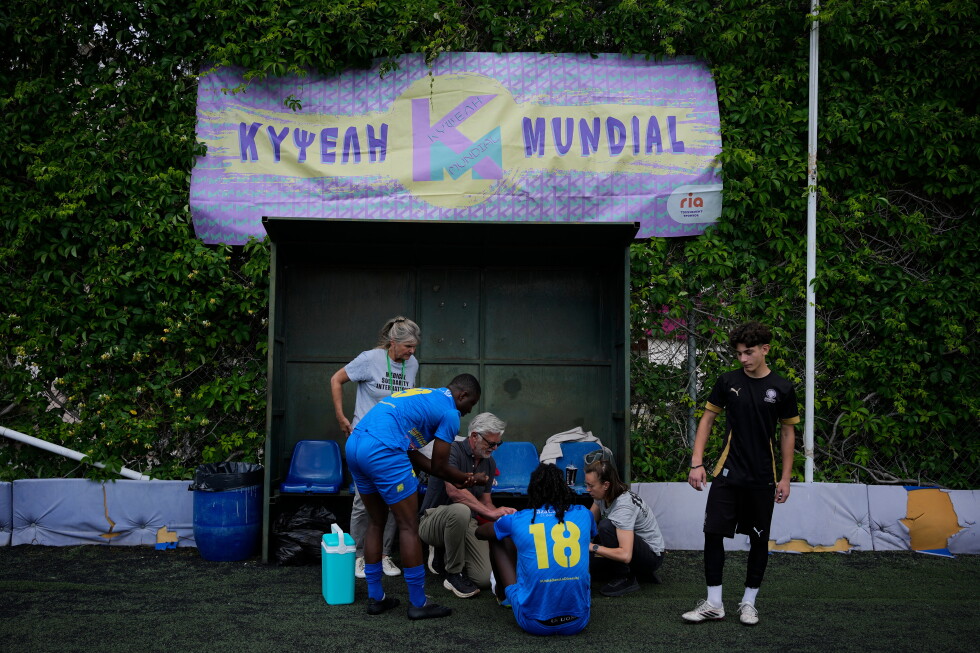
As the 2026 North America World Cup prepares to kick off, a unique, people-centered version of world football has already wrapped up its competition in the heart of Athens, Greece. Far from the glitzy mega-stadiums and luxury hospitality suites that will define the upcoming three-nation tournament, this grassroots gathering unfolds on cramped practice pitches tucked into dense urban neighborhoods, where spectators press against chain-link fences and the beat of live music drifts out onto surrounding residential streets.
Named the Kypseli Mundial after the vibrant central Athens district that hosts it, this tournament is built on a simple but powerful mission: to bring together migrant, refugee and local Greek players through a shared love of football, and to challenge rising anti-migrant sentiment across the country. Unlike the official World Cup, national teams that failed to qualify for the North American tournament are well represented here: amateur players with roots in Albania, Afghanistan, Cameroon, Guinea, Mali, Nigeria, Sudan and dozens of other nations take the field to represent their home communities.
The timing of the 2026 tournament carries heavy symbolic weight. Just one day after the official World Cup kicks off on June 11, the European Union will implement sweeping new stricter migration and asylum rules, which include tougher border enforcement, faster deportation procedures, and Greek government plans to relocate migrant detention centers to offshore facilities in African nations. For many of the participating migrant players, this policy shift has been a growing source of anxiety, making the Kypseli Mundial a welcome, joyful escape from political uncertainty.
The tournament was founded three years ago by Moussa Sangare, an Ivorian migrant living in Athens, who launched the event to break down fear and mistrust between local Greek communities and migrant populations. Greece has long stood on the frontline of irregular migration into the European Union, and was the epicenter of the 2015 refugee crisis. While irregular border crossings have dropped sharply over the past decade, anti-migrant rhetoric and policies have gained traction, with the Greek government ramping up border security and vowing to increase deportations.
Sangare, who worked tirelessly throughout the tournament coordinating schedules, welcoming teams, creating social media content and cleaning up pitches after matches, explained the core vision behind the event. “People are often afraid of migrants, but we wanted to change this narrative,” he said. “Interacting with migrants and second-generation migrants and doing things together: People change their minds through experience. For us, this tournament is like a mini–World Cup in Greece.”
That spirit of connection is visible across every pitch. One field, located near the archaeological site of Plato’s Academy where ancient Athenians first debated the meaning of citizenship, offers a sweeping view of the Acropolis in the distance, weaving the country’s ancient legacy of open debate into the modern-day event. On match days in Kypseli, supporters wave flags from their home countries, volunteers lead open-air drumming circles, and African pop music blares over portable speakers as coaches yell instructions and fans cheer on their teams.
For the amateur players, the tournament is a rare chance to step outside the grueling daily routines that define many migrant working lives in Athens. Most participants work long, low-profile hours in restaurant kitchens, hotels, construction sites and delivery roles across the city. Amissi, a Malian midfielder who works in a local factory assembling water heaters, called his first participation in the tournament a point of pride after his semifinal match.
Amelie Nguedia, a player with roots in Cameroon, echoed that joy. Even though Cameroon did not qualify for the official World Cup, she brought her full energy to the Kypseli tournament, dancing onto the pitch before kickoff to the delight of her teammates. “Coming to play here is a real pleasure,” she said. “We aren’t professionals, but we love participating.” She added that she would be cheering on Ivory Coast in the official World Cup this summer.
Over five weeks of competition, 21 teams battled for the title, with Nigeria taking home the men’s championship and local Greek neighborhood club Fostiras Kaisarianis claiming the women’s trophy. Head referee Chara Vogiatzidaki emphasized that the tournament’s impact goes far beyond the final scoreboard. “There are so many countries and different cultures, and I think the main goal is to show respect for all communities,” she explained. “There are some teams that are technically very advanced, and others that are less so. But the important thing is that all the teams have the mindset of enjoying themselves. That’s really beautiful.”
Across every match, the festive, collaborative spirit won out. Though games were competitive, there was little hostility between teams and fans. Hard tackles drew shouts from the sidelines, but rival supporters traded jokes and shared laughs across the fence dividing the stands. For a few weeks, political tension and policy uncertainty were set aside, replaced by the universal language of football that unites people across every border.