Diplomatic efforts to reach a landmark peace deal between the United States and Iran hit a new impasse over the weekend, as Washington issued a stark warning that it retains full military capacity to resume hostilities at any time, while Tehran pushed back against US President Donald Trump’s non-negotiable red lines for any agreement.
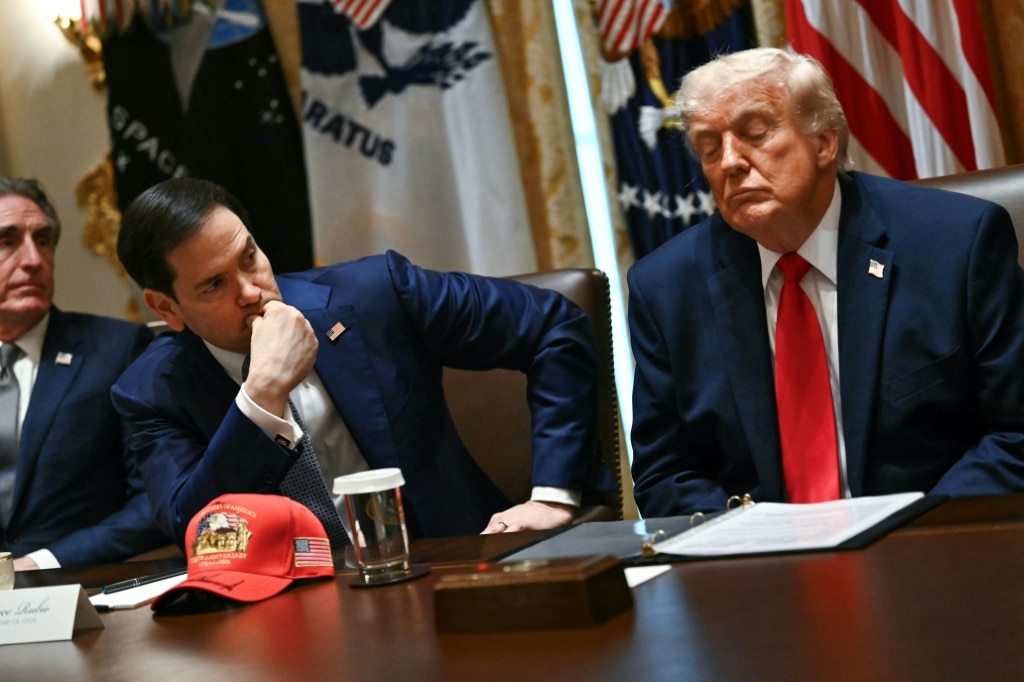
After weeks of tense, back-and-forth negotiations mediated by Pakistan, the White House confirmed Friday that Trump has yet to sign off on an initial framework, following a two-hour closed-door strategy session held in the White House Situation Room. While anonymous US sources told Agence France-Presse the draft text is already awaiting the president’s approval, Iranian officials have flatly denied that any final agreement has been reached, disputing key terms laid out publicly by Trump.
Speaking on Saturday at the annual Shangri-La Dialogue, Asia’s premier defense summit held in Singapore, US Secretary of Defense Pete Hegseth emphasized that Washington’s military readiness remains uncompromised. “Our ability to recommence hostilities if necessary is more than proven – we are fully capable, and our munition stockpiles are more than sufficient, both in the region and globally, thanks to our balanced posture of precision and high-volume armaments,” Hegseth stated. His comments echoed a recent public update from US Central Command (CENTCOM), which reaffirmed on social platform X that American military forces “remain present and vigilant across the Middle East.”
Negotiations were thrown into chaos earlier this week after the US carried out airstrikes on the southern Iranian port of Bandar Abbas, which prompted immediate retaliatory fire from Iranian forces, casting serious doubt on the viability of the diplomatic process. This turbulence has spilled over to a parallel negotiation track focused on ending ongoing fighting in Lebanon, a demand Iran has insisted be included in any comprehensive end to hostilities.
Trump has laid out clear non-negotiable conditions for any deal, chief among them a permanent Iranian commitment to never develop a nuclear weapon, and the full reopening of the blockaded Strait of Hormuz, one of the world’s most critical maritime chokepoints for global energy supplies. “President Trump will only accept a deal that serves American interests and meets his stated red lines,” a senior White House official told AFP after Friday’s strategy meeting. “Iran can never be permitted to possess a nuclear weapon,” the official added.
Iran has quickly rejected the ultimatums laid out by Washington. “We said goodbye to the language of ‘must’ 47 years ago,” Iranian Foreign Ministry spokesperson Esmaeil Baqaei told state media, pushing back against Trump’s conditions. While Baqaei confirmed diplomatic exchanges are still ongoing, he stressed that “no final agreement has been reached yet.”
In a phone call with the Emir of Qatar, Iranian President Masoud Pezeshkian reaffirmed Tehran’s readiness to reach a “dignified framework” to end the conflict, according to Iran’s official state news agency IRNA. Key sticking points remain, however: Trump claimed Friday that the deal would see Iran clear all mines from the Strait of Hormuz and reopen the waterway without imposing any shipping tolls, in exchange for the US lifting its own blockade on Iranian ports. He also added that the two sides would coordinate to remove and destroy Iran’s existing enriched uranium, with no sanctions relief or asset releases scheduled for the immediate future.
Iranian state-owned Fars News Agency disputed nearly all of Trump’s characterizations, citing senior diplomatic sources. Tehran is demanding the immediate release of $12 billion in frozen Iranian assets before advancing to the next phase of negotiations, the report said. It also noted that “no such clause appears in the text of the agreement” for a toll-free reopening of Hormuz, and that Trump’s claim about the destruction of Iran’s nuclear material “is fundamentally baseless.”
For ordinary Iranians, the lack of transparency and conflicting claims have left little confidence that a lasting peace is near. “Both sides are speaking in a way that keeps their domestic supporters satisfied. It’s not clear who is telling the truth,” said Ali, a 49-year-old resident of Tonekabon, a city north of Tehran. “It seems likely there will be more strife to come.”
On the secondary front of the wider conflict in Lebanon, heavy fighting has continued despite a planned April 17 ceasefire that has never been implemented, with both sides regularly trading accusations of truce violations. Israeli Prime Minister Benjamin Netanyahu announced Friday that Israeli ground forces have advanced beyond the Litani River, located roughly 20 miles north of the Israel-Lebanon border. The announcement came even as military delegations from both Israel and Lebanon met at the Pentagon in Washington to discuss de-escalation.
Hezbollah, the Iran-backed militant group that has led fighting against Israel in southern Lebanon, said it carried out fresh attacks on northern Israeli targets and repelled Israeli infantry advances near Qalaat al-Chakif, also known as Beaufort Castle, a historically strategic site that Israeli forces used as a key base during their 22-year occupation of southern Lebanon that ended in 2000. Lebanon was drawn into the wider conflict in early March, after Hezbollah launched a massive rocket barrage on Israel in retaliation for the US-Israeli airstrike that killed Iran’s supreme leader, prompting Israeli airstrikes and a full ground invasion of southern Lebanon.
Direct talks between Israel and Lebanon began in April, with a fourth round of negotiations scheduled for next week in Washington, following Friday’s meeting between the two sides’ military delegations.