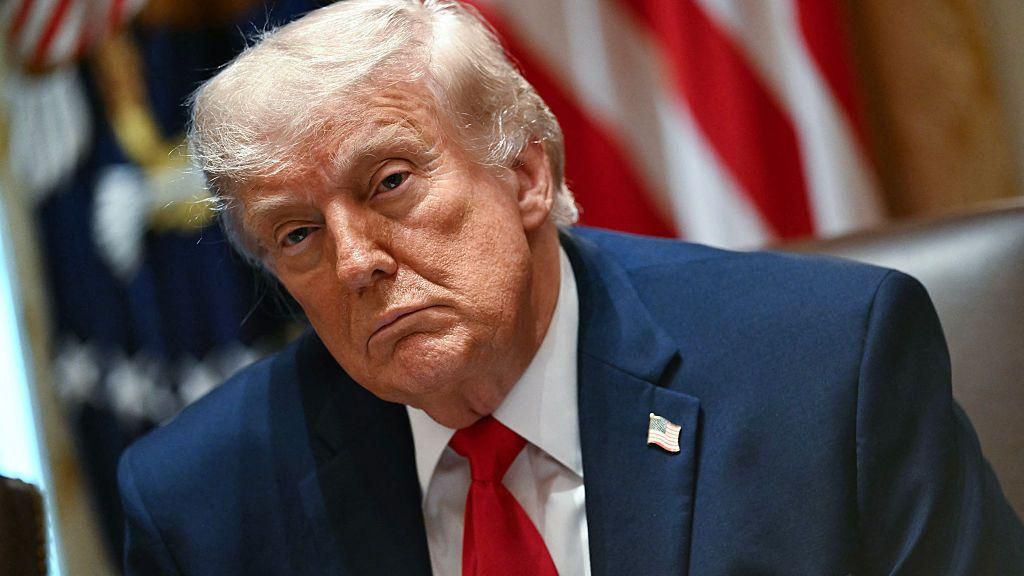
A high-stakes meeting at the White House’s Situation Room, convened for U.S. President Donald Trump to finalize a proposed 60-day ceasefire extension framework with Iran, wrapped up Friday with no clear announcement of next steps, leaving diplomatic efforts between the two longtime adversaries in limbo. The gathering of Trump and top national security aides came one day after U.S. officials confirmed the two sides had reached a preliminary memorandum of understanding, pending formal approval from both Trump and Iran’s supreme leadership.
Ahead of the meeting, Trump laid out three non-negotiable red lines he said any agreement must meet: Iran must make a permanent commitment to never develop or acquire a nuclear weapon, the Strait of Hormuz — one of the world’s most critical global energy chokepoints — must be fully reopened to unrestricted, two-way commercial shipping, and all naval mines deployed in the waterway must be permanently destroyed. He also added that Iran must grant U.S. teams authorization to remove and destroy the country’s existing stockpiles of enriched uranium, adding that no financial sanctions relief would be exchanged until those conditions are met, noting that less contentious provisions have already been agreed by both negotiating teams. In a social media post earlier Friday, Trump also said he was prepared to lift the U.S. blockade of the strait to allow stranded vessels to begin departing for their home ports.
But Iranian officials have pushed back sharply on many of Trump’s stated terms, directly contradicting the U.S. version of the draft preliminary agreement. Iran’s state-aligned Fars News Agency reported that no provision requiring the destruction of Iranian nuclear materials was included in the memorandum of understanding, and labeled Trump’s latest comments as “a mixture of truth and lies.” Foreign ministry spokesman Esmaeil Baqaei reiterated Iran’s longstanding position that the country will not enter any negotiations over its sovereign nuclear program, saying Tehran’s sole focus is on ending the ongoing armed conflict that began in February. Iran has repeatedly maintained its nuclear program is entirely for peaceful energy and medical purposes, and denies it has ever pursued a nuclear weapons capability.
Iran’s chief negotiator Mohammad Baqer Qalibaf added Friday that the country places no trust in U.S. verbal guarantees, only tangible action, saying “No action will be taken before the other side acts” and warning that “The winner of any agreement is the one who is better prepared for war the day after.”
The current ceasefire between the two nations has been in place since April 8, after a sharp escalation of hostilities that began when the U.S. and Israel launched large-scale coordinated strikes on Iranian military and nuclear infrastructure on February 28. Iran responded with missile attacks on Israel and U.S. military assets across the Persian Gulf, and moved to effectively close the Strait of Hormuz — through which roughly 20% of the world’s daily oil supplies pass — sending global crude prices soaring in the weeks that followed.
In recent days, both sides have repeatedly accused one another of violating the fragile truce. Just this week, Iran’s Islamic Revolutionary Guard Corps launched a missile attack on a U.S. air base in Kuwait, which it said was the staging ground for earlier strikes on Bandar Abbas, a strategic Iranian port city adjacent to the strait. U.S. Central Command condemned the attack as an “egregious ceasefire violation.”
U.S. Vice President JD Vance told reporters Thursday that negotiators from both sides were still ironing out a handful of remaining sticking points, most notably language related to Uranium enrichment, an issue at the core of decades of tensions between the U.S. and Iran. “We’re not there yet, but we’re very close and we’re going to keep on working at it,” Vance said. A senior White House official confirmed the conclusion of Friday’s meeting to reporters after it adjourned, but declined to share any further details on the internal discussion or a timeline for future talks. For weeks, Trump has repeatedly publicly claimed that Washington and Tehran are close to reaching a historic deal, and that negotiations are progressing smoothly, but as of yet no substantive final agreement has materialized.