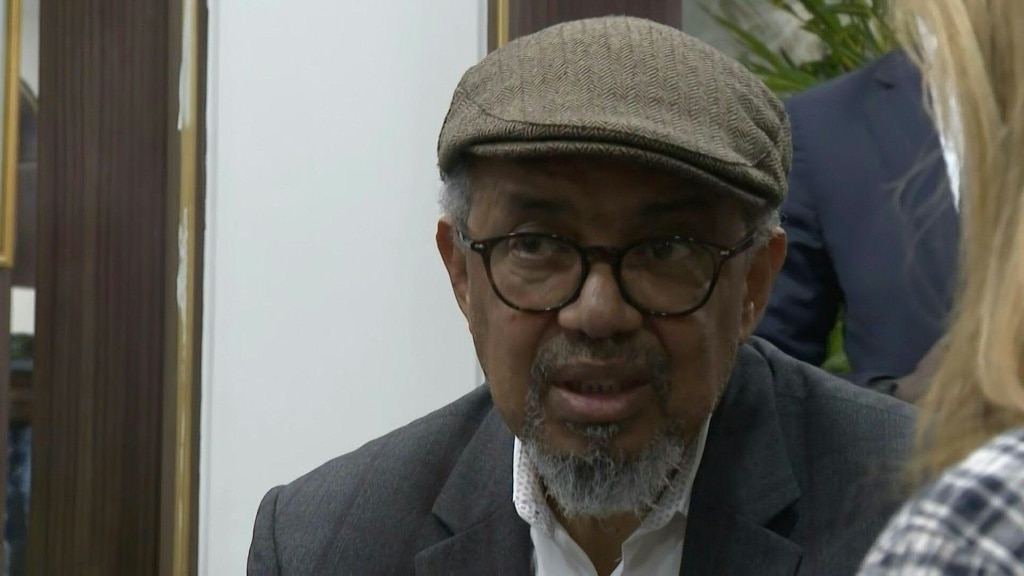
Two weeks after Democratic Republic of Congo (DRC) declared its 17th Ebola outbreak, World Health Organization (WHO) Director-General Tedros Adhanom Ghebreyesus arrived in the Congolese capital Kinshasa late Thursday to coordinate international response efforts to the fast-spreading epidemic. Tedros was scheduled to meet with senior Congolese government officials on Friday, before traveling a day later than planned to the conflict-torn northeastern province of Ituri, the epicenter of the current outbreak.
The scale of the crisis already far exceeds initial reports. According to the Africa Centres for Disease Control and Prevention (Africa CDC), at least 1,077 suspected cases have been recorded across affected regions since the outbreak was officially announced on May 15, with 246 confirmed deaths to date. The WHO has warned that the true caseload is almost certainly much higher, as the virus began spreading silently before being detected, and the DRC’s severely underfunded health system lacks the laboratory capacity to test and confirm every suspected case quickly enough to slow transmission.
Health workers have faced steep challenges in containing the outbreak, which has already spread beyond Ituri to two additional DRC provinces and crossed the border into neighboring Uganda, where seven confirmed cases and one fatality have been reported. The crisis is compounded by decades of systemic instability in eastern DRC, a mineral-rich region plagued by persistent violence from dozens of armed factions. Ituri, where the outbreak is centered, remains largely out of government control, with limited access for health teams due to attacks from the Islamic State-affiliated Allied Democratic Forces (ADF) and other local militant groups that regularly target civilian populations.
Ituri shares borders with North Kivu and South Kivu, two other violence-wracked provinces that have also recorded Ebola cases in the current outbreak. Large swathes of both Kivu provinces are controlled by the Rwanda-backed M23 rebel group, which resumed its insurgency in late 2021 and escalated attacks in early 2023. The ongoing conflict has forced more than a million people in Ituri alone to flee their homes, with hundreds of thousands packed into overcrowded displacement camps on the outskirts of major towns like Bunia. Displaced residents live in extremely cramped conditions with almost no access to clean water or basic sanitation, creating a perfect environment for Ebola to spread rapidly.
At the Kingonze displacement camp outside Bunia, residents described the terrifying risk of an outbreak sweeping through the camp. “If Ebola comes, we’ll be wiped out as we’re packed like sardines,” said local resident Dorcas Mapenzi. Deborah Nzale, a widow who shares a 32-square-foot tarpaulin shelter with nine family members, added: “We sleep piled on top of each other, with everyone’s sweat. If a single person gets infected here in this camp, everyone will die.”
Complicating response efforts further, the current outbreak is caused by the Bundibugyo strain of Ebola, for which no widely approved vaccine or targeted treatment currently exists. However, there are glimmers of hope on the horizon: Africa CDC head Jean Kaseya announced Thursday that a targeted vaccine could be available for deployment by the end of 2025. The WHO also confirmed Thursday that its expert advisory groups have approved the launch of clinical trials for existing vaccine and treatment candidates that may prove effective against the Bundibugyo strain.
In response to the outbreak, neighboring Uganda and Rwanda have already closed their shared borders with the DRC. United States Secretary of State Marco Rubio also reaffirmed this week that the U.S. is implementing rigorous screening measures to prevent Ebola from reaching American soil. Speaking to reporters after his arrival in Kinshasa, Tedros struck a determined tone, telling the Congolese people in an earlier post on X that they are not facing this crisis alone: “That thing can be stopped,” he said.
Ebola is a highly contagious haemorrhagic fever that spreads through close contact with infected people or their bodily fluids. Over the past 50 years, the virus has killed more than 15,000 people across Africa. The deadliest Ebola outbreak in DRC’s history, recorded between 2018 and 2020, killed nearly 2,300 people out of more than 3,500 confirmed cases.