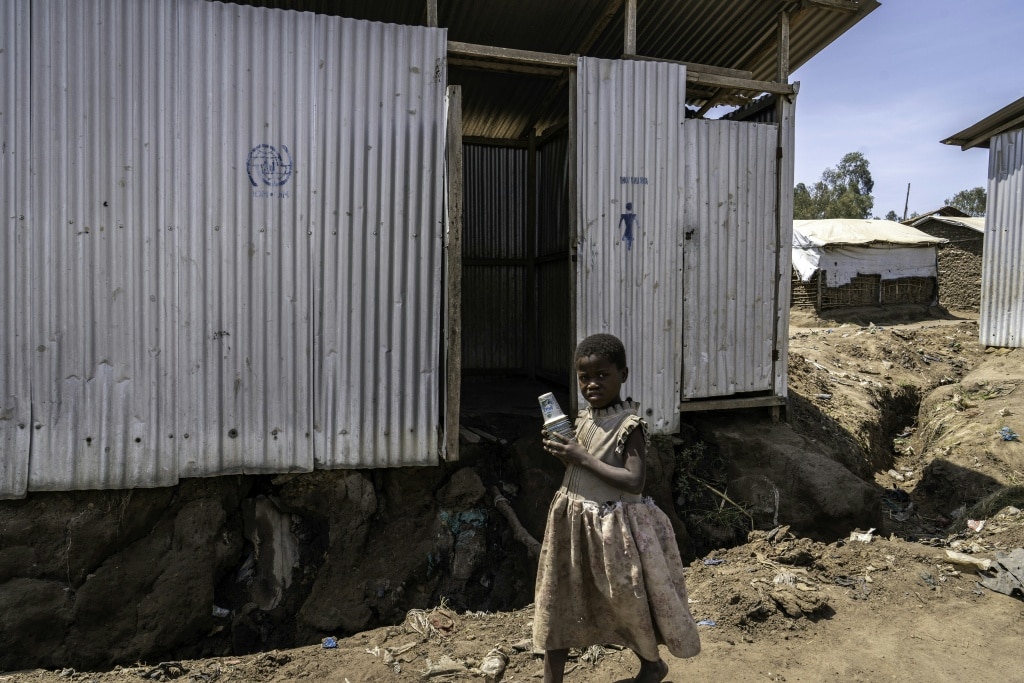
In the dusty sprawl of Kingonze displaced persons camp on the outskirts of Bunia, the capital of northeastern DRC’s Ituri province, more than 25,000 people uprooted by years of brutal armed conflict live in cramped, makeshift tarpaulin shelters. For these displaced residents, the threat of an Ebola outbreak reaching their overcrowded home is not an abstract risk—it is a catastrophe that could wipe out the entire community.
“If Ebola comes, we’ll be wiped out as we’re packed like sardines,” Dorcas Mapenzi, a displaced woman living in the camp, told AFP. Ituri is currently the epicenter of the latest Ebola outbreak spreading through eastern DRC, a region where decades of rebel violence and communal clashes have forced more than a million people from their homes across the province, most of whom now reside in crowded, under-resourced camps.
The deadly Bundibugyo strain of Ebola, which spreads through close physical contact and bodily fluids, has already gained a foothold in the region. From the declaration of the outbreak on May 15 through May 24, the World Health Organization (WHO) has recorded 10 confirmed deaths and 223 suspected fatalities, out of a total of more than 1,000 confirmed and suspected cases across the country. Crucially, there is currently no approved vaccine or specific treatment for this particular strain of the virus, meaning containment efforts rely entirely on basic protective measures, social distancing and rapid contact tracing—measures that are all but impossible to implement in the camp’s current conditions.
Kingonze camp has not yet recorded any Ebola cases, but every aspect of life here creates the perfect conditions for the virus to spread like wildfire. Widow Deborah Nzale shares a 3-square-meter tarpaulin shelter with nine family members, living and sleeping piled on top of one another in sweltering heat. “Given these conditions, how are we going to protect ourselves against this disease, when everyone tells us we need to distance ourselves to fight Ebola?” Nzale asked. “If a single person gets infected here in this camp, everyone will die.”
Basic hygiene and sanitation infrastructure, critical to stopping Ebola’s spread, is virtually non-existent in Kingonze. Residents say their children play next to overflowing, filthy toilets and often defecate in open ground between shelters. The camp relies on just one single borehole for its entire population of 25,000, with water only flowing from the tap for a few hours each day. To date, no protective gear, hygiene kits or soap have been distributed to the camp’s residents, even after awareness teams have visited to warn about the virus’s dangers.
“People looking to raise awareness come through here with messages but, surprisingly, we don’t have the kit we need to protect ourselves,” Budjo Amos, a displaced man who fled communal violence in the province, said. “I don’t even have soap to wash my hands. The most urgent thing is to give us clean water.”
WHO Director-General Tedros Adhanom Ghebreyesus, who is scheduled to visit Bunia on Friday, has already warned that eastern DRC is facing a “catastrophic collision of disease and conflict.” Ongoing fighting in the region has severely hampered outbreak response efforts, and the Congolese government has faced widespread criticism for its delayed response—officials only declared the outbreak several weeks after the first cases were detected. Most hospitals across Ituri still lack critical equipment, particularly isolation units needed to quarantine infected patients and stop transmission.
Across Ituri, there are roughly 61 displaced person camps housing a total of nearly 970,000 displaced people, meaning the risk of a catastrophic camp-wide outbreak is not limited to Kingonze. Ituri’s military governor Lieutenant General Johnny Luboya Nkashama acknowledged the urgency of the situation in comments to AFP Friday. “We need to deploy equipment and qualified, specialist medical staff as quickly as possible,” he said, “to spare this province from disaster.” As displaced residents wait for action, their fear grows that a single case could turn into a tragedy that kills thousands.