Rescuers from more than half a dozen countries are working against rising floodwaters and a ticking clock to extract five villagers trapped deep in a rugged, flooded cave in northern Laos for more than a week, with unexpected overnight rain throwing a new obstacle into the complex operation.
The incident unfolded around May 19 or 20, when a group of eight local foragers ventured into the remote cave system in Xaisomboun Province, roughly 120 kilometers north of Laos’ capital Vientiane. The villagers, who make their living foraging in the region’s thickly wooded, mountainous landscape, entered the cave after spotting unusually colored rock and sediment they suspected held valuable gold deposits. When sudden heavy rains flooded the cave’s entrance and narrow, twisting passages, seven of the group became trapped. One villager successfully escaped and alerted local authorities, triggering a large-scale multi-national rescue response.
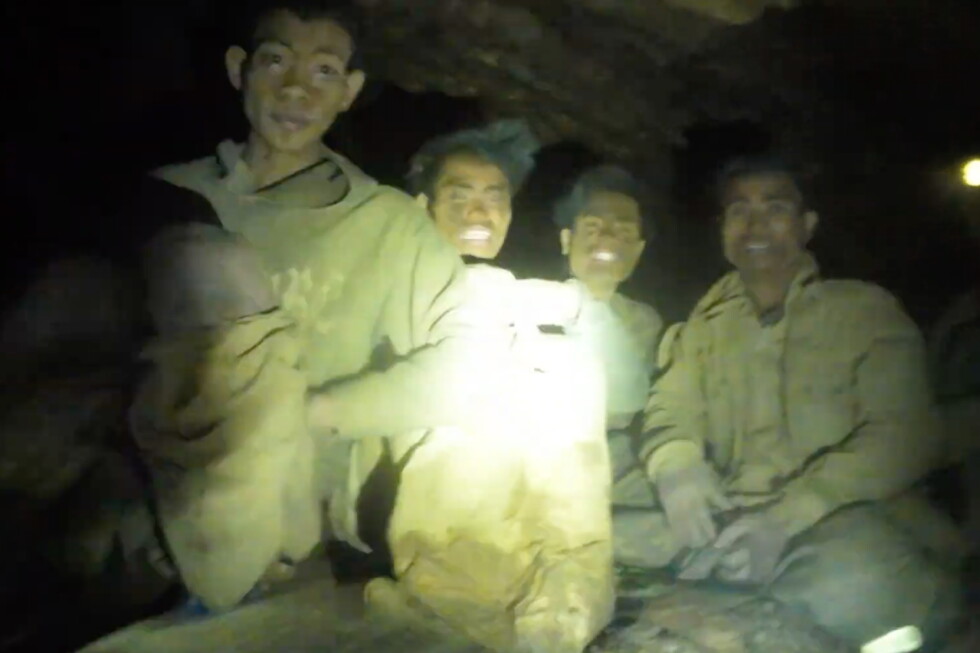
After days of slow, perilous advance through the cave system’s jagged, waterlogged passageways, rescue teams made a breakthrough discovery on Wednesday: five of the trapped miners were alive, huddled on a small elevated rock surrounded by chest-deep floodwater, wearing working headlamps. The moment of contact was captured on camera by Thai cave diver Norrased Palasing, one of the lead rescuers on the mission. Footage shows the five men — identified only by their first names as Khamla, Mued, Ee, Ing, and Laen — breaking into tears of relief when rescuers emerged from the dark, flood-filled tunnel. Though alive and alert, the group was severely weakened by more than seven days of limited food and water, showing signs of dehydration and exhaustion. Divers have since delivered clean water and soft food to sustain them while extraction efforts proceed.
In on-camera messages to their families, the trapped men urged loved ones not to fear for their safety. “Don’t worry mom, dad. I’m still strong, I’m still healthy. Tomorrow I will be home. I love you mom and dad,” Mued said in his recorded message.
Search operations are still ongoing for two additional missing villagers who have not yet been located by rescue teams.
The rescue mission has drawn international expertise, with experienced cave and flood divers traveling from across the Asia-Pacific and Europe to assist. Leading the effort are local Lao rescue teams alongside specialized rescue personnel from neighboring Thailand, including several divers who took part in the high-profile 2018 Tham Luang cave rescue that saved 12 young soccer players and their coach after 18 days trapped in a flooded northern Thai cave. A Malaysian diver has already joined the operation, with additional divers from Indonesia, Japan and France en route to the cave site as of Friday.
Rescuers had laid out an ambitious extraction plan for Friday: deploying large pumps to drain excess floodwater from the cave’s inner passages to clear a safe route for the five trapped villagers to exit. That plan hit a major setback when a heavy overnight rainstorm dumped more water into the region. Local Longcheng district official Bounphong Khammanyvong explained that the cave’s entrance sits in a natural low-lying basin, meaning all rainwater from the surrounding hills drains directly into the cave system, quickly reflooding passages teams had begun to clear.
The cave system’s natural geography — with its narrow, sharply twisting corridors, jagged rock walls and constantly shifting flood levels — has made the rescue operation one of exceptional danger and difficulty for diving teams, who must navigate zero-visibility water and tight gaps that require specialized training and equipment to traverse safely.