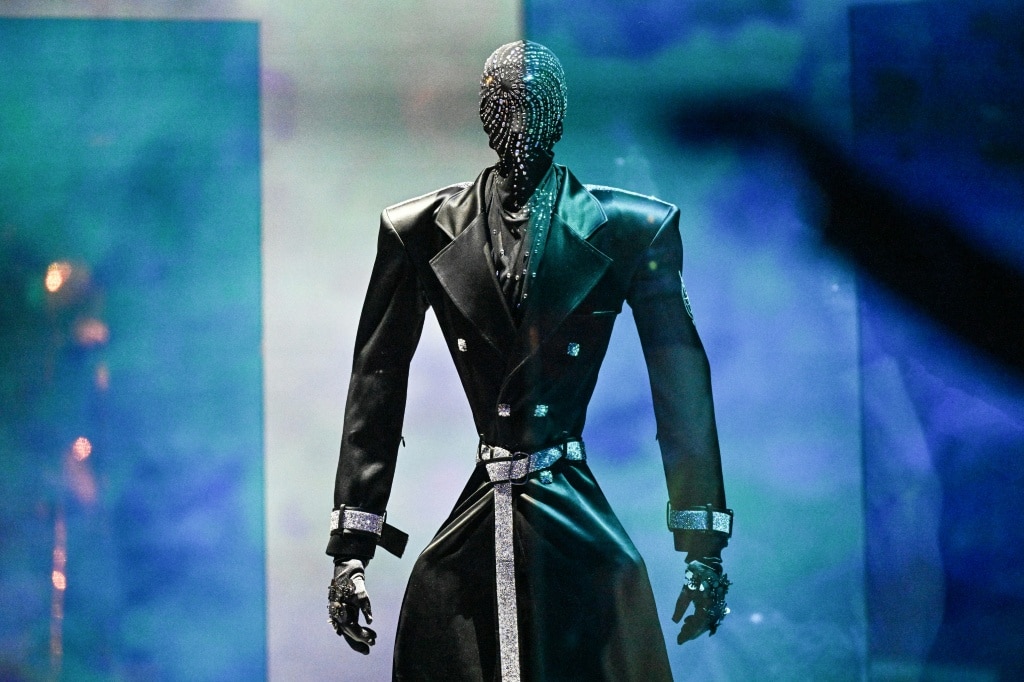
South Korea’s capital Seoul has hosted one of the fashion world’s most innovative shows to date, merging cutting-edge robotics technology with high-end apparel design in an experimental display that explores the future of human-robot coexistence. Unlike traditional fashion presentations that center solely on human talent, this unique event paired every human model with a humanoid robot companion, both clad in matching custom-designed outfits, bringing the creative concept “Robots need clothes” to vibrant life on the runway.
The showcased designs spanned a wide range of bold aesthetic directions. Standout pieces included a blue tasseled Texas-inspired ensemble fitted with a mini cowboy hat for the robot counterpart, a retro metallic silver puffer jacket, flowing silky gowns, and voluminous 1970s-inspired black space-age trousers echoing the iconic stage style of rock legend David Bowie. Every garment was carefully tailored to fit the unique skeletal structures of the robot models, ensuring a polished, intentional look as pairs took turns strutting down the catwalk in synchronized movement.
The event was organized by Seoul-based entertainment firm Galaxy Corporation, which designed all of the garments featured in the show. In an interview after the presentation, Galaxy Corporation CEO Choi Yong-ho explained the core idea driving the concept: the team came to recognize that just as humans rely on clothing for expression and function, robots will also need garments as they become more integrated into daily life. “Just as every human being is unique, we believe that every single robot should also be distinct,” Choi noted. The company plans to commercially launch its robot apparel line under the brand name “MACH 33” by the end of this year.
The humanoid models that walked the runway were produced by Unitree, a Chinese robotics startup that has grown in popularity thanks to the relatively affordable pricing of its humanoid products. This display comes as advancements in robotic engineering have unlocked new capabilities for humanoids: modern models can already perform choreographed dance routines, compete in athletic races, and even execute complex acrobatic moves like backflips.
Industry forecasts point to explosive growth in humanoid adoption in the coming decades. Leading global financial services firm Morgan Stanley projects that the total global humanoid population could surpass one billion units by 2050, as the machines become more integrated into sectors ranging from manufacturing to service work and entertainment. Even so, fully autonomous humanoids powered by advanced embodied artificial intelligence remain rare today, with most high-profile robotic demonstrations relying on either pre-programmed movements or remote human operation.