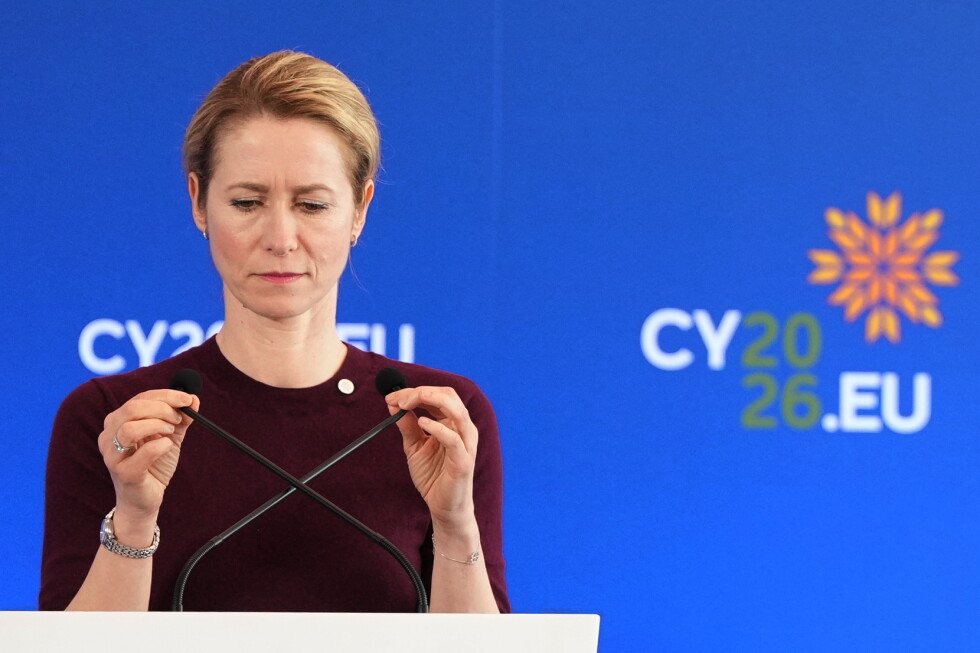
During a gathering of European Union foreign ministers held in Limassol, Cyprus on Thursday, EU High Representative for Foreign Affairs Kaja Kallas outlined a key priority for the bloc’s maritime security strategy: securing unimpeded freedom of navigation through the Strait of Hormuz once the ongoing Iran war concludes. To meet this goal, Kallas said, the existing EU Red Sea naval mission will need a significant boost in resources, most notably a larger fleet of European vessels, alongside expanded operational scope.
Currently, the EU maritime operation known as Aspides — a name drawn from the Greek word for “shield” — is tasked with defending commercial shipping against repeated attacks from Yemen’s Houthi rebel group. Operating with just three dedicated vessels at present, the mission is centered on Red Sea security, but the Strait of Hormuz, which sits at the southern outlet of the Red Sea, has emerged as a new critical priority for the bloc. Before the outbreak of the Iran war, the strait carried roughly 20 percent of the world’s total oil and gas supplies, making it one of the most vital global chokepoints for energy trade.
Kallas confirmed that the bloc is weighing amendments to Aspides’ operational plans to accommodate new requirements, including the need for specialized ships capable of clearing naval mines from the waterway. When asked about the most critical need for the expanded mission, Kallas emphasized, “But it mostly needs more ships.” She also confirmed that one additional vessel will soon join the Aspides operation, though she declined to share further details on the ship’s origin or capabilities.
This discussion comes months after the EU extended Aspides’ operating mandate until the end of February 2027, and approved an extra 15 million euros (equivalent to $17.5 million) in dedicated funding for the mission.
Parallel to EU planning, France and the United Kingdom are also exploring the creation of their own independent naval task force to escort commercial vessels through the Strait of Hormuz after hostilities end. A senior EU official, speaking on condition of anonymity due to restrictions on discussing private negotiations, confirmed that the bloc has held early discussions about potentially merging the expanded Aspides mission with the proposed Franco-British force. However, the official noted that core logistics, particularly the question of which authority would command a combined task force, remain unresolved and require further negotiation.
The disruption to Red Sea and Strait of Hormuz shipping triggered by the Iran war, which began on February 28, has already had significant economic impacts. Skyrocketing insurance premiums for transiting the waterway have pushed shipping costs sharply higher, to the point that it is currently cheaper for most commercial vessels to reroute around the southern tip of Africa rather than take the shorter Red Sea route. The EU official added that even after the Iran war ends, shipping costs are unlikely to return to pre-war levels for at least 12 more months. As a potential mitigation measure, EU officials are currently evaluating the option of offering state-backed insurance guarantees to shipping companies, which would help lower the elevated insurance premiums that have pushed costs so high.
This report includes contributed reporting from Associated Press correspondent Sam McNeil in Brussels.