An investigation by Agence France-Presse has uncovered a deeply contradictory revelation: the $200 million trust fund established to support low-lying Pacific island nation Tuvalu, one of the countries most vulnerable to catastrophic climate change, holds investments in coal mining, natural gas exploration, and the world’s highest-emitting crude oil refinery. As Tuvalu braces to host a pre-COP31 climate summit this year to draw global attention to the existential threat rising seas pose to its territory, the disclosure has sparked urgent calls for transparency and a full review of the fund’s portfolio.
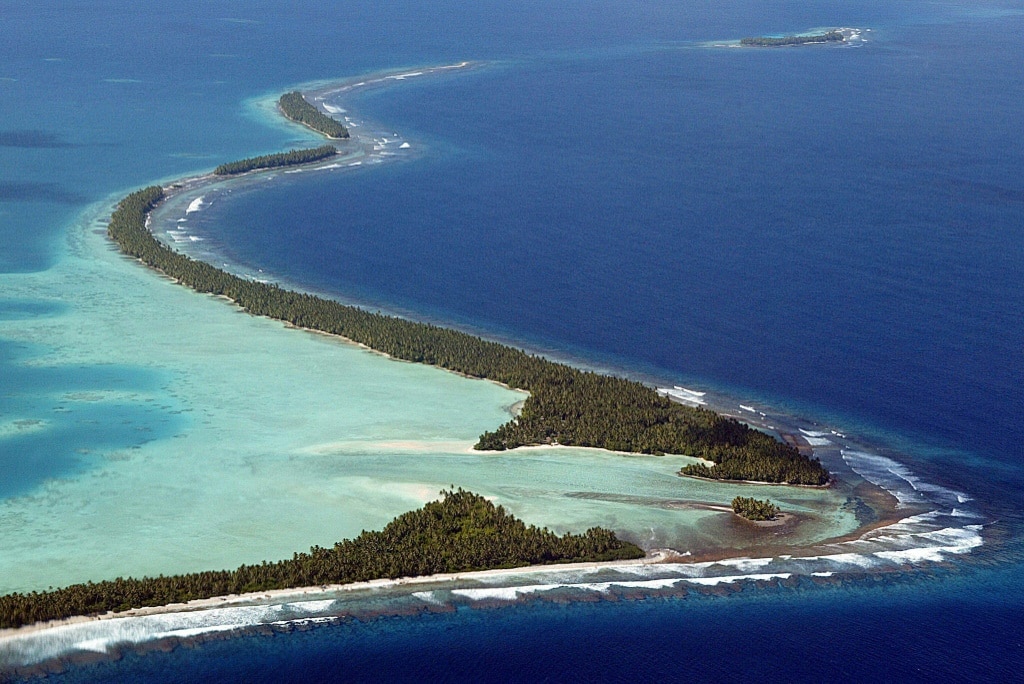
A chain of tiny coral atolls situated halfway between Australia and Hawaii, Tuvalu faces some of the most severe climate impacts on Earth: ocean acidification is eroding its coral foundations, storm surges and chronic sea-level rise are increasingly inundating its limited land, and tropical disease risks are growing. With just 26 square kilometers of dry land across the entire archipelago, infrastructure is stretched so thin that the main international airport’s runway doubles as a community sports field. With almost no natural resources and a deeply fragile economy, Tuvalu relies almost entirely on its government-managed trust fund to cover the skyrocketing costs of climate adaptation and disaster response.
Established in 1987 with founding financial support from Australia, New Zealand and the United Kingdom, the Tuvalu Trust Fund has long served as the nation’s largest single financial asset, providing critical ongoing revenue for a state heavily dependent on international aid. Management of the fund was handed to global advisory firm Mercer in 2022, with formal investment guidelines that explicitly require the portfolio to align with Tuvalu’s unique climate vulnerability: the fund’s official objectives state Tuvalu is “particularly susceptible to the adverse impacts of climate change” and mandate that managers minimize exposure to fossil fuel reserves and carbon emissions wherever possible.
AFP’s review of public financial records and government reporting, however, tells a different story. Analyzing holdings data from 14 Mercer-managed funds held by the Tuvalu Trust Fund as of December 2025, investigators found that Tuvalu’s money is tied to some of the world’s largest fossil fuel companies and highest-emitting energy projects.
Among the most high-profile investments is a stake in Indian multinational Reliance Industries, held through Mercer’s emerging markets fund. Reliance owns the Jamnagar petrochemical complex in western India, the world’s largest single-site crude oil refinery. Non-profit climate monitoring group Climate Trace recorded the facility emitted nearly 20 million tonnes of carbon dioxide in 2022, making it the planet’s top-emitting oil refinery.
Further holdings include investments in U.S. utility giants The Southern Company and Duke Energy, ranked the second and third largest greenhouse gas emitters in the United States, according to data from the Political Economy Research Institute. A 2024 report from the U.S.-based Energy and Policy Institute documented that The Southern Company spent $60 million funding groups behind climate disinformation campaigns between 1993 and 2004.
Tuvalu’s portfolio also includes stakes in mining giant Rio Tinto and Australian oil and gas supermajor Woodside Energy, both listed among Australia’s 10 largest greenhouse gas emitters in official government data. The Woodside investment is particularly striking: earlier in 2025, when the Australian government approved a 40-year extension of Woodside’s North West Shelf gas project, Tuvalu’s Climate Change Minister Maina Talia publicly condemned the decision, warning the project’s emissions threatened Tuvalu’s very survival and urging Australia to reject the extension.
Roughly 12% of the entire Tuvalu Trust Fund, equal to around $25 million, is allocated to Mercer’s Australian shares fund, whose single largest holding is BHP Group, the world’s biggest mining firm and one of Australia’s most valuable companies. While BHP has divested most of its thermal coal assets in recent years, it still retains stakes in Australian thermal coal mines that produce the fossil fuel for steel manufacturing.
For Tuvalu’s climate activists, the findings are deeply disheartening. “It was really shocking to see our nation tied up with fossil fuel companies,” Richard Gokrun, a Tuvaluan climate advocate and former weather forecaster, told AFP from the capital Funafuti. “We stand strong for the phase-out of fossil fuels, because we see the impacts to our country every day. The major changes that we are seeing are sea-level rise. We are starting to see new places are getting flooded or inundated.”
The contradiction comes at a pivotal moment for Tuvalu’s global climate advocacy: later this year, the nation will host global leaders for a special pre-COP31 summit ahead of the United Nations’ next major climate conference, an event designed to highlight the devastating toll climate change is already taking on small island developing states. A September 2025 government report also shows Tuvalu is actively courting new donors to contribute additional capital to the trust fund through the UN climate process, with Prime Minister Feleti Teo repeatedly stating that opening new fossil fuel projects is “immoral and unacceptable” and a “death sentence” for his nation.
Climate finance experts say the current portfolio fails utterly to meet the fund’s stated climate commitments. Sebastian Gehricke, a climate finance specialist at the University of Otago, told AFP the investments appear to show “virtually no formal consideration for climate change.” Ivan Diaz-Rainey, a finance professor at Australia’s Griffith University, said AFP’s findings “clearly warrants further investigation” and called for “full disclosure of holdings and a clear account of what actions have been taken to give effect to the fund’s commitments to climate action.”
In response to AFP’s reporting, a spokesperson for the Tuvalu Trust Fund said the fund is currently reviewing its fossil fuel exposure in light of the new findings, reaffirming that “since Tuvalu is particularly susceptible to the adverse impacts of climate change, the TTF continues to seek to minimise the fund’s exposure to fossil fuel reserves and carbon emissions.” When contacted for comment, Mercer declined to address the holdings, stating it “does not provide commentary or analysis on our clients or their investment portfolios.”