The ongoing conflict in Iran has put global energy markets to an unexpected test, particularly after supply disruptions hit the Strait of Hormuz—the world’s busiest and most critical oil transit chokepoint. What has surprised most industry analysts, however, is the surprising resilience of international oil prices, which have held steady near $100 per barrel, a far lower level than most pre-conflict forecasts predicted even with the loss of Hormuz transit capacity.
The core explanation for this unexpected market stability lies in the rapidly expanding role of oil production across North and South America. Long before the Iran conflict erupted, the International Energy Agency projected that nearly all incremental global oil demand growth through 2026 would be covered by rising output from American nations including the United States, Canada, Brazil, Guyana, and Argentina.
Prior to the war, market expectations centered on a coming period of oversupply: OPEC had signaled plans to ramp up production, which most analysts believed would push stockpiles higher and drag prices downward. The Iranian conflict upended this outlook entirely. The disruption of Hormuz shipping removed up to 14 million barrels of daily supply from global markets, driving prices upward and leading to large draws on global commercial stockpiles instead of the expected builds.
Yet a long-held energy market axiom has held true: high prices are the most effective remedy for supply shortages. Producers across the Americas have moved quickly to capitalize on elevated prices by ramping up output and expanding export capacity. In the United States, crude oil exports hit an all-time record of 6.44 million barrels per day in April 2026, and the country is expanding port infrastructure to handle even more volume, with nearly 800,000 barrels per day of new dock capacity scheduled to launch by 2026.
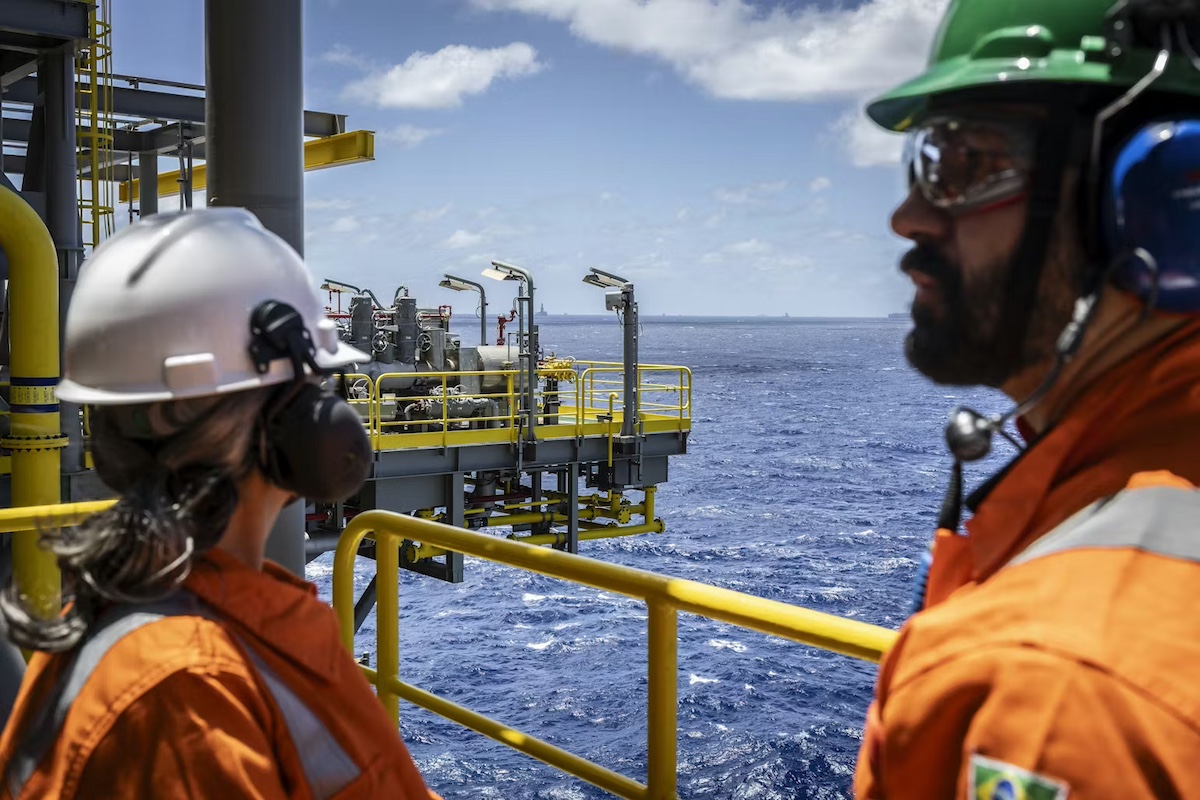
Down in Brazil, the country has added eight new offshore floating production units in recent years, bringing a combined total capacity of nearly 1.5 million barrels per day. State-owned oil giant Petrobras recently brought one new project online in the Búzios field off the coast of Rio de Janeiro five months ahead of schedule, a direct move to capitalize on strong global prices. Industry projections point to another sharp production increase for Brazil in 2026.
Further north along the South American coast, Guyana has solidified its position as one of the world’s fastest-growing oil producers. Current output already sits around 900,000 barrels per day, and forecasts indicate production could nearly double by the end of the 2020s. Even Venezuela, which has struggled with years of declining output and deep economic crisis, has managed to boost exports substantially in response to higher global prices.
When combined, these regional gains are projected to push total oil output across the Americas to roughly 30 million barrels per day by the end of 2026, a volume that approaches pre-war OPEC total production. The U.S. retains its title as the world’s largest single producer, with total liquid hydrocarbon output hitting almost 22 million barrels per day in April 2026.
Ironically, this Western Hemisphere production boom can trace part of its origins to OPEC itself. For more than a decade, the cartel’s de facto leader Saudi Arabia led a strategy of output cuts to prop up global prices, a policy that made higher-cost exploration and production projects across the Americas commercially viable—particularly U.S. shale oil development.
Saudi Arabia’s “higher for longer” price strategy is rooted in its domestic economic priorities: to fund large-scale diversification projects including the planned futuristic city Neom, the kingdom requires oil prices of at least $90 per barrel. The unintended consequence of this policy has been a powerful financial incentive for non-OPEC producers to scale up output aggressively.
Even with this rapid growth in American production, it would be premature to declare a permanent shift of the global oil industry’s center of gravity away from the Middle East. Production economics still heavily favor Gulf Cooperation Council producers, as extraction costs in the Persian Gulf remain among the lowest on Earth.
In many major Saudi fields, production costs fall below $10 per barrel, and the regional average across the Gulf is roughly $27 per barrel. By comparison, most North American shale operations require prices between $50 and $65 per barrel to turn a profit. This cost gap becomes critically important during market downturns: if oil demand weakens and prices fall, higher-cost American producers will face pressure first, while low-cost Gulf producers with massive reserve bases can easily outlast periods of low prices.
Geography also gives Middle Eastern producers a major advantage in fast-growing key Asian markets. For large emerging economies including India, Pakistan, and Bangladesh, importing oil from the nearby Gulf is far more cost-effective than long-haul shipments from the Americas. Additionally, most Asian refineries were originally designed to process heavy, high-distillate Middle Eastern crudes that align with regional demand for diesel and jet fuel, the fuels that underpin most economic growth. U.S. shale exports are largely lighter crude that cannot directly replace Middle Eastern grades without costly refinery modifications.
Gulf producers are also investing heavily to protect their long-term market position and reduce reliance on the Strait of Hormuz. The United Arab Emirates is expanding its Habshan-Fujairah pipeline, which bypasses the strait entirely to ship crude to the Indian Ocean. Saudi Arabia already operates the massive East-West Pipeline, which can move up to 7 million barrels of oil per day to Red Sea export terminals, eliminating exposure to Hormuz disruptions and opening more direct trade routes to European and Asian markets.
There is no question that the Americas are reshaping the global oil market in profound ways. The region now functions as the world’s de facto swing producer, adding critical supply flexibility during geopolitical shocks and supply crises. Still, long-term market dominance depends on far more than just production volume: production costs, geographic access to key markets, infrastructure investment, and total reserve size all play decisive roles. On all these metrics, the Middle East retains a formidable, unrivaled advantage.
For as long as global oil demand remains at historically high levels, the Gulf region will almost certainly stay the core hub of global oil production and exports—even as the Americas grow into an increasingly important source of crude supply for the world.