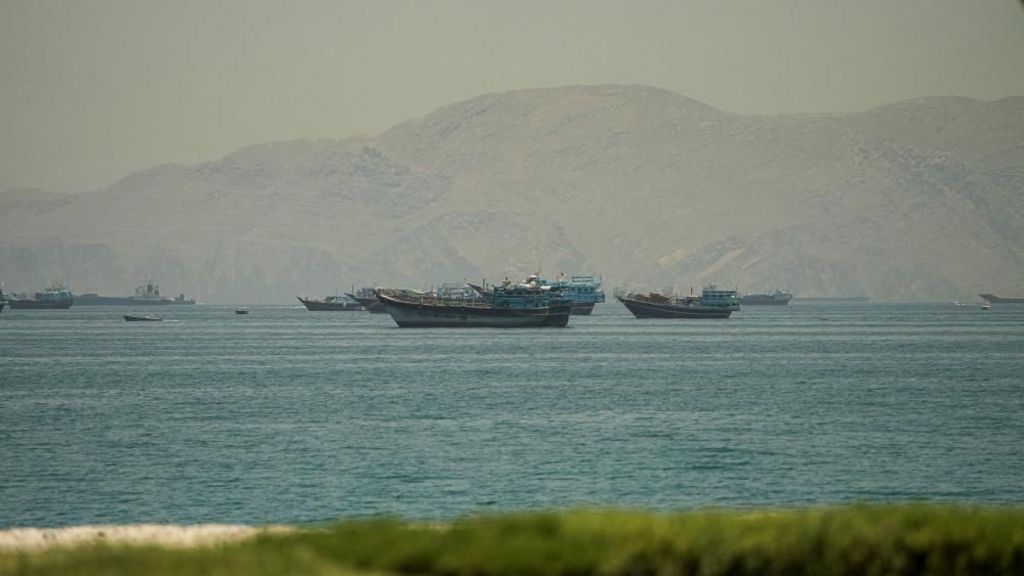
Weeks after a fragile truce halted large-scale conflict between Iran and the United States, a new round of US air strikes near the strategic Strait of Hormuz has thrown ongoing peace negotiations into uncertainty, with Tehran condemning the attack as a blatant breach of the ceasefire agreement.
The US Central Command (Centcom) confirmed the Monday strikes in southern Iran, framing the operation as necessary self-defense targeting Iranian missile installations and boats suspected of preparing to lay mines. While Centcom did not release exact location details, an unnamed official speaking to The New York Times confirmed the targets were located in the vicinity of Bandar Abbas, Iran’s key southern port city that hosts a major naval base along the Strait of Hormuz. Local Iranian officials initially reported hearing large explosions in the area and launched an immediate investigation into the incident.
In an official statement following the strikes, Iran’s foreign ministry labeled the US action an “aggressive and unjustified” gross violation of the ceasefire that took effect on April 8. The ministry held Washington fully accountable for any consequences stemming from the operation in Hormozgan province, the coastal region that borders the world’s most critical energy chokepoint. Iran has blocked shipping through the strait since the conflict began, a move that triggered a sharp spike in global energy prices. “Without a doubt, the Islamic Republic of Iran will not leave any evil unanswered and will not hesitate to defend the Iranian nation,” the statement added. In a subsequent development, Iran’s Islamic Revolutionary Guard Corps (IRGC) claimed it had shot down an American drone and opened fire on a US fighter jet that entered Iranian airspace, though the group did not provide a timeline for the encounter.
The conflict dates back to February 28, when the United States and Israel launched a wave of deadly opening attacks against Iran, including an operation that killed Iran’s supreme leader. After three weeks of intense fighting, the two sides reached a ceasefire agreement that has held largely intact for over a month, with only one major clash recorded earlier in May. The strikes come at a critical juncture, as diplomatic negotiators have been holding multi-party talks aimed at extending the existing truce and eventually reaching a permanent end to the open conflict.
Details of the proposed preliminary deal have emerged in recent days: rather than a full permanent settlement, the parties are negotiating a memorandum of understanding that would include a 60-day extension of the ceasefire, the reopening of the Strait of Hormuz to commercial shipping, and a framework for future negotiations on Iran’s controversial nuclear program. The core sticking point in the talks remains Tehran’s demand for the release of billions of dollars in Iranian assets that have been frozen by foreign governments. Additional points of contention center on the future of Iran’s stockpile of highly enriched uranium, which the US, Israel and Western nations claim is intended for nuclear weapons development – an assertion Iran has repeatedly denied, maintaining its nuclear program is exclusively for peaceful energy and medical purposes.
US leadership has sent mixed signals on the status of negotiations in recent days. Over the weekend, former President Donald Trump first indicated a deal was close at hand, then reversed course saying he had instructed American negotiators to avoid rushing into an agreement. Secretary of State Marco Rubio has clarified that a final agreement remains achievable, but will require several more days of negotiations. On Monday, Iranian officials acknowledged that some incremental progress has been made, but added that a finalized deal is not imminent.
The majority of peace negotiations to date have been mediated by Pakistan, but this week Iranian negotiators shifted to talks facilitated by Qatari mediators in Doha. A source briefed on the Doha talks confirmed to Reuters that Iran’s central bank governor joined Monday’s negotiating session to lead discussions on the issue of frozen assets, with talks also focusing heavily on the status of Iran’s uranium program and the future of the Strait of Hormuz. At this stage, it remains unclear how the Monday strikes will impact the trajectory of the diplomatic process, leaving regional stability and global energy markets in a state of heightened uncertainty.